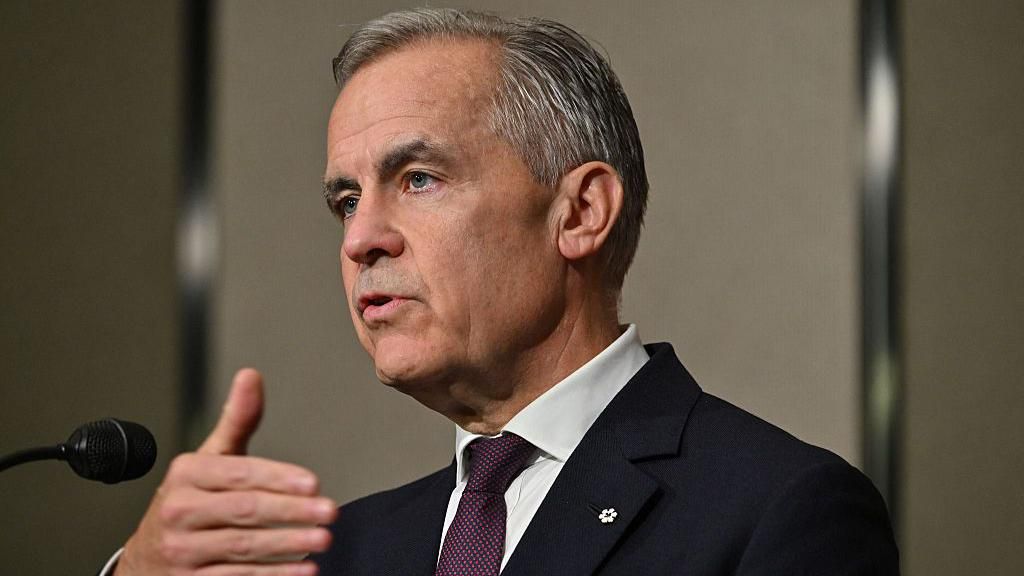
As the mandatory July 1 review of the United States-Mexico-Canada Agreement (USMCA) draws near, trade tensions between Canada and the United States have escalated sharply, centered on retaliatory Canadian provincial bans on U.S. alcohol imports imposed in response to sweeping Trump-era tariffs. Canadian Prime Minister Mark Carney has outlined a clear negotiating position: Ottawa is ready to begin detailed trade discussions with Washington immediately, but it will not rush an unfavorable deal and is prepared to wait for the right conditions if necessary.
The current standoff traces back to 2025, when former U.S. President Donald Trump implemented new tariffs on key Canadian export sectors including steel, aluminum, automobiles and agricultural goods, a measure he claimed would protect American manufacturing and create U.S. jobs. In response, multiple Canadian provinces – led by Ontario, home to the world’s largest single alcohol purchaser, the Ontario Liquor Control Board – pulled all U.S.-produced alcoholic beverages from store shelves. Ontario Premier Doug Ford has remained unwavering in this policy, confirming that U.S. liquor will not return to shelves until the targeted tariffs are fully lifted.
Carney confirmed Thursday that the reversal of provincial alcohol bans could happen rapidly once progress is made on resolving the core tariff dispute, telling reporters, “Issues such as decisions on which alcohol to put on the shelves – we can make progress very quickly on that with progress in other areas.” He emphasized that the Trump administration’s tariffs violate the terms of the existing USMCA free trade framework, and pushed back against U.S. demands for unilateral concessions, noting “We’re not sitting here taking notes and taking instruction from the U.S.”
In recent days, senior U.S. officials have ramped up pressure on Canada over the alcohol ban. U.S. Commerce Secretary Howard Lutnick called the restriction “disrespectful” Wednesday, while U.S. Trade Representative Jamieson Greer threatened consequences if the issue is not resolved. Lutnick also dismissed Canada’s cautious, wait-and-see negotiating approach as “the worst strategy I’ve ever heard,” pointing to the vast size discrepancy between the U.S. and Canadian economies.
Ford, speaking to CNN Thursday, countered that the U.S. is already suffering steep economic losses from the dispute, noting that Canadian consumer boycotts of U.S. goods and reduced cross-border travel are costing the American economy “tens of billions of dollars.” “This can come to a quick end, everyone can thrive and prosper,” Ford said, if Washington agrees to roll back the tariffs.
Under Canadian law, liquor regulation falls under provincial rather than federal jurisdiction, meaning provincial leaders hold final authority over whether to restore U.S. alcohol sales. Candace Laing, newly appointed to Carney’s Canada-U.S. trade advisory committee and president and CEO of the Canadian Chamber of Commerce, confirmed that Canada is open to using the alcohol issue as negotiating leverage to secure tariff rollbacks, but will not make unilateral concessions outside of a balanced reciprocal agreement. “Canada is not going to give any concessions that aren’t in the context of a real negotiation,” Laing said.
Many policy analysts argue that Canada’s negotiating position has strengthened considerably in recent months. Fen Hampson, a Carleton University international affairs professor and co-chair of the institution’s Canada-U.S. relations expert group, noted that Trump’s domestic political standing has eroded amid widespread public opposition to the U.S.-Israel military campaign in Iran, a factor that could shift control of Congress in upcoming midterm elections. At the same time, Carney has consolidated power, with recent special elections and parliamentary defections granting his government a stable majority in Parliament.
Hampson argued that Canada’s willingness to wait is a deliberate, strategic choice that gives Ottawa a “last mover advantage,” allowing Canadian negotiators to see what terms Trump secures with Mexico and other trading partners before finalizing any agreement. He added that Canada also holds key structural advantages, as it supplies the U.S. with critical goods including energy, base metals and critical minerals that American industry depends on. “The Canadians are very smart here,” Hampson said. “They’re ragging the puck, they’re running the clock down.”
Washington has identified a handful of ongoing trade irritants with Canada, including the alcohol ban and access to Canada’s protected dairy market, that it hopes to address during the upcoming USMCA review negotiations, which must conclude by July 1 under the terms of the existing agreement.