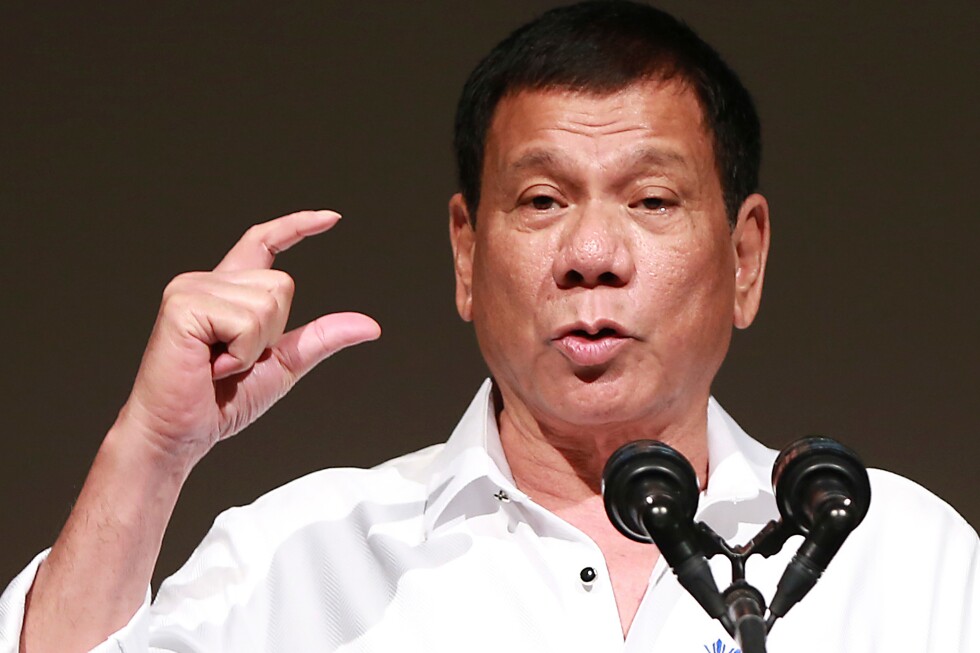
THE HAGUE, Netherlands – In a landmark ruling that marks a major turning point in global accountability for grave human rights violations, a three-judge panel at the International Criminal Court announced Thursday it has unanimously confirmed charges of crimes against humanity against former Philippine President Rodrigo Duterte, stemming from the thousands of deaths linked to his infamous anti-drug crackdowns that spanned more than a decade.
The panel concluded there are substantial, credible grounds to hold the 81-year-old former leader responsible for dozens of extrajudicial murders, a killing campaign that first took shape during his decades-long tenure as mayor of Davao City in the southern Philippines and expanded nationwide after he won the Philippine presidency in 2016, holding office until 2022.
Duterte, who was arrested in the Philippines last year, has repeatedly and vehemently denied all allegations against him. He has opted to forgo personal appearance in all ICC hearings to date, and a preliminary ruling last month confirmed he is medically fit to proceed to trial, after an earlier hearing was delayed over concerns about his health. A firm start date for the full trial has not yet been finalized by the court.
In their 50-page written ruling, judges laid out that accumulated evidence demonstrates Duterte personally developed, publicly promoted and systematically implemented a deliberate policy to “neutralize” people suspected of involvement in the drug trade. Prosecutors argue that beginning in 2011, national police operatives and unofficial hit squads carried out dozens of targeted killings at Duterte’s direction, with participants incentivized by cash payouts and coerced by the threat of being marked as targets themselves if they refused to comply. During pretrial hearings held this past February, deputy prosecutor Mame Mandiaye Niang told the court that participation in the killings eventually devolved into a twisted, perverse competition among those involved.
Estimates of the total death toll from the crackdown during Duterte’s presidential term vary widely: official Philippine police figures count just over 6,000 unintended killings, while independent human rights organizations place the actual death toll as high as 30,000.
Prosecutors framed Thursday’s confirmation of charges as a critical milestone in their years-long push to deliver accountability for the widespread killings. “This decision represents a significant milestone” in our work to deliver justice for victims, the prosecution office said in a statement released Wednesday ahead of the public announcement.
But Duterte’s defense team has rejected the ruling as fundamentally flawed. Lead defense counsel Nick Kaufman told the Associated Press the panel’s decision relies entirely on uncorroborated testimony from self-admitted killers who agreed to testify in exchange for leniency, arguing the evidence used to confirm charges lacks any credible corroboration.
The ruling has already sparked sharply contrasting reactions, with families of people killed during the crackdown celebrating the decision in the Philippines. For survivors, the confirmation of charges brings long-awaited hope of justice and closure after years of official obstruction. Randy delos Santos, whose 17-year-old nephew Kian delos Santos was gunned down by police in a Manila alley in 2017 in a killing that sparked nationwide outrage, said the decision gives a voice to victims who were long reduced to nameless statistics. “This is for all the victims, who were not even given the chance to be recognized as victims because their stories were twisted in police reports, investigations and findings,” delos Santos told reporters. “Unlike Kian, most other victims were nameless, voiceless and were just numbers and statistics whose horrific stories were never heard. Now the ICC will give their stories a chance to be told.”
Global and local human rights groups have also praised the ruling as a watershed moment for international justice. Maria Elena Vignoli, senior international justice counsel at Human Rights Watch, noted that the progression to trial sends an unambiguous message to current and former leaders around the world: no individual, even a former head of state, is above the law for the most serious international crimes. “Duterte’s trial will send a powerful message that no one responsible for grave crimes is above the law, whether in the Philippines or elsewhere, and that justice will eventually catch up with them,” Vignoli said.
The path to Thursday’s ruling has been marked by repeated legal and procedural hurdles stretching back more than six years. ICC prosecutors first launched a preliminary investigation into the drug crackdown in 2018. Just one month after the investigation was announced, then-President Duterte announced the Philippines would withdraw from the ICC, a move widely criticized by human rights activists as an attempt to evade accountability for the killings. Earlier this week, appeals judges rejected a bid by Duterte’s legal team to dismiss the entire case on the grounds that the court lacks jurisdiction following the Philippine withdrawal.
In another procedural development earlier this year, ICC judges disqualified the court’s former chief prosecutor Karim Khan from leading the case, citing a reasonable appearance of bias stemming from Khan’s prior legal work representing victims of Duterte’s alleged crimes before he took up his role at the ICC. Khan had already stepped back from his official duties at the court pending the outcome of an independent investigation into unrelated allegations of sexual misconduct.
Associated Press journalist Jim Gomez contributed reporting from Manila, Philippines.