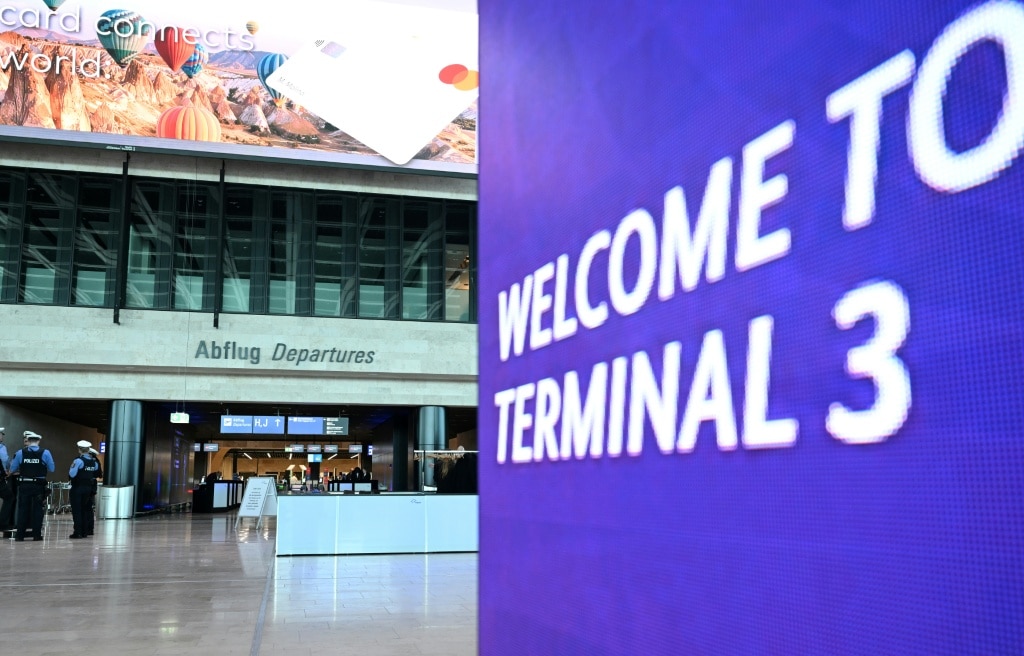
After a decade of construction, years of delays, and hundreds of millions of euros in cost overruns, Germany’s busiest air hub, Frankfurt Airport, has officially inaugurated its long-awaited Terminal 3 this Wednesday. For German infrastructure observers, the opening itself stands as a rare small victory for a country that has become widely known for its string of stalled, over-budget public construction projects.
The sprawling new terminal boasts an 18-meter-tall soaring ceiling and a sweeping glass facade, engineered to accommodate an extra 20 million passenger movements annually when fully operational. Privately financed, the project was originally targeted for a 2022 opening, but global supply chain disruptions and labor shortages triggered by the COVID-19 pandemic pushed the completion date back years. What was initially projected to cost between 2.5 billion and 3 billion euros ultimately ended with a final price tag of 4 billion euros, equal to roughly $4.7 billion.
Despite the cost and timeline overruns, officials and project leaders marked the inauguration with cautious celebration. Speaking from the terminal’s duty-free concourse, Fraport CEO Stefan Schulte, the executive leading the airport’s operating company, framed the completed terminal as a proof of concept for large-scale infrastructure delivery in Germany. “The clear message from Terminal 3 is ‘yes, we can carry out major projects in Germany,’” Schulte said. A total of 57 airlines are set to relocate operations to the new terminal, with German leisure carrier Condor scheduled to be its primary tenant.
The opening comes in sharp contrast to Germany’s most infamous infrastructure fiasco: Berlin Brandenburg Airport, which was plagued by a seemingly endless series of design flaws, management missteps, and construction errors that stretched its buildout to 14 years before it finally opened in 2020. Frankfurt Terminal 3’s relatively shorter (if still delayed) timeline stands out against other stalled national projects, including Stuttgart 21, a massive underground rail hub in southwestern Germany that was supposed to open in 2019 and remains indefinitely delayed, leaving a large swathe of central Stuttgart looking like an active construction site. Critics have long blamed Germany’s infrastructure delays on convoluted permitting processes and overly rigid regulatory requirements that slow progress on large developments.
Not all stakeholders welcomed the new terminal, however. Critics have questioned the timing of the expansion, pointing to ongoing turbulence in global aviation driven by geopolitical instability from the ongoing Middle East war, as well as declining passenger volumes at Frankfurt as competition from other European major hubs intensifies. Environmental and climate activists have also voiced sharp opposition to the project. The Initiative for Climate Protection, the Environment and Against Noise in Air Transport issued a scathing rebuke of the expansion, arguing the new terminal will accelerate environmental degradation and erode quality of life for communities living near the airport through increased aircraft noise, carbon dioxide emissions, and other airborne pollutants.