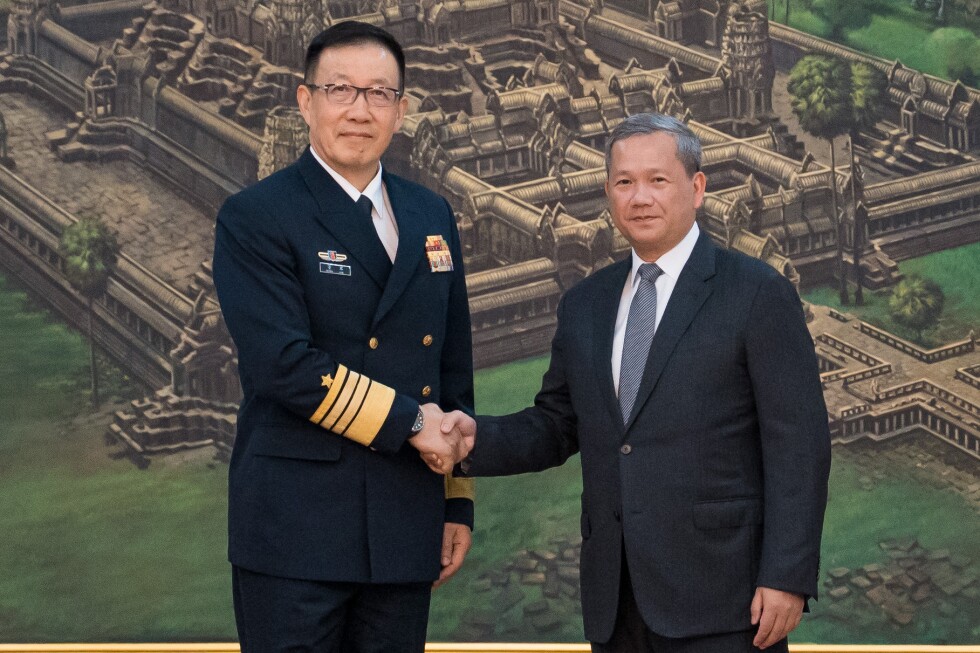
In a landmark step forward for bilateral cooperation, Cambodia and China launched their inaugural “2+2” Strategic Dialogue Mechanism on Wednesday, bringing the top foreign policy and defense leaders of both nations together in Phnom Penh to advance mutual political and security alignment.
The high-level gathering drew Chinese Foreign Minister Wang Yi and Defense Minister Dong Jun to the Cambodian capital, where they met with their respective Cambodian counterparts: Foreign Minister Prak Sokhonn and Defense Minister Tea Seiha. The dialogue initiative was first proposed by Chinese President Xi Jinping during his state visit to Cambodia in April 2023, designed to strengthen the two countries’ existing comprehensive strategic partnership. This new ministerial-level dialogue format marks China’s second such framework in Southeast Asia, following a similar arrangement launched with Indonesia last year, as Beijing continues expanding its diplomatic and security influence across the region.
Beyond the joint dialogue session, the two visiting Chinese ministers are scheduled to hold separate bilateral meetings with Cambodia’s Senate President Hun Sen and Prime Minister Hun Manet during their trip. After the conclusion of the inaugural “2+2” talks, Wang Yi will hold in-depth one-on-one discussions with Prak Sokhonn on Thursday to review progress on implementing existing bilateral cooperation agreements and explore shared efforts to advance peace, security and stability across Southeast Asia.
Following his engagement in Cambodia, China’s foreign ministry confirmed Tuesday that Wang Yi will continue his Southeast Asian tour with official visits to Thailand and Myanmar.
As of Wednesday, Cambodian officials have not released immediate details on the content or outcomes of the closed-door talks.
Longstanding close ties bind the two nations: China is Cambodia’s largest source of foreign direct investment and top international aid donor, and Cambodia is widely recognized as Beijing’s closest political ally in Southeast Asia. Bilateral trade between the two countries hit $19.73 billion in 2023, with a significant trade imbalance tilted heavily in China’s favor.
This deep strategic partnership has sparked persistent scrutiny from Western governments and independent analysts, particularly centered on a Chinese-funded upgrade of Cambodia’s Ream Naval Base, located on the Gulf of Thailand. Skeptics have raised repeated suspicions that the renovated facility will ultimately function as a forward strategic military outpost for the Chinese People’s Liberation Army Navy. Construction on the base completed major upgrades last year, including a new longer pier capable of accommodating larger naval vessels, a fully functional dry dock for ship repairs, and additional supporting infrastructure.
The U.S. government has publicly stated its concern that Cambodia has secretly granted China exclusive access to portions of the base, claims Cambodian officials have repeatedly and forcefully denied. During a public opening event for the base expansion in April 2023, Prime Minister Hun Manet explicitly rejected the allegations, emphasizing that all construction and expansion work was carried out transparently and no secret agreements had been struck with Beijing.
In a notable development three months ago, the USS Cincinnati, a U.S. Navy warship carrying a crew of roughly 100 service members, became the first American naval vessel to dock at Ream Naval Base following the completion of the Chinese-funded renovation, marking a small but symbolic step in U.S. engagement with the facility.