Nearly complete official results from Bulgaria’s snap parliamentary election confirm a historic landslide victory for former president Rumen Radev’s Progressive Bulgaria alliance, which has secured the first absolute parliamentary majority held by a single political bloc in the country since 1997. The outcome brings an end to nearly four years of chronic political instability that forced the Balkan nation to hold eight consecutive elections since 2021.
The 62-year-old Radev, a former air force general who stepped down from the presidency earlier this year to run for a parliamentary seat, campaigned on a populist anti-corruption platform aimed at dismantling what he calls Bulgaria’s entrenched “oligarchic governance model”. His coalition captured 44.7 percent of the popular vote with 98.3 percent of ballots counted, putting it on track to control roughly 130 of the 240 seats in Bulgaria’s unicameral parliament. Turnout for Sunday’s vote hit the highest level recorded since 2021, reflecting broad cross-spectrum support for Radev’s pledge to break years of political gridlock.
The election upends Bulgaria’s existing political order. Longtime pro-EU conservative leader Boyko Borissov’s GERB party, which dominated Bulgarian politics for nearly a decade before 2021, slumped to just 13.4 percent of the vote, barely edging out the liberal pro-EU PP-DB coalition which captured 12.7 percent. Both the far-right Vazrazhdane party and the MRF, a minority-focused party representing Bulgarian Turks and Roma communities, are projected to cross the electoral threshold to win parliamentary seats.
In his victory address to reporters, Radev framed the win as a transformative shift for Bulgarian politics. “This is an unequivocal win for Progressive Bulgaria – a victory of hope over distrust, a victory of freedom over fear,” he stated. While Radev emphasized that Bulgaria will remain committed to its European integration path, he also pushed back against existing EU policy orthodoxy, noting: “A strong Bulgaria and a strong Europe need critical thinking and pragmatism. Europe has fallen victim to its own ambition to be a moral leader in a world with new rules.”
Radev’s foreign policy positions have already drawn sharp attention from both Moscow and Brussels. A self-described pragmatist who has emerged as a vocal critic of EU policy, Radev has repeatedly called for the restoration of closer practical ties with Russia, based on mutual respect and equal dialogue. He has opposed Bulgaria’s existing policy of sending military arms to Ukraine, criticized the recent 10-year defense cooperation deal between Sofia and Kyiv, and has argued for a negotiated end to the ongoing conflict. Even so, he has pledged not to use Bulgaria’s EU veto power to block collective EU foreign policy decisions.
The Kremlin quickly welcomed Radev’s election win. Kremlin spokesman Dmitry Peskov told reporters Monday that Moscow views Radev’s calls for closer ties with Moscow favorably, adding that the Kremlin also approves of his commitment to resolving international disputes through dialogue. For its part, the European Commission struck a measured tone in its initial reaction. European Commission President Ursula von der Leyen reaffirmed that “Bulgaria is a proud member of the European family and plays an important role in tackling our common challenges,” adding that she looks forward to working with the new government.
Political analysts across Bulgaria have framed the result as a watershed moment, but warn that major questions remain about Radev’s ability to deliver on his core promises. Political analyst Teodor Slavev noted that while Radev’s bloc holds an absolute majority that allows it to govern alone, passing sweeping judicial and constitutional reforms required to root out high-level corruption will need a two-thirds parliamentary majority, forcing Radev to negotiate cross-party support. Daniel Smilov, a political scientist at Sofia’s Center for Liberal Strategies, added that Radev will face persistent pressure from Eurosceptic factions within his own bloc and the far-right opposition to shift Bulgaria toward a more openly anti-EU course. “His initial signals are that he will pursue a pro-European policy and will not block the EU… The whole question is whether those signals will actually be followed through,” Smilov told AFP.
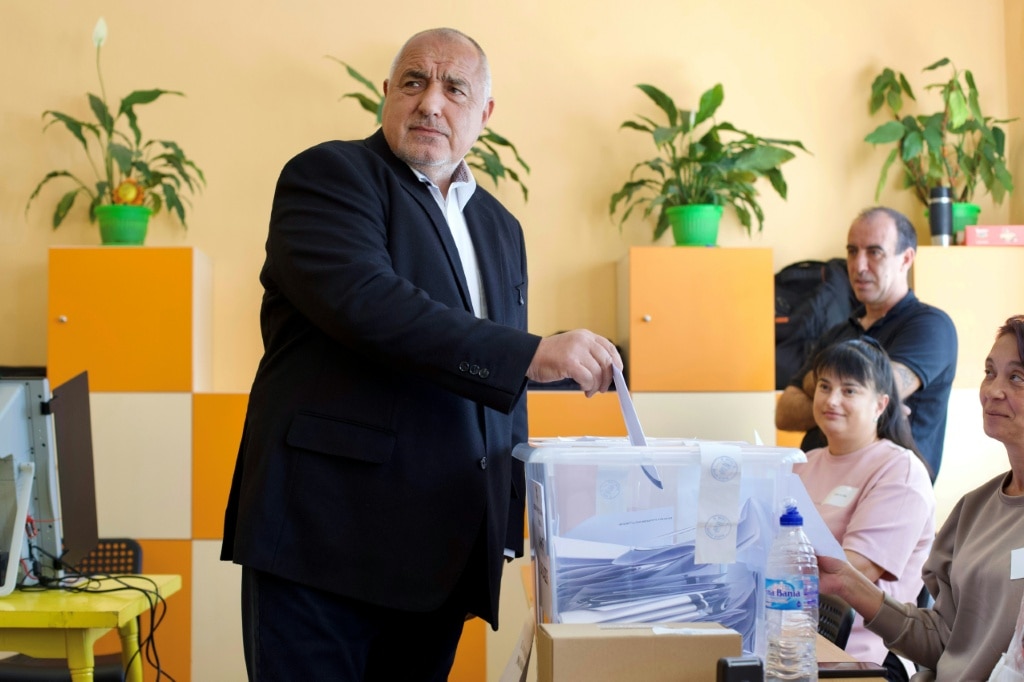
Outgoing long-time prime minister Boyko Borissov congratulated Radev on his victory Sunday, but offered a cautious note: “Winning elections is one thing, governing is another.”
The election was overshadowed by long-standing concerns about electoral fraud in Bulgaria. Political parties across the ideological spectrum urged voters to turn out to counter the widespread practice of vote buying. In pre-election anti-corruption raids, Bulgarian police seized more than 1 million euros in suspected vote-buying funds and detained hundreds of people, including sitting local councillors and municipal mayors.