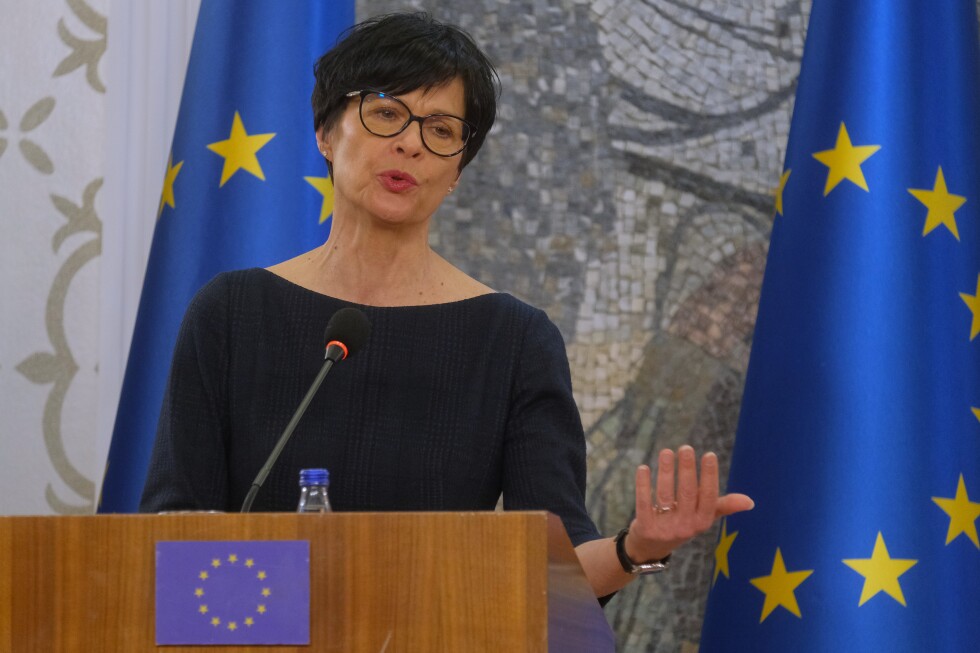
BRUSSELS – The European Union has issued a stark ultimatum to Serbia: reverse eroding democratic standards or risk losing access to nearly €1.5 billion ($1.8 billion) in pre-accession development funding, EU Enlargement Commissioner Marta Kos confirmed to EU legislators Monday.
Kos emphasized that the European Commission is increasingly alarmed by multiple troubling developments in Serbia, which has been working toward EU accession for years. The bloc’s concerns span systemic issues, including newly enacted laws that weaken judicial independence, heavy-handed crackdowns on public protest movements, and repeated interference with independent media outlets. These issues have raised serious questions about whether Serbia continues to meet the eligibility requirements for disbursements from EU pre-accession financial instruments, Kos added.
International election monitors have already documented widespread irregularities and instances of voter intimidation during last month’s local elections held across 10 Serbian municipalities, adding to international scrutiny of Belgrade’s democratic commitments.
Under the EU’s pre-accession assistance framework, candidate countries gain access to large-scale growth-focused funding on the condition that they implement targeted democratic and institutional reforms. To date, Serbia has received roughly €110 million ($130 million) from the allocation, leaving the remaining €1.5 billion in funding now hanging in the balance, Kos said.
This warning comes amid a broader EU push to deepen integration with Western Balkan nations, a strategy accelerated after Russia launched its full-scale invasion of Ukraine in February 2022. The bloc has grown increasingly concerned that Moscow could seek to expand its influence and destabilize the Western Balkans, a region still grappling with political and economic fallout from the violent conflicts of the 1990s.
Serbian populist President Aleksandar Vucic has repeatedly stated his government’s official goal of securing EU membership, but his administration has maintained close political and economic ties to Moscow. Last year, Vucic openly defied EU diplomatic warnings by attending Russia’s annual Victory Day parade in Moscow alongside Russian President Vladimir Putin, a move that deepened distrust between Belgrade and Brussels.
To address growing concerns over judicial reforms, experts from the Venice Commission – Europe’s leading constitutional and democratic oversight body – traveled to Serbia last month. The delegation held meetings with senior political leaders, judicial heads, and legal officials to review concerns raised by the speaker of Serbia’s national parliament. The Commission is set to release an urgent formal opinion on its findings in the coming weeks.
Kos made clear that Brussels’ demands are non-negotiable: Serbia must fully bring its national judicial legislation into line with the Venice Commission’s upcoming recommendations, and take concrete steps to restore full independence to the country’s media sector. “Serbia has to deliver,” Kos told lawmakers.