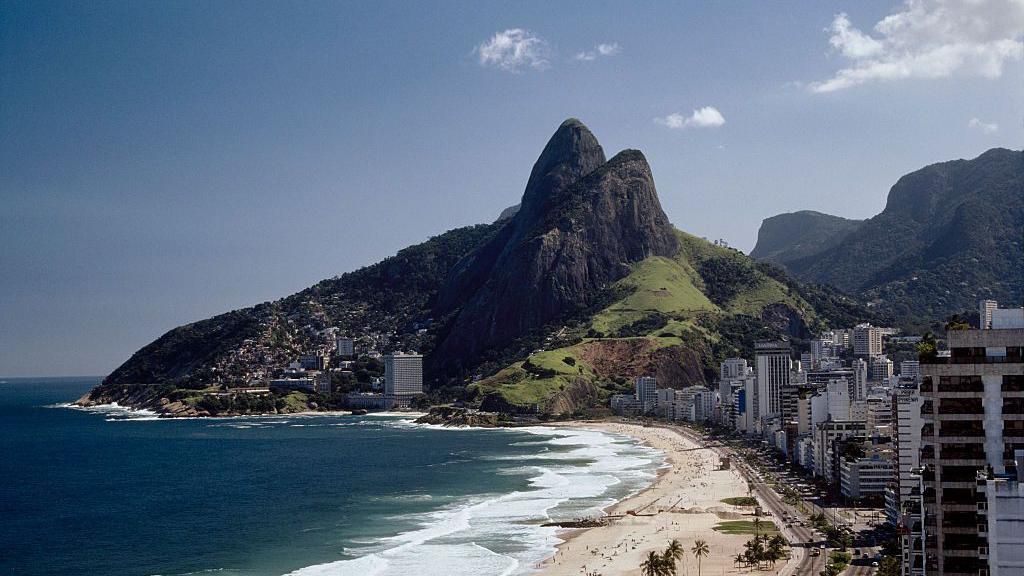
A routine anti-criminal operation in one of Rio de Janeiro’s most well-known favelas turned into a frightening ordeal for roughly 200 sightseeing visitors early one morning, when an exchange of gunfire between police officers and suspected gang members left the group trapped at the peak of a iconic tourist viewpoint. Morro Dois Irmãos, the hilltop site where the incident unfolded, draws hundreds of hikers and casual visitors daily thanks to its sweeping, postcard-perfect views of Rio’s famous Ipanema Beach, with the main hiking trail to the summit starting just east of the Vidigal favela neighborhood.
The operation was a joint effort led by investigators from the Public Prosecutor’s Office of Bahia and Rio de Janeiro’s Civil Police force, who launched the raid targeting alleged high-ranking members of the Comando Vermelho criminal gang, a notorious organized crime group that maintains a heavy presence in many of Rio’s informal communities, according to reporting from leading Brazilian broadcaster TV Globo. Law enforcement teams entered the neighborhood believing the targeted gang members were hiding within Vidigal, but a confrontation between officers and the suspects quickly escalated into active gunfire near the entrance to the Morro Dois Irmãos trail. The crossfire blocked the only main access route to the summit, trapping the crowd of tourists who had already climbed to the top to watch the popular sunrise over Ipanema.
Footage of the incident shared widely across social media captures the tense scene: the large group of stranded visitors huddling on the ground at the hilltop as the sun rose over the Atlantic, while a police helicopter circled overhead and the distant echo of gunfire could be heard across the neighborhood. For many of the tourists, the experience was a sudden shock to a planned morning excursion. Matilda Oliveiro, a Portuguese traveler who had climbed the hill with her sister Rita to watch the sunrise, recalled that local trail guides quickly ordered the entire group to take cover once gunfire began. “We had waited for sunrise and, suddenly, the guides asked us to sit down and we started hearing gunshots,” she told TV Globo in an interview after the incident. She added that the guides responded quickly to the crisis, noting “It’s always scary, but it was controlled as much as possible. We passed the police on the way, and the situation was already under control.”
According to local media reports, the entire group of stranded tourists was able to begin descending the hill roughly 30 minutes after the shootout broke out, once police secured the access route and brought the situation under control. Multiple visitors confirmed that local trail guides had received advance notice of the planned police operation, and had coordinated with law enforcement units on the ground to manage the crowd once the confrontation began. Danielly Nobre, a 25-year-old visitor who was part of the stranded group, told Brazilian daily newspaper O Dia that the group was already at the summit when the shooting started, and guides immediately began coordinating to keep everyone safe. “We were caught by surprise. We were already at the top when we started hearing gunshots, and the guides were already telling us what was happening,” Nobre said. She added that guides repeatedly reassured the crowd that the situation was under control, and a passing police helicopter also issued instructions for the group to stay calm and remain in cover. “In the end, everything worked out. Everyone went down in a single file, everyone helping, and we managed to finish the trail, see the sunrise, and experience that adrenaline rush,” Nobre added.
The incident shines a light on the persistent presence of organized crime in Rio de Janeiro’s favelas, where groups like Comando Vermelho have evolved far beyond their origins as drug trafficking organizations. Today, these criminal groups enforce strict local rules and hold de facto monopolies over the provision of basic services including residential gas delivery, cable television, internet access and local public transport in the communities they control, making anti-gang operations a frequent but high-risk part of law enforcement work in the city.