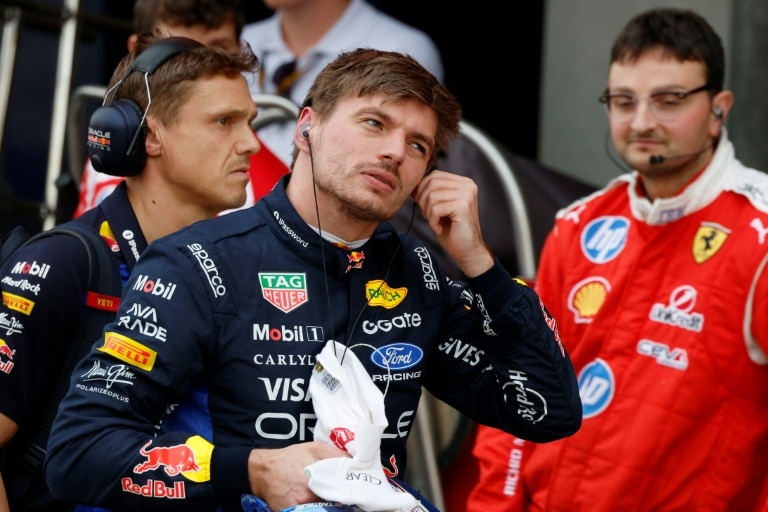
In a decisive move responding to weeks of fierce backlash from top drivers including four-time world champion Max Verstappen, Formula One governing bodies and team principals have unanimously agreed to targeted rule changes that will take effect as early as next month’s Miami Grand Prix. The 2025 season’s sweeping regulatory overhaul, which introduced a revised hybrid power unit system with strict battery management requirements, sparked unprecedented public criticism that even put Verstappen’s long-term future in the sport in question.
Under the original rules, drivers were forced to conserve battery charge throughout qualifying laps, forcing them to lift off the throttle and slow down artificially to manage energy reserves, while a manual boost button granted extra power for overtaking maneuvers. After the Chinese Grand Prix, Verstappen delivered a scathing rebuke of the new racing format, calling it “a joke” and hinting he would step away from F1 when his current contract ends in 2027 if meaningful adjustments were not made. The Red Bull driver’s criticism was echoed by multiple other competitors on the grid, while fans across the globe voiced frustration that the regulations had diluted the on-track spectacle that defines top-tier open-wheel racing.
Held via online call on Monday, the meeting brought together Formula One management, the Fédération Internationale de l’Automobile (FIA), and all team principals to hash out adjustments. Stakeholders finalised a set of targeted tweaks that will roll out for the Miami Grand Prix scheduled for May 3. This race will mark the end of a five-week enforced break in the 2025 calendar, which came after the cancellation of the opening Bahrain and Saudi Arabian rounds due to ongoing armed conflict in the Middle East.
The most impactful changes center on the hybrid power system that drew the most driver complaints. Energy harvesting capacity, which controls how much kinetic energy drivers can recover to charge the on-board battery during a race, will be lowered from eight megajoules to seven megajoules. Meanwhile, the maximum power output of the hybrid power unit will be increased from 250 kilowatts to 350 kilowatts. The FIA says the combination of these two adjustments will allow drivers to push at full speed for longer stretches during qualifying sessions, eliminating the need for artificial slowing to save battery.
A second key change addresses safety concerns related to the boost button, which came under scrutiny after British rookie Ollie Bearman’s high-speed crash during the most recent round in Japan. Investigators partially attributed the incident to dangerous differences in closing speeds caused by drivers activating their boost buttons at different times. Going forward, the maximum power output from the boost button will be capped at 150 kilowatts, a change the FIA says will “limit sudden performance differentials” that create unsafe on-track conditions.
Not all stakeholders are pushing for dramatic, wholesale changes to the rulebook, however. Mercedes team principal Toto Wolff, whose drivers Kimi Antonelli and George Russell have gotten off to a strong start to the 2025 season with Antonelli holding a nine-point lead over Russell in the driver standings after three completed races, advocated for incremental, careful adjustments rather than sweeping overhauls.
Speaking ahead of Monday’s vote, Wolff noted that ongoing discussions between drivers, the FIA, F1 management and team principals had remained constructive, with all parties aligned on the core goal of improving the racing product. “It’s how can we improve the product, make it out-and-out racing, and look at what can improve in terms of safety, but act with a scalpel and not with a baseball bat,” Wolff said. He added that the sport would benefit from testing small adjustments after just three completed races, rather than making rash, far-reaching changes that could create new unforeseen problems. “We are custodians of the sport and we have many hundreds of thousands of fans that love F1,” he said. “In order to protect this huge opportunity that the sport gives us, we shouldn’t badmouth in public our own sport.”
Further negotiations and reviews of the 2025 rules are scheduled to take place after the Miami Grand Prix as stakeholders continue to refine the regulations for future races.