As the United States gears up for November’s critical midterm elections, all eyes are turning to Virginia, where voters head to the polls Tuesday for a high-stakes referendum that could upend the balance of power in the U.S. House of Representatives. What began as a redistricting push championed by former President Donald Trump to shore up Republican advantages has evolved into a major liability for the GOP, with Democrats positioned to pick up four additional congressional seats if the measure passes.
The fight over this ballot initiative sits at the heart of a broader national battle over gerrymandering, the longstanding and widely decried practice of manipulating electoral district boundaries to favor the controlling political party. This clash has emerged as one of the defining issues of the 2024 midterm campaign cycle.
If approved, the measure would allow Virginia to redraw its congressional districts years ahead of the next scheduled nationwide redistricting, which is tied to the decennial U.S. census and not set to occur until 2030. Currently, Democrats hold a narrow 6-5 advantage in the state’s 11 House seats; the new map would boost that edge to 10 out of 11 districts, delivering a major boost to Democratic efforts to flip or retain control of the chamber.
Control of the House currently hangs by a thread, making the Virginia referendum outcome potentially decisive for the trajectory of Donald Trump’s remaining term in office. A Democratic majority would empower the party to block Trump’s legislative agenda and launch new investigations into his administration, while a continued Republican majority would leave Trump with a compliant congressional body aligned with his policy priorities.
The current national redistricting fight traces back to Trump’s 2023 call on Republican-led states to redraw district maps mid-decade, a move designed to protect the GOP’s fragile House majority. That call triggered a tit-for-tat response, with both parties racing to secure additional congressional seats ahead of November’s vote.
Texas was the first major state to act, approving a new map that could net Republicans up to five extra seats. California quickly countered with its own ballot measure aimed at delivering five new seats for Democrats. Now, Virginia represents one of the Democratic Party’s last major opportunities to gain ground through redistricting before voters cast their ballots nationwide.
Democratic Party organizations have poured unprecedented sums of money into the Virginia campaign, turning the referendum into one of the costliest redistricting fights in U.S. history. Combined, the two leading opposing campaigns have raised nearly $100 million, a large share of which comes from so-called “dark money” groups: non-profit organizations that can spend heavily on political activity without revealing the identities of their donors to the public.
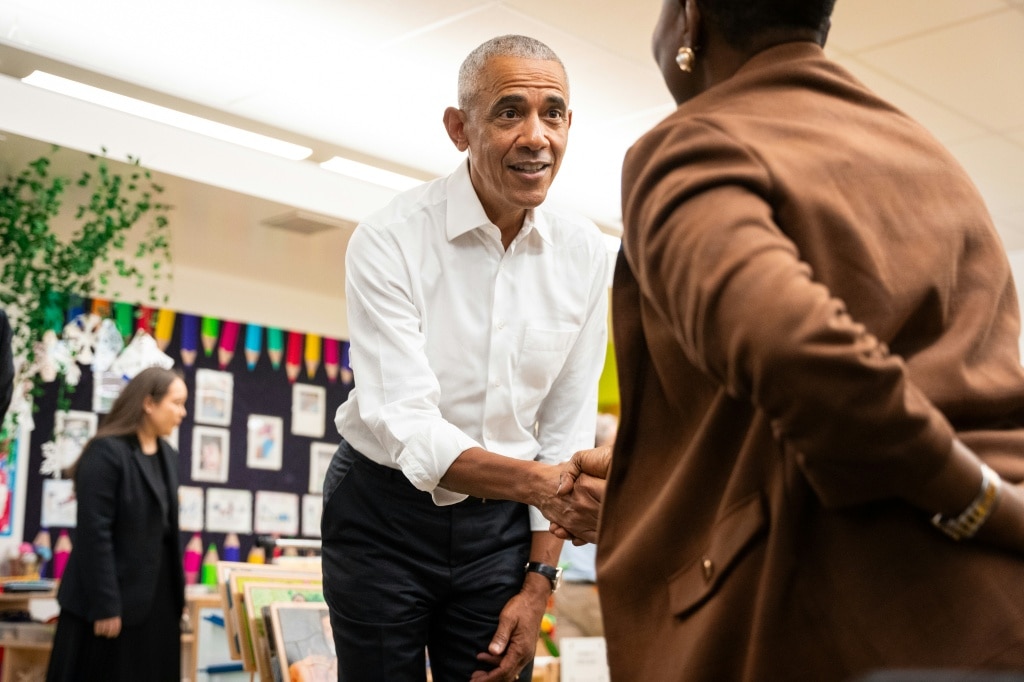
According to reporting from *The Hill*, the pro-redistricting group Virginians for Fair Elections has raised the majority of that total, pulling in nearly $65 million to support the yes campaign. Former President Barack Obama, still one of the Democratic Party’s most high-profile and influential surrogates, released a video message urging Virginia voters to support the measure.
“By voting yes, you can push back against the Republicans trying to give themselves an unfair advantage in the midterms… And we’re counting on you,” Obama said.
Democrats frame the Virginia map change as a necessary countermeasure to balance out Trump’s nationwide push for partisan redistricting that benefits Republicans. Republicans, by contrast, decry the initiative as a brazen power grab in a politically competitive state where Trump won 46 percent of the popular vote in the 2024 presidential election.
Virginia Republican Congresswoman Jen Kiggans, whose own congressional district would be reshaped by the new map, told ABC News that ramming through the redistricting plan would “come back to bite” Democrats in future elections.
Early voting and absentee ballot data cited by *The Hill* shows more than one million Virginians have already cast their ballots, with Democrats holding a substantial lead in turnout among early voters. However, recent public opinion polling shows yes supporters hold only a narrow single-digit lead, and political analysts warn the outcome remains far from certain.
Larry Sabato, a prominent political scientist at the University of Virginia, told AFP that a lopsided 10-1 advantage for Democrats is far from a guaranteed outcome. “To get 10 out of 11 seats is not easy, even with Virginia leaning more Democratic,” Sabato said. “And of late… it hasn’t been as Democratic as it had been previously.”
A victory in the referendum would deliver a major political boost to House Democratic Leader Hakeem Jeffries, who has led national Democratic efforts to neutralize pro-Trump gerrymandered maps passed in Republican-led states. A loss, by contrast, would be a significant blow to Virginia Democratic Governor Abigail Spanberger, who has staked much of her political capital on the push for redistricting and has seen her approval ratings slip amid the high-profile fight.
The outcome in Virginia will also set the stage for the final phase of the national redistricting battle. Florida Governor Ron DeSantis has called for a special legislative session to redraw that state’s congressional map, a move that could net Republicans up to five additional seats and potentially erase any Democratic gains from a Virginia victory.