In a major milestone for the Donald Trump administration’s hard-line campaign against unauthorized mass migration, the first group of 15 South American migrants expelled from the United States has touched down in the Democratic Republic of the Congo, marking the start of a controversial third-country deportation agreement between the two nations.
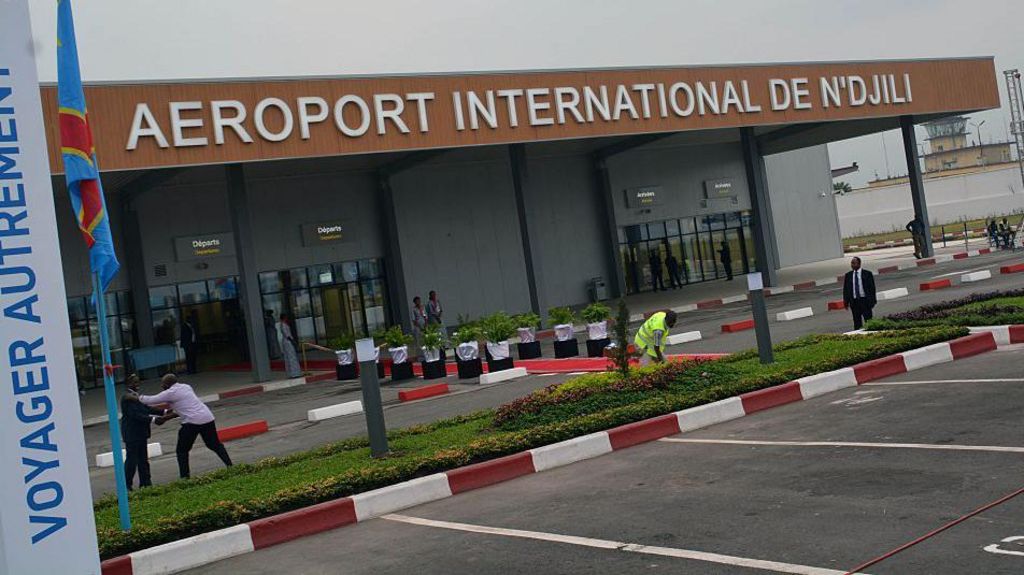
The plane carrying the deportees landed at Kinshasa’s N’djili International Airport in the early hours of Friday. While the Congolese government released only limited details about the group in its official statement, an anonymous airport source speaking to the BBC confirmed most of the 15 are Colombian and Peruvian citizens — making them third-country nationals, meaning they hold no citizenship in either the United States or DR Congo.
Kinshasa has moved quickly to clarify the terms of the arrangement, emphasizing that the migrants’ stay in the central African nation is strictly temporary. The Congolese government also explicitly stated Washington is covering all costs related to the migrants’ reception, support, and care during their stay, and that the deal does not represent a permanent relocation scheme or an outsourcing of U.S. migration policy. When the agreement first came to light earlier this month, Congolese officials framed the decision to accept the deportees as aligned with the country’s commitments to human dignity, migrant rights protection, and international solidarity. Migrants are being admitted under short-stay permits that comply with DR Congo’s existing foreign entry and residence laws, the government added.
This deportation operation is part of a broader, long-running push by the Trump administration to expand third-country deportations as a core tool of its immigration crackdown. Prior to this arrangement with DR Congo, the U.S. has already sent expelled migrants to other African nations including Ghana, South Sudan, and Eswatini. Since Trump took office in January 2025, dozens of migrants have been relocated to third countries under this policy. A minority report from the U.S. Senate Foreign Relations Committee has raised new questions about the cost of the program, estimating that the Trump administration has likely spent more than $40 million (£30 million) on third-country deportations as of January 2026. The report notes the full total expenditure remains unknown, but confirms the U.S. has disbursed more than $32 million in direct funding to five partner countries: Equatorial Guinea, Rwanda, El Salvador, Eswatini, and Palau.
When approached for comment, the U.S. State Department declined to discuss diplomatic communications with foreign governments, but reaffirmed the administration’s unwavering commitment to ending illegal mass migration and strengthening U.S. border security.
Beyond the migration deal, the U.S. maintains multiple overlapping policy priorities with DR Congo. Washington is currently negotiating a critical minerals agreement with Kinshasa that would grant American companies greater access to DR Congo’s extensive reserves of strategically important metals, including cobalt, tantalum, lithium, and copper — all key inputs for electric vehicle batteries and renewable energy technology. The Trump administration also previously brokered a landmark peace deal between DR Congo and neighboring Rwanda to resolve years of conflict in eastern DR Congo, though full implementation of the agreement has remained an ongoing challenge.
Most recently, following a new round of peace talks in Switzerland mediated by the U.S. and Qatar, both the Congolese government and the Rwanda-backed M23 rebel group have announced key confidence-building steps ahead of a permanent ceasefire. The two sides committed to allowing unimpeded access for humanitarian aid, protecting civilian populations and critical infrastructure, and launching formal monitoring of a permanent ceasefire. Negotiating delegates from both sides expressed cautious encouragement over the progress made toward ending the years-long conflict. Rwanda has consistently denied international evidence of its support for M23, claiming any military presence near the border is a defensive measure to counter threats from armed groups based in DR Congo.
This report includes additional contributions from journalist Richard Kagoe.