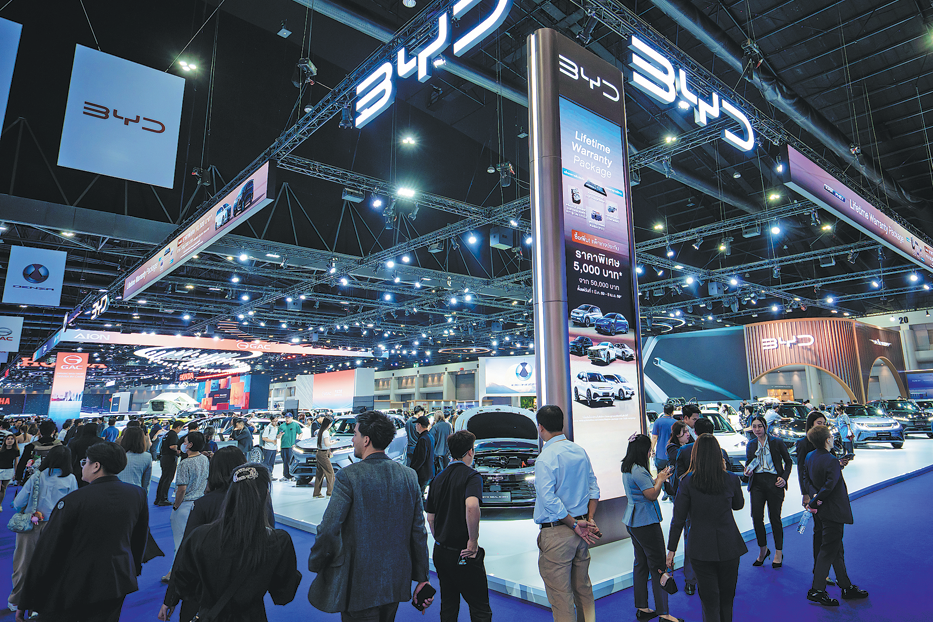
Escalating geopolitical tensions in the Middle East have sent global oil prices surging in recent months, creating a sharp, uncomfortable policy dilemma for Washington: rising fuel costs are driving growing consumer demand for affordable electric vehicles, but long-standing US trade barriers continue to block Chinese EV brands that could meet that demand.
The global benchmark Brent crude climbed 4.7% to settle at $99.39 per barrel this Thursday, a sharp jump from the roughly $70 per barrel price point that held before the Iran conflict intensified in late February. The run-up in crude has pushed retail gasoline prices higher across the United States, making the lower operating costs of electric vehicles far more attractive to cost-conscious car shoppers.
For years, the US federal government has locked Chinese-made passenger vehicles out of the domestic market through steep tariffs that exceed 100%, with official justifications centered on protecting domestic manufacturing jobs and addressing unsubstantiated national security risks. A 2025 regulatory rule went even further, banning the import and sale of connected vehicles and critical automotive components with ties to China. Nand Mulchandani, a visiting fellow at Stanford University’s Hoover Institution, points out that intense lobbying from domestic industry groups has been a core driver of these restrictions, noting US legacy automakers have continuously pressured the Biden administration to secure artificial competitive advantages in the domestic market.
Despite the political and regulatory headwinds blocking their entry, data shows large segments of US consumers are eager for access to Chinese EV brands, drawn by their combination of competitive pricing, innovative features, and strong overall value. A Cox Automotive survey of 802 US consumers planning to purchase a new vehicle within the next two years, conducted between December 29 and January 2, found that 49% of respondents rated Chinese vehicles as offering very good or excellent value for money. Forty percent of all survey participants said they supported allowing Chinese auto brands to enter the US market, with that number jumping to 69% among younger, more demographics.
The high cost of new vehicles in the US has only amplified this consumer demand. For nearly a year, the average transaction price for a new vehicle in the country has hovered around $50,000, pushing a growing share of buyers to seek lower-cost alternatives that Chinese manufacturers are uniquely positioned to provide. Joanna Stern, senior personal technology columnist at The Wall Street Journal, highlighted this gap in a January 29 column after testing Chinese EVs, noting that leading manufacturers including Xiaomi, BYD and Geely have earned global recognition for delivering longer battery ranges and deeply integrated, user-friendly digital platforms.
“We’re talking software that feels smooth like a brand-new smartphone, not a screen you have to jab five times to load a map. Plus, they often cost tens of thousands of dollars less than Western competitors. In Europe and Mexico, they’re blowing past Tesla and other EV rivals,” Stern wrote in her column, titled I Test Drove a Chinese EV. Now I Don’t Want to Buy American Cars Anymore.
That assessment is echoed by EV enthusiasts on social platforms. On Reddit’s popular r/electricvehicles forum, users frequently highlight that Chinese electric vehicles offer premium features including luxury seating, customizable ambient lighting, and intuitive infotainment systems at their price points, delivering far better value than many Western brands. Many commenters note that Chinese EVs’ performance, high-end interior finishes, advanced connectivity, and driver-assist systems match or even exceed those offered by market leader Tesla.
Yet while consumer sentiment has shifted sharply in favor of greater access to Chinese EVs, the position of US auto industry leadership remains dramatically opposed. Last month, major US auto trade groups sent a formal letter to the White House urging the administration to maintain the full ban on Chinese automakers’ entry into the US market, citing competitive fairness concerns, per a report from Reuters. Notably, President Donald Trump struck a more moderate tone during a January appearance in Detroit, saying he would be open to Chinese automakers establishing domestic manufacturing operations in the US as long as those facilities employed American workers.
Some automotive industry analysts argue that blocking Chinese EVs entirely is short-sighted, and that US manufacturers could learn critical lessons from China’s agile production model. Steve Greenfield, founder and CEO of automotive technology advisory firm Automotive Ventures, observed that Chinese automakers have compressed development timelines dramatically: new models can move from concept to full production in as little as 18 to 24 months, roughly half the average timeline for many legacy Western manufacturers. Greenfield added that Chinese manufacturers achieve this faster pace while maintaining consistent quality, keeping production costs low through advanced automation and optimized supply chains.
Greenfield told Automotive News that US legacy automakers would benefit greatly from understanding how Chinese firms deliver affordable, high-quality EVs so quickly, and that strategic cross-border partnerships could deliver widespread gains for the US industry. For his part, Mulchandani noted the ultimate future of Chinese EVs in the US market will depend on a broader policy calculation of costs and benefits for the country as a whole. “If the government does the calculations and thinks that this would be net good for the country and for the consumers, I’m sure they’ll make the right decision,” Mulchandani told China Daily.