Just days after Hungarian voters delivered a sharp rebuke to Viktor Orbán’s authoritarian far-right agenda, Bulgaria is gearing up for another early national election that could propel a well-known left-leaning former head of state into the prime minister’s office.
Years of unbroken political instability have gripped this EU and NATO member state of 6.5 million people, and this April 19 snap vote marks the eighth early election the country has held in just five years. The crisis stretches back to 2021, when long-serving conservative Prime Minister Boyko Borissov stepped down after mass public protests over systemic corruption and pervasive inequality. Since that turning point, no sitting administration has managed to hold power for longer than 12 months, falling to either mass street demonstrations or parliamentary backroom maneuvers. This constant rotation has eroded public trust in state institutions, driven widespread voter apathy, and pushed election turnout down to historic lows in recent cycles.
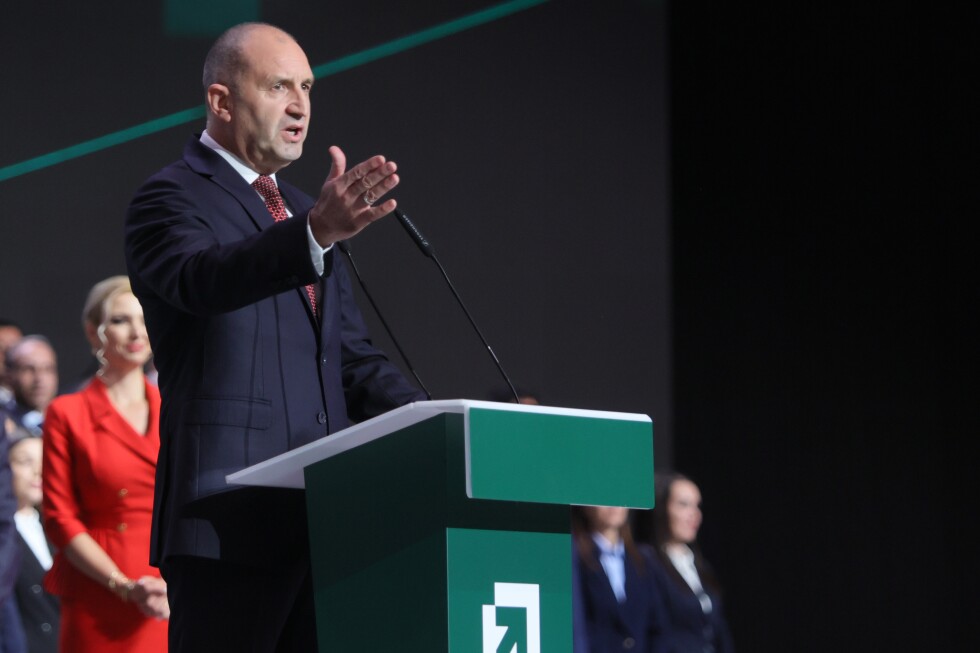
The frontrunner in this latest vote is 62-year-old Rumen Radev, a former fighter pilot and air force commander who stepped down from his largely ceremonial post as president in January, cutting his second five-year term short to launch a bid for the prime ministership. One of Bulgaria’s most popular public figures, Radev leads the center-left Progressive Bulgaria coalition, and has campaigned on a promise of sweeping change to end the country’s ongoing political paralysis. His platform centers on rooting out the oligarchic corruption that has plagued Bulgarian public life for decades, a message that has resonated deeply with voters frustrated by years of graft and institutional failure. Mass anti-corruption protests that drew hundreds of thousands of mostly young demonstrators to the streets late last year forced the collapse of the previous conservative-led government, clearing the way for this new snap vote.
Bulgaria has made major European integration strides in recent years: it joined the border-free Schengen Area in 2024, and adopted the euro as its official currency on January 1 this year. But the country has also faced growing concerns over Russian interference in its domestic politics. Last month, Sofia formally requested assistance from the EU’s diplomatic service to counter coordinated Russian efforts to shape Bulgarian public opinion through social media disinformation campaigns and pro-Kremlin propaganda outlets. Experts have warned that active networks of covert Russian influence accounts are working to sow political division within the country ahead of the vote.
Unlike previous low-turnout contests, pre-election polling projects that turnout this Sunday will rise above 50%, up from an average of just 35% in recent elections. Analysts attribute the expected increase to the high-profile candidacy of Radev, as well as new confidence-building measures from the interim government, which has carried out nationwide police raids, made multiple arrests, and launched pretrial proceedings targeting widespread vote-buying.
Most opinion polls, which carry a margin of error between 3 and 3.5 percentage points, show Radev’s coalition capturing more than 30% of the vote, putting it roughly 10 percentage points ahead of its closest competitor: Borissov’s center-right GERB party, the same conservative bloc that was ousted from power in December’s protests. While Radev is widely projected to win a plurality of votes, he will need to form a coalition government to rule, and he has already ruled out working with both GERB and the Movement for Rights and Freedoms, whose leader Delyan Peevksi has been sanctioned for corruption by both the United States and United Kingdom.
The most likely potential coalition partner is the pro-Western bloc “We Continue the Change”, which polls forecast will take third place with 12% to 14% of the vote. However, deep disagreements over foreign policy threaten to derail any potential partnership. While Radev has officially condemned Moscow’s full-scale invasion of Ukraine, he has repeatedly opposed sending military aid to Kyiv and has publicly called for reopening diplomatic negotiations with Russia to end the conflict, aligning with the Eurosceptic and pro-Russian positions that have drawn support from a segment of the Bulgarian electorate.
Even with these leanings, some political analysts argue that Radev is unlikely to attempt a major foreign policy reorientation toward Moscow. Evelina Slavkova, a researcher with Bulgaria’s Trend polling center, noted that the country’s existing institutional ties to the EU and NATO — reinforced by its recent accession to the eurozone and Schengen Area — create strong structural guardrails that keep Bulgaria anchored to Western institutions.
“Our country has succeeded, despite all the obstacles, despite disagreements among some politicians, in building a very important set of tools that keeps Bulgaria on the right track,” Slavkova told the Associated Press. “These memberships allow us to be much more at ease” with our current Western alignment, she added.
Slavkova also pointed out that Radev has deliberately avoided taking clear, definitive stances on divisive issues during the campaign, attempting to straddle competing political positions to broaden his appeal. While that strategic ambiguity may work well on the campaign trail, she noted, governing the country will eventually require Radev to offer clear, uncompromising answers to the pressing challenges facing Bulgaria.