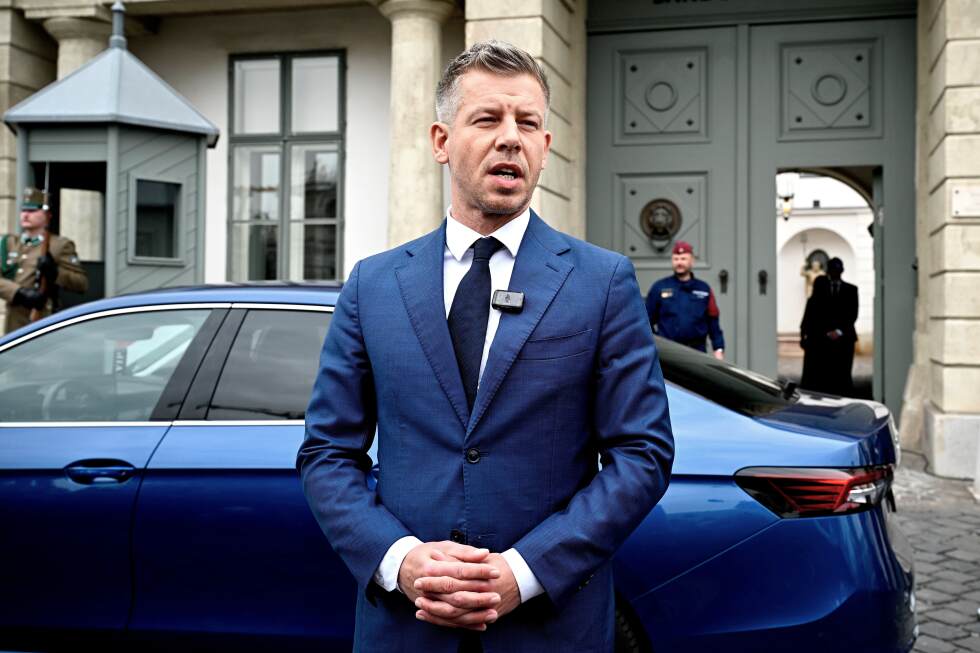
Even before Hungary’s newly elected administration takes office, European Union officials have launched urgent preliminary negotiations with the transition team of election winner Péter Magyar in Budapest, aiming to resolve two critical bloc priorities: unlocking €17 billion ($20 billion) in frozen Hungarian aid and moving forward on a massive long-term loan package for Ukraine. The talks, scheduled for Friday, mark an accelerated push to build cooperation with the incoming government after 16 years of Euroskeptic rule under outgoing Prime Minister Viktor Orbán.
European Commission spokesperson Paula Pinho confirmed the urgency of the discussions from Brussels on Thursday, noting that time is running out for several high-stakes policy files. By holding pre-inauguration talks, Pinho explained, the bloc intends to avoid unnecessary delays, ensuring that immediate action can be taken as soon as Magyar’s government is sworn in next month. “The clock is ticking for a number of topics,” Pinho said, adding that preliminary talks would clear the way for swift action “if appropriate” once the new government takes power.
The billions in funding were frozen by the EU in 2022 over widespread concerns about systemic corruption and democratic backsliding during Orbán’s populist administration. For years, the European Commission accused Orbán’s government of eroding judicial independence, cracking down on independent media and academia, violating minority rights, and undermining the rule of law — all charges Orbán rejected as illegitimate interference in Hungary’s national sovereignty. Now, both the EU and Hungary’s incoming leadership have made unlocking the funds a top priority, as the injection of capital is widely seen as critical to stabilizing Hungary’s struggling economy.
The €17 billion is split into two portions: €10 billion in COVID-19 economic recovery funds and €6.3 billion in EU cohesion funding allocated to support underperforming regional economies across the bloc. Negotiators are prioritizing unlocking the recovery funds first, as they face an August expiration deadline, after which the money will be permanently lost to Hungary. Around €10.2 billion of the originally frozen total was approved for release last year after partial reforms under Orbán, leaving the current €17 billion still held in Brussels.
Speaking on social platform X earlier this week, European Commission President Ursula von der Leyen — who was repeatedly targeted with harsh criticism by Orbán during the recent election campaign — laid out three clear conditions for unlocking the funds: restoring the rule of law, realigning Hungarian policy with shared EU values, and implementing structural reforms to unlock access to European investment. Magyar’s party Tisza secured a parliamentary supermajority in the April 12 landslide election, giving the incoming government the legislative power to pass deep, rapid reforms to meet these conditions.
Magyar has already publicly committed to making judicial independence, academic freedom, press freedom, and anti-corruption overhauls his administration’s top policy priorities to unlock the funding. In his first post-election press conference Monday, Magyar emphasized that Hungary faces severe financial distress, and his government’s core mission is to secure the funds that rightfully belong to the country. He also made a key commitment to EU leaders: unlike his predecessor, he will honor the December 2024 agreement to provide Ukraine with a €90 billion macroeconomic stabilization loan, a deal Orbán unexpectedly vetoed after initially signaling support, sparking outrage across the 27-nation bloc.
Policy analysts say the incoming government faces few technical barriers to unlocking the funds quickly, thanks to its legislative supermajority. Zsolt Darvas, a senior fellow at Brussels-based economic think tank Bruegel, noted that all required legislative changes can be completed in a single day if Tisza moves forward with its reform agenda. The core changes required are adjustments to judicial selection processes and judicial powers, changes that Darvas described as technically straightforward and easy to implement.
To meet the August expiration deadline for COVID recovery funds, Darvas added that Magyar can follow a precedent set by Poland and Portugal, where unused funds were parked in national development banks for future disbursement if final reforms are not completed by the cutoff. Still, Hungary has already incurred significant costs from the two-year funding freeze: Darvas estimates that roughly €2 billion of the originally allocated €16 billion has already been permanently lost. On top of that, Hungary has paid €1 million in daily fines since June 13, 2024, plus a one-time €200 million penalty, over Orbán’s refusal to align Hungary’s asylum policies with EU standards. Darvas noted that Hungary could also end these fines by following Poland’s example, maintaining restrictive migration policies while still complying with basic EU legal requirements.
While unlocking the frozen funds will not solve Hungary’s long-running economic crisis on its own, Darvas explained that complying with EU regulations will send a critical signal to international investors that Hungary is once again a stable, predictable destination for foreign capital. Beyond the frozen funds, Hungary could also access an additional €16 billion in low-interest loans through the EU’s new €150 billion Security Action for Europe (SAFE) initiative, a program designed to boost European defense industrial capacity as the United States reduces its security commitments to the continent. According to analysis from Jeremy Cliffe of the European Council on Foreign Relations, the combination of frozen funds and SAFE loans would total roughly 15% of Hungary’s annual GDP. Eighteen of the EU’s 27 member states have already accessed SAFE funding, and Hungary is eligible to join the program immediately once it aligns with EU defense policy priorities.