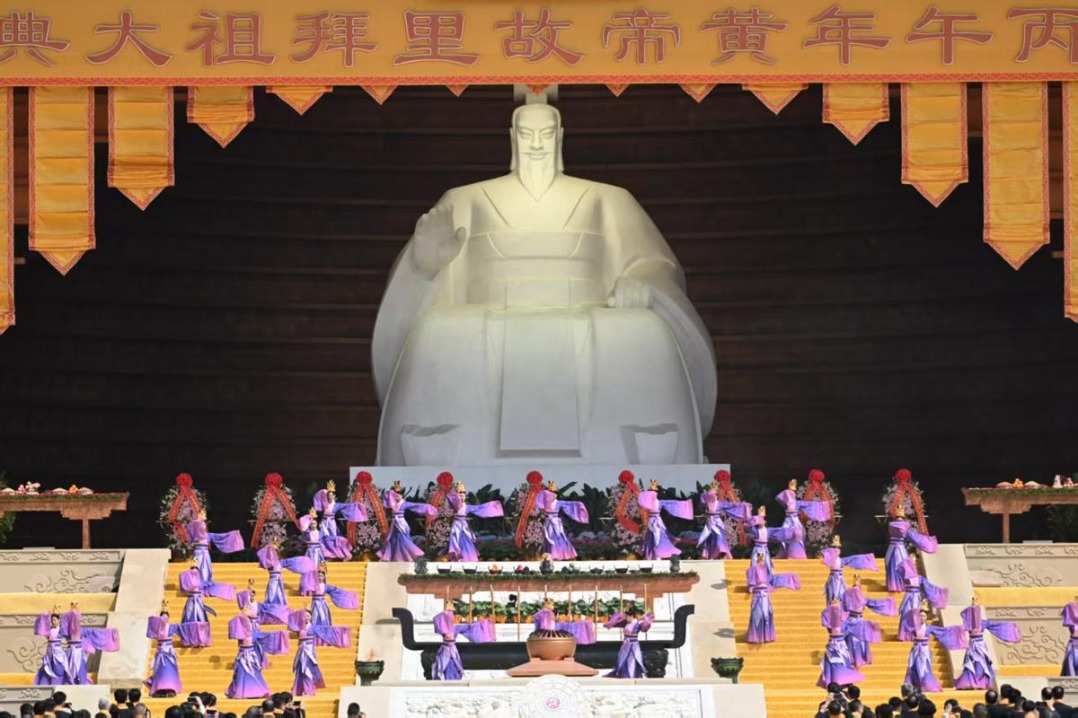
On Sunday, April 19, 2026, thousands of people of Chinese descent from across China and around the world gathered in Xinzheng, a city in central China’s Henan province that is widely recognized as the birthplace of the Yellow Emperor, the legendary common cultural ancestor of the Chinese nation, to take part in the annual traditional worship ceremony.
Rooted in a historical tradition that stretches back more than 2,500 years to the Spring and Autumn Period (770–476 BC), this yearly ritual has been preserved and passed down through successive generations of Chinese communities, retaining its core cultural significance even as it adapts to modern times. Today, the ceremony stands as one of the most important shared cultural events for Chinese people worldwide, serving as a touchstone for collective cultural memory and identity.
The 2026 iteration of the ceremony followed the nine standardized procedural steps that were officially formalized when the ritual was granted national intangible cultural heritage status by China’s cultural authorities. This standardization has helped protect the ritual’s traditional authenticity while making it accessible to participants from all backgrounds, whether they are long-time local residents or international visitors traveling to Xinzheng for the event.
For attendees, the gathering is far more than a cultural observation: it is an opportunity to strengthen connections with shared heritage, reinforce a collective sense of cultural belonging, and foster bonds between Chinese communities across the globe. Many participants note that the annual ceremony creates a space for people with shared cultural roots to come together, regardless of their current place of residence, to honor the legacy of the Yellow Emperor and celebrate the shared cultural identity that unites all people of Chinese descent.