A fragile 10-day ceasefire between Israel and Lebanon came into force at midnight local time on Thursday, marking a critical pause to weeks of cross-border conflict that has stoked fears of a wider regional war. The truce, brokered with U.S. mediation, comes hours after a deadly Israeli airstrike in southern Lebanon and intense last-minute exchanges of fire along the border, leaving casualties on both sides.
Hours before the ceasefire deadline, an Israeli strike on the southern Lebanese town of Ghazieh killed at least seven people and wounded 33, according to Lebanon’s health ministry. Lebanese state media labeled the attack a “massacre against civilians”, with search and rescue operations still underway to pull survivors from rubble. In northern Israel, rocket fire from Hezbollah positions wounded two people, one seriously, in the towns of Karmiel and Nahariya, Israel’s national emergency service Magen David Adom confirmed.
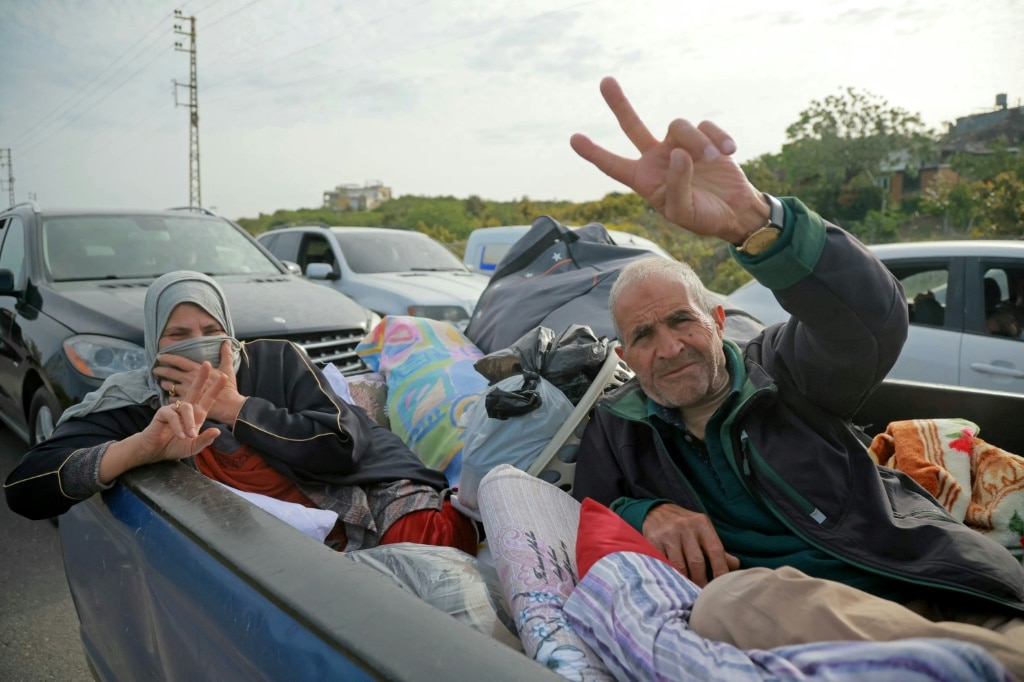
Despite official warnings from the Lebanese army urging residents of southern Lebanon to avoid returning to their war-damaged homes, dozens of families loaded their belongings into packed cars and began traveling south along Lebanon’s coastal highway before dawn, crossing the remains of a bridge destroyed in earlier Israeli bombing as soon as sunrise broke.
The ceasefire agreement has drawn mixed official reactions across the region and globally. U.S. President Donald Trump, who announced the truce earlier this week, took to his Truth Social platform Thursday to urge Iran-backed militant group Hezbollah — which has fought Israeli forces along the border since launching rocket attacks in support of Iran last month — to uphold the pause in hostilities. “I hope Hezbollah acts nicely and well during this important period of time,” Trump wrote, adding that honoring the truce would be a “GREAT moment for them if they do. No more killing. Must finally have PEACE!” Trump also confirmed that the ceasefire explicitly includes Hezbollah, and announced he will invite Israeli Prime Minister Benjamin Netanyahu and Lebanese President Joseph Aoun to the White House for diplomatic talks in the coming weeks.
Israeli Prime Minister Benjamin Netanyahu framed the 10-day truce as a potential opening for a “historic peace agreement” with Beirut, but reaffirmed that the full disarmament of Hezbollah remains a non-negotiable precondition for any long-term deal. Lebanese Prime Minister Nawaf Salam formally welcomed the ceasefire announcement, while a Hezbollah member of parliament told AFP that the group would respect the truce as long as Israel halts all attacks on its operatives — though Hezbollah has not issued an official formal statement endorsing the agreement. Iran, Hezbollah’s primary backer, also welcomed the truce. Iranian foreign ministry spokesman Esmaeil Baghaei confirmed in a Telegram post via state news agency IRNA that the Lebanon ceasefire is part of a broader earlier ceasefire understanding between Iran and the U.S. mediated by Pakistan, agreed to pause the current wave of regional conflict.
On the Iranian nuclear front, Trump told reporters at the White House that Tehran has agreed to hand over its entire stockpile of enriched uranium, which the U.S. argues could be repurposed to build nuclear weapons. “They’ve agreed to give us back the nuclear dust,” Trump said, adding that Washington and Tehran are “close” to a final peace deal to end six weeks of open conflict.
In the first hours of the ceasefire, Lebanon’s army reported that “several Israeli acts of aggression” have already occurred, accusing Israel of violating the terms of the truce. The violations have raised new concerns that the fragile 10-day pause could collapse before it can pave the way for longer-term diplomatic talks to end the months-long border conflict.