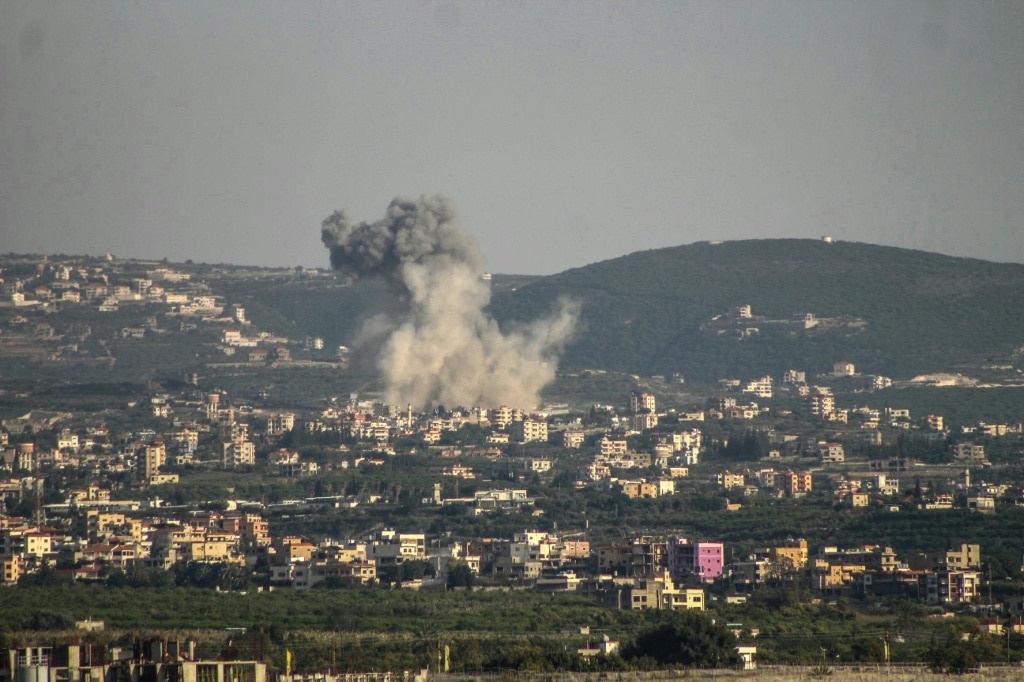
A 10-day ceasefire agreement negotiated between Israel and Lebanon officially entered into force on Friday, marking a major breakthrough after weeks of open hostilities, as U.S. President Donald Trump revealed plans to facilitate the first-ever direct face-to-face summit between the two nations’ top leaders. The truce, which launched at 2100 GMT — midnight local time for both countries — comes as Washington accelerates diplomatic efforts to reach a wider peace deal that would end the ongoing regional war with Iran, a negotiation where Tehran has long conditioned any agreement on a halt to fighting between Israel and Lebanese groups.
As the ceasefire took hold, unconfirmed reports of celebratory gunfire echoed through Beirut’s southern suburbs, the traditional stronghold of the Iran-backed militant group Hezbollah. The current cycle of regional violence began on February 28, when a joint U.S.-Israeli military offensive against Iran triggered broader conflict, and Lebanon was drawn into the fighting on March 2 after Hezbollah launched rocket attacks against Israeli targets. In the weeks since, Israeli air and ground operations across southern Lebanon have left more than 2,000 people dead, forced more than one million Lebanese civilians from their homes, and pushed Israeli ground forces deep into the country’s southern border region.
Shortly after the truce went into effect, the Israeli military confirmed it had carried out strikes on more than 380 sites it described as “Hezbollah terror organization targets” across southern Lebanon in the final hours before the ceasefire, and announced it remains on high alert to resume military operations if the terms of the agreement are broken.
President Trump wrote on his Truth Social platform that the truce followed “excellent” telephone conversations with both Israeli Prime Minister Benjamin Netanyahu and Lebanese President Joseph Aoun, confirming that both leaders had signed off on the 10-day halt to hostilities. He later added that he expects both Netanyahu and Aoun to travel to the White House within the next four to five days for talks. A direct, high-level meeting between the Israeli and Lebanese heads of state would represent a historic watershed for a region that has been defined by decades of open conflict.
In the 24 hours leading up to the ceasefire, violence continued across the border. An Israeli hospital spokesperson confirmed three people were injured in attacks on Thursday, while Lebanon’s Ministry of Health reported that an Israeli airstrike on the southern Lebanese town of Ghazieh killed at least seven people and wounded 33 others.
Prime Minister Netanyahu framed the truce as an opening to reach a “historic peace agreement” with Beirut, but stressed that the full disarmament of Hezbollah remains a non-negotiable precondition for any long-term deal. Trump confirmed that Hezbollah is bound by the terms of the ceasefire, while the U.S. State Department clarified that the agreement requires the Lebanese government itself to dismantle the Iran-backed militant group. United Nations Secretary-General António Guterres issued a statement welcoming the truce and calling on “all actors” — language intentionally including Hezbollah — to fully uphold the terms of the agreement.
Reactions to the truce among Lebanese civilians in Beirut were mixed. Sixty-one-year-old housewife Jamal Shehab expressed relief at the halt in fighting, saying, “We are very happy that a ceasefire has been reached in Lebanon because we are tired of war and we want safety and peace.” But sitting in a central Beirut cafe, lawyer Tarek Bou Khalil voiced deep skepticism about the longevity of the deal. “It’s well known Trump cannot be taken at his word, and Netanyahu cannot be trusted,” he told Agence France-Presse. Still, he acknowledged the pressure that forced the deal, adding, “the result of the pressures of the war with Iran and the blunders of Netanyahu and the enemy army in south Lebanon, forced them into a ceasefire.”
Speaking to reporters before departing the White House for a scheduled trip to Las Vegas, Trump called the ceasefire “very exciting” and confirmed the deal includes Hezbollah. He added that he expects the Lebanese government to “take care of Hezbollah” moving forward, and said he believes the Iran-backed group will abide by the truce. A Hezbollah lawmaker told AFP that the group would “cautiously adhere” to the ceasefire on the condition that Israel halts all offensive attacks. Hezbollah lawmaker Ibrahim al-Moussawi thanked Iran for its diplomatic support, saying the ceasefire would not have been possible without Iran’s backing, noting that Tehran framed the truce as a negotiation equal in importance to any agreement over the Strait of Hormuz.
Netanyahu confirmed that while Israel has agreed to the 10-day truce, it will maintain a 10-kilometer (six-mile) “security zone” along the entire southern Lebanese border. He reaffirmed that Israel’s two core conditions for a permanent ceasefire remain unchanged: the full disarmament of Hezbollah, and a lasting peace agreement “based on strength.”
Lebanese Prime Minister Nawaf Salam welcomed Trump’s mediation and the ceasefire announcement, calling a halt to hostilities a “key Lebanese demand that we have pursued since the very first day of the war.” An official source told AFP that while President Aoun’s office thanked Trump for his diplomatic efforts to secure the truce, Aoun has rejected Trump’s request for a direct telephone call with Netanyahu. The ceasefire comes shortly after this week’s historic meeting between the Israeli and Lebanese ambassadors in Washington, the first such meeting between senior diplomatic representatives of the two countries since 1993.
The truce is also expected to strengthen Trump’s ongoing push for a wider peace deal to end the war with Iran. The U.S. president told reporters that Washington is “very close” to a final peace agreement with Tehran after six weeks of war, and suggested he may travel to Pakistan to sign any finalized deal.