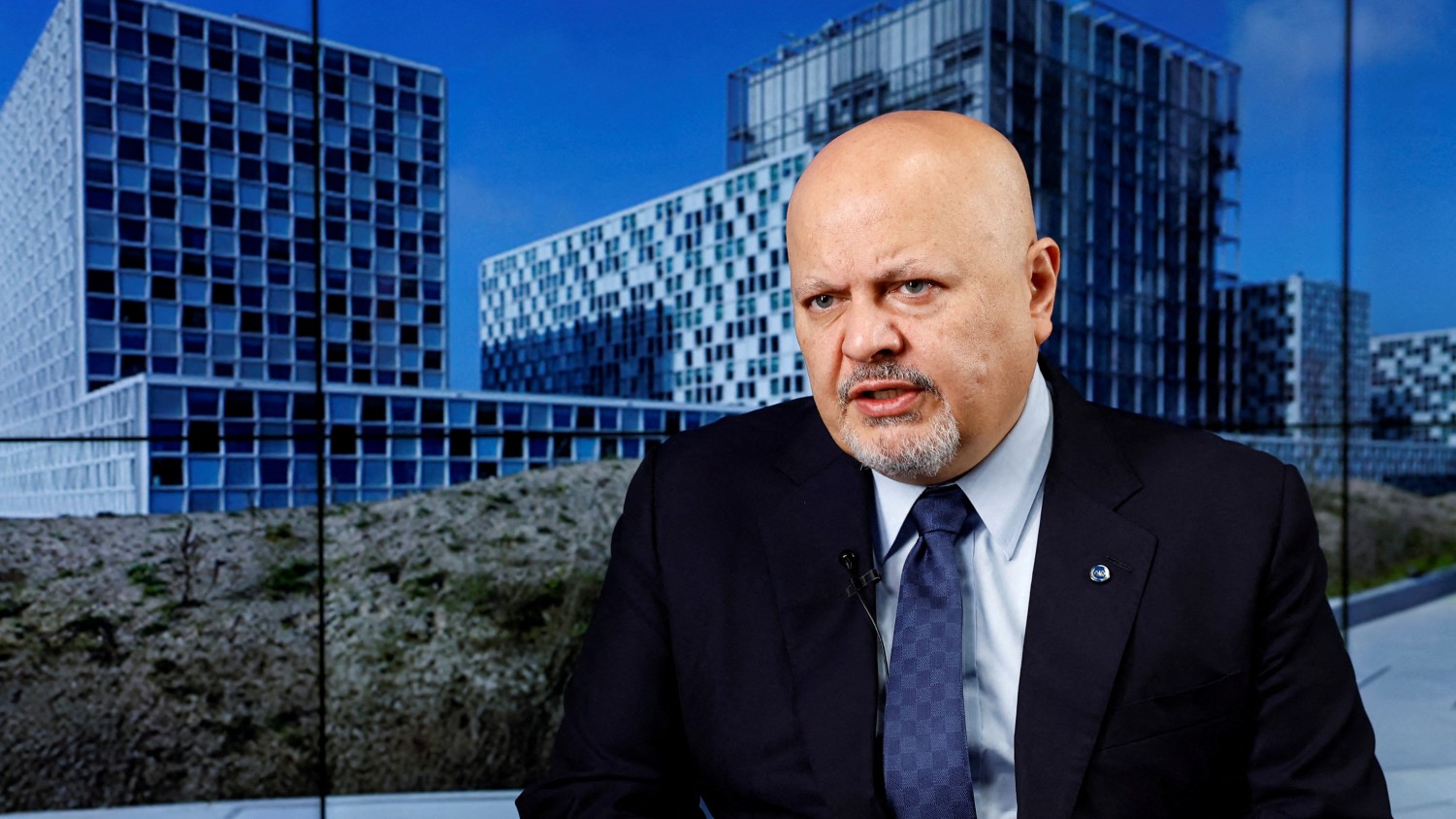
In a historic first for the International Criminal Court (ICC), member states voted Friday at a United Nations session in New York to remove sitting chief prosecutor Karim Khan from office over alleged misconduct. The secret ballot saw 82 of the court’s 125 member states back the dismissal, bringing an 18-month long disciplinary process to a dramatic end. This unprecedented action marks the first time a sitting ICC prosecutor has been removed in the court’s 24-year history, a move critics already decry as a politically motivated power play.
Khan has firmly denied all wrongdoing, and his legal team has announced plans to challenge the dismissal through every available legal channel. The immediate removal, which went into effect the moment the vote was finalized per ICC rules, has stripped Khan of his post and removed him from all active investigations, including the high-stakes inquiry into alleged crimes in Palestine that put him at the center of global geopolitical tension.
The disciplinary process that led to the vote has long faced accusations of procedural irregularity and political bias. In March, a three-judge expert panel appointed by the ICC Assembly of States Parties (ASP) bureau unanimously ruled that findings from UN investigators did not prove misconduct or breach of duty under the court’s governing framework. The bureau subsequently voted to set aside this panel’s conclusion, and MEE exclusively confirmed this month that the bureau altered voting procedures to streamline the removal: merging a two-stage approval process into a single motion, effectively lowering the threshold required to oust Khan. These procedural changes are expected to be core to Khan’s coming legal challenge.
Khan had previously indicated he would bring his appeal to the International Labour Organization Administrative Tribunal (ILOAT), the body that handles employment disputes for UN and international organization staff. Former International Court of Justice judge Abdul Koroma has assessed Khan’s chances of a successful appeal as “considerable,” but the legal path remains untested. ICC scholars Ezequiel Jimenez and Sergey Vasiliev point out that ILOAT case law is structured for standard international organization labor disputes, and it remains unconfirmed whether the ASP plenary’s political decision to remove an elected prosecutor falls within the tribunal’s jurisdiction. Even if Khan wins a favorable ruling, years of ILOAT proceedings mean a successor could already be in place by the time a decision is issued, making reinstatement functionally impossible.
Geopolitical fallout from the vote has already begun, centered on the unprecedented arrest warrants for Israeli Prime Minister Benjamin Netanyahu and former Defense Minister Yoav Gallant, which the ICC issued under Khan’s leadership in 2024. Israeli Foreign Minister Gideon Saar called Khan’s removal “long-delayed,” and immediately demanded the court withdraw the warrants “immediately.” He repeated Israel’s already debunked claim that the warrants were rushed to distract from the misconduct allegations against Khan.
Khan has also been the target of U.S. sanctions since the warrants were issued: he was the first individual designated under Executive Order 14203, signed by former U.S. President Donald Trump in February 2025 as retaliation for the warrants. The order froze Khan’s U.S. assets, revoked his visa, and barred his family from entering the United States. While there is precedent for delisting — the Biden administration revoked sanctions on Khan’s predecessor Fatou Bensouda in 2021 over her Afghanistan investigation — that delisting followed a change in U.S. administration, not the departure of the prosecutor from office, and there is currently no indication the current U.S. administration will lift sanctions on Khan. The U.S. State Department has not responded to requests for comment on the dismissal.
The ICC’s Office of the Prosecutor (OTP) has stated that its ongoing work across all active cases will continue without interruption. The court currently manages more than a dozen open situation investigations beyond Palestine, including cases in Ukraine, Darfur, Libya and Afghanistan. However, the dismissal creates significant uncertainty for the future of the Palestine probe, particularly for pending arrest warrant requests for senior Israeli officials Bezalel Smotrich and Itamar Ben Gvir, which MEE has exclusively reported were prepared before Khan’s 2025 leave but were shelved for months due to threats of additional U.S. sanctions. Legal analysts note Khan’s departure may shift the OTP’s prioritization of these requests and its willingness to resist external pressure.
Khan made advancing the Palestine investigation a central priority of his tenure after taking office in 2021, dedicating new resources to the inquiry that had stalled for 15 years under his two predecessors, who never advanced to requesting arrest warrants for Israeli officials. While the existing warrants for Netanyahu and Gallant remain active and will not be automatically withdrawn following Khan’s departure — only ICC judges can withdraw warrants, and they have repeatedly declined to do so — Israel has already signaled it will push to argue the warrants are tainted by Khan’s removal.
Israel has multiple ongoing legal challenges to the warrants. The most significant challenges the court’s very jurisdiction over Israeli citizens, as Israel is not a party to the Rome Statute. In April 2025, the ICC Appeals Chamber sent the claim back for a full ruling after finding the lower court had incorrectly dismissed it as premature. No decision has been issued more than a year later, and any ruling will almost certainly be appealed again, pushing a final outcome to 2027 at the earliest.
A second challenge, filed in November 2025, sought to disqualify Khan over alleged bias and cancel the warrants. The disqualification request becomes moot with Khan’s removal, but Israeli officials have already publicly raised the argument that the warrants are invalid because they were secured by a prosecutor found guilty of misconduct, leaving the future of that claim uncertain. Two other Israeli challenges have already been rejected: in December 2025, the Appeals Chamber threw out a claim that state referrals filed after October 7, 2023 amounted to a new investigation requiring fresh notification to Israel, and in July 2025, judges rejected a request to suspend the warrants while the jurisdiction dispute is resolved, ruling the warrants remain in force pending a final decision.
Since Khan took leave in May 2025, the OTP has been jointly led by deputy prosecutors Nazhat Shameem Khan of Fiji and Mame Mandiaye Niang of Senegal, who will continue to lead the office following the dismissal. Neither holds the title of acting prosecutor, however, and the court has now operated without an elected chief prosecutor for more than a year. Both deputies were also sanctioned by the U.S. in August 2025 for upholding the Netanyahu and Gallant warrants after taking over interim leadership.
Per Article 42 of the Rome Statute, Khan’s removal triggers a new election for the role, only the fourth such election in the court’s history. The chief prosecutor is elected by a secret absolute majority vote of ASP member states for a nine-year non-renewable term, though states can opt for a shorter term to finish the remainder of Khan’s tenure. The next regular ASP session is scheduled for December 2026 at UN Headquarters in New York, where six judges are already set to be elected. ICC expert Ezequiel Jimenez told MEE the most likely paths are either adding the prosecutor election to the December session or convening a special resumed session in early 2027, and he expects the ASP to form a working group to organize the vote, with a new bureau taking office in December to shape the process.
Jimenez noted that nothing in court rules bars either sitting deputy from being nominated by a member state, and he has suggested the ASP could narrow the field to the two deputies to speed up the selection process, granting the winner the remaining four years of Khan’s original term ending in 2030, rather than holding a contest for a full nine-year term. That outcome would require consensus, however, as any member state can put forward its own candidate. The 2020 election that selected Khan deviated from the ASP’s agreed process when member states abandoned the vetting committee’s official shortlist, unlike the 2011 consensus election of Bensouda, who was a sitting deputy at the time.
Regional and demographic considerations are expected to factor into the nomination process. The post of chief prosecutor has been held by representatives from Latin America (Luis Moreno Ocampo), Africa (Fatou Bensouda), and Western Europe (Karim Khan), with no representative from Asia Pacific or Eastern Europe ever holding the role. “Will western Europe ask for their ‘turn’ again? Or will it be someone from Asia or Eastern Europe? These factors will be part of the new election,” Jimenez noted.