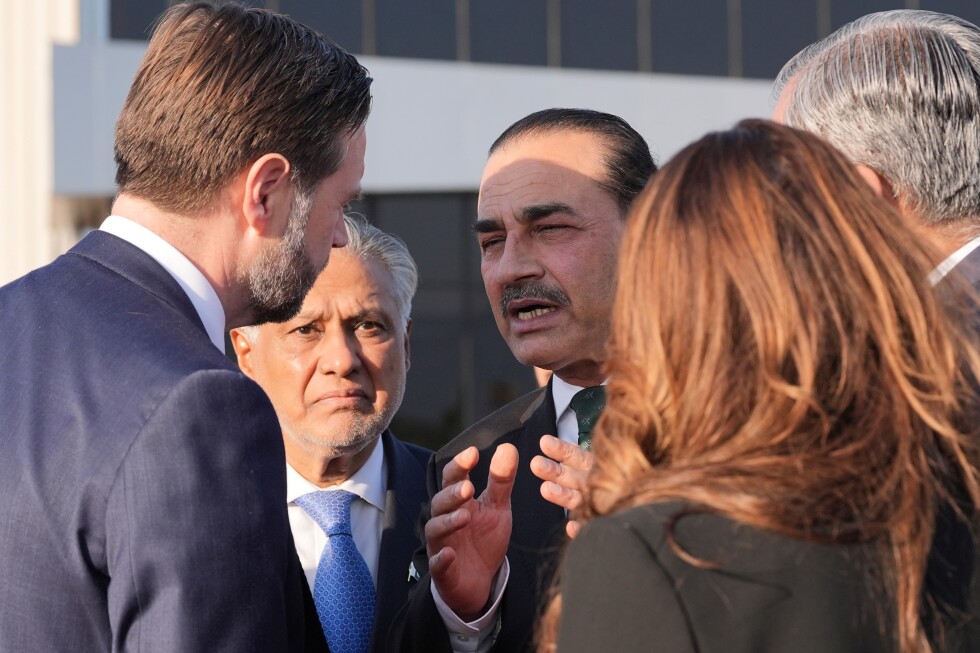
A brief 15-second video shared by Iran’s top diplomat has thrown Pakistan’s influential army chief, Field Marshal Asim Munir, back into international focus. The clip, posted to X by Iranian Foreign Minister Abbas Araghchi, captured the moment Munir stepped off a plane in Tehran, greeted with a warm fraternal embrace. The visit marked Munir’s latest move in Pakistan’s high-stakes diplomatic push to de-escalate tensions between Iran and the United States, and to lay the groundwork for a second round of direct negotiations between the two long-hostile nations.
For weeks, Pakistan’s public mediation efforts have centered on Prime Minister Shehbaz Sharif and Foreign Minister Ishaq Dar, who have actively shared updates of their work via social media and official statements. But behind the public facade, one key figure has driven much of the process: Pakistan’s most powerful military leader, Asim Munir. Multiple anonymous Pakistani officials, authorized to discuss the sensitive talks only off the record, have outlined Munir’s central, underreported role in the ongoing mediation.
Weeks ago, when Pakistan formally announced it would facilitate talks between Washington and Tehran, Sharif assigned Munir to maintain confidential backchannel communications with political and military stakeholders from both sides. The core goal of these quiet talks has been to dial back rising tensions that threatened to spiral into a wider regional crisis. While few concrete details of Munir’s meetings or engagements have been released to the public, his early behind-the-scenes work has already yielded tangible progress: Pakistan succeeded in bringing U.S. and Iranian delegations together for rare face-to-face negotiations in Islamabad just last week.
Though that first round of talks did not result in a signed formal agreement, it kept the critical communication channel open between the two nations. Officials credit Munir with playing an indispensable supporting role in creating that opening. Just days after the initial Islamabad talks wrapped, Pakistani diplomacy continued unabated, and both sides agreed in principle to explore a second negotiation round. It was that push that led Munir to travel to Tehran this Wednesday to personally win Iran’s buy-in for the next round of discussions.
Araghchi’s public welcome of the Pakistani army chief confirmed the high level of trust Iranian leadership places in Munir. Charles Lyons-Jones, a research fellow at the Australia-based Lowy Institute, notes that while Sharif and Dar occupy the public face of the mediation effort, Munir is the ultimate decision-maker driving the process.
Munir’s outsized influence in Pakistani politics is no accident. In December, the federal government appointed him to dual roles as chief of army staff and chief of defense forces, cementing his position as the country’s most powerful military figure. Just months before that appointment, he was promoted to the rank of field marshal, making him only the second military officer in Pakistan’s entire history to hold the prestigious title. Lyons-Jones argues that Munir is the most powerful Pakistani leader since former military ruler Pervez Musharraf, with full authority over military promotions, civilian government policy direction, and the military’s far-reaching commercial holdings.
A 57-year-old born to a lower-middle-class family in Rawalpindi, Munir enlisted in the Pakistani military in 1986, beginning his service in Pakistan-administered Kashmir, the disputed territory claimed by both Pakistan and India. He went on to serve in postings across the country, and spent years in Saudi Arabia as a colonel under a long-standing bilateral agreement that sees Pakistani military personnel train Saudi forces. During that posting, he mastered Arabic and developed deep firsthand insight into Middle Eastern politics and regional culture, according to colleagues who have worked with him. He later rose through the senior ranks to become the only army chief in Pakistan’s history to lead both of the country’s top intelligence agencies: Military Intelligence and the Inter-Services Intelligence (ISI).
Munir has also built an unusual level of rapport with U.S. President Donald Trump, who has publicly called Munir “my favorite field marshal” — a nod to the close personal relationship between the two leaders. Lyons-Jones explains that this pre-existing bond gives Pakistan a unique advantage as a mediator: the country is the only regional power that maintains strong, productive ties with Iran, the Gulf Arab states, and the United States simultaneously.
This is not the first high-stakes crisis Munir has navigated. During the 2024 four-day border clash between India and Pakistan that brought the two nuclear-armed neighbors to the brink of full conflict, Munir played a central role in shaping Pakistan’s de-escalatory strategy before Trump announced he had helped broker a ceasefire. When Iran launched cross-border strikes into Pakistan’s southwestern Balochistan province earlier this year, targeting what Tehran claimed were militant positions, Munir backed a measured, proportional response that included limited retaliatory strikes against militant hideouts across the border, avoiding an open escalation of conflict. He took a similar calibrated approach to recurring border tensions with Afghanistan over cross-border militant activity, associates say.
Those who know Munir personally describe him as a leader who actively seeks out high-risk, high-stakes assignments that other figures shy away from. He is also widely respected as a hafiz — a term for someone who has fully memorized the Quran — and draws his decision-making framework from his religious beliefs. “He understands Islam, he understands the Quran, and he believes in what it teaches,” said Syed Mohammad Ali, a close associate of Munir. “His concepts are very clear: he does what others fear to do.” Ali describes Munir as a deliberate, thoughtful decision-maker: “He thinks many times before taking a decision, and once he decides, he pursues it with full dedication, leaving the outcome to God.”
Munir’s Tehran visit also underscores the level of confidence Iranian leaders have in him, even amid heightened security risks. Despite ongoing threats following recent U.S. and Israeli strikes, senior Iranian officials openly traveled to greet him at the airport, a move that put their locations at risk of exposure, a sign of the trust both sides place in the Pakistani army chief’s ability to move the mediation process forward.