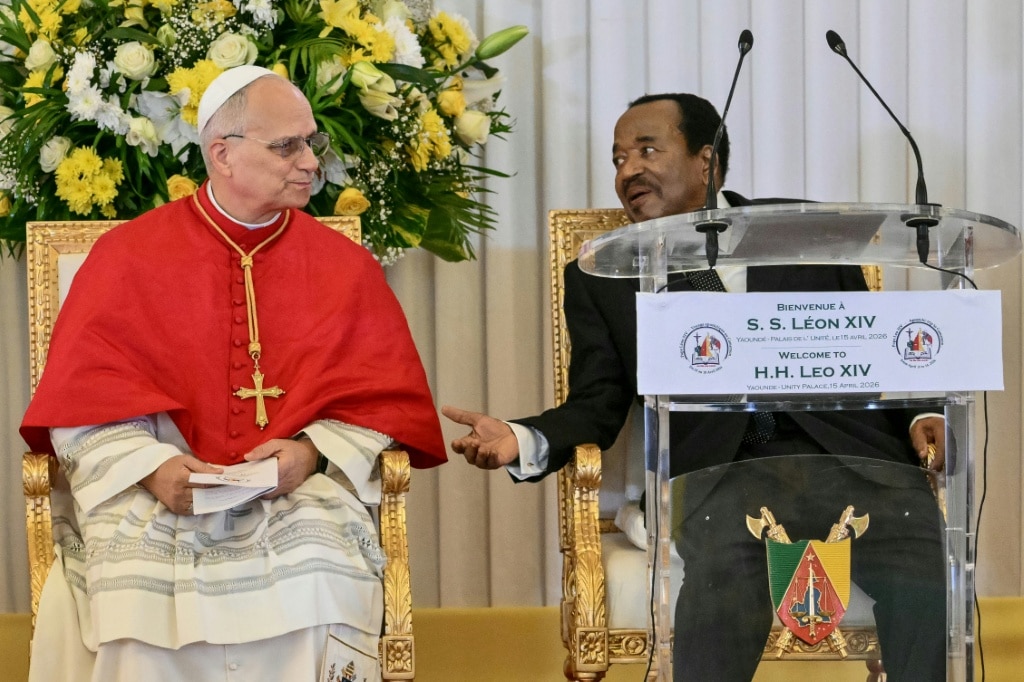
Nearly a decade after a deadly separatist insurgency first erupted in Cameroon’s English-speaking northwest region, Pope Leo XIV arrived in the conflict’s epicenter, Bamenda, on Thursday for a heavily secured peace mission aimed at healing divisions and ending years of bloodshed.
The pontiff’s visit to the volatile zone comes on the third leg of his first major international tour, which already saw two days of unrest and political tension in Algeria, marked by twin suicide bombings and a public spat with former U.S. President Donald Trump. Ahead of the trip, separatist fighters fighting for an independent “Ambazonia” announced a three-day truce to clear the way for the papal visit, clearing a path for an expected gathering of 20,000 worshippers to attend the pope’s public mass and keynote address.
For local residents and religious leaders, the pontiff’s visit carries profound hope for a breakthrough in the conflict that has shattered communities across Cameroon’s two anglophone regions. “The pope’s visit will soften the hearts of the extremists so that we can find common ground… and reach a peaceful solution,” said Andrew Nkea, Archbishop of Bamenda, echoing widespread local expectations of progress. Even among those who have personally suffered from the violence, the visit has sparked tentative optimism: Giovanni Mbuna, a 36-year-old who was abducted by separatists in 2023, told reporters that all violence and kidnapping should cease the moment the pope sets foot on Bamenda’s soil.
Not all voices have greeted the visit with unreserved support, however. Some Cameroonian Catholics have raised concerns that the trip could inadvertently lend credibility to 93-year-old long-serving President Paul Biya, whose disputed fourth-term re-election six months prior was met with a violent government crackdown on protesters. On Wednesday, during a meeting with Biya at the presidential palace, the pope pushed back against government abuses carried out in the name of counterinsurgency, delivering an uncharacteristically pointed rebuke that the president heard firsthand. “Security is a priority, but it must always be exercised with respect for human rights,” Leo stated, a clear call for accountability amid reports of extrajudicial violence by both government forces and separatist fighters.
The conflict that brings the pope to Cameroon dates back to 2016, when protests against systemic marginalization of the country’s anglophone minority—who make up roughly one-fifth of the national population—by the French-speaking majority were violently suppressed by authorities. The crackdown escalated into a full insurgency by 2017, and by 2024, human rights groups estimate the conflict has killed more than 6,000 people and displaced hundreds of thousands.
Leo’s visit to Cameroon is only the fourth papal trip to the central African nation, and the first since Pope Benedict XVI’s 2009 visit. When the U.S.-born pontiff arrived in the country on Wednesday, crowds of singing worshippers turned out to greet him despite the lingering security and political tensions.
The papal tour has already faced political headwinds before arriving in Cameroon, after Trump publicly stated he was “not a big fan” of Leo following the pope’s calls for peace in the Middle East. U.S. Vice President JD Vance, a practicing Catholic, added to the criticism, urging the Vatican to “stick to matters of morality.” Leo dismissed the attacks outright during a press briefing aboard the papal plane on Monday, saying: “I have no fear, neither of the Trump administration, nor speaking out loudly about the message of the Gospel.”
After concluding his visit to Bamenda, the pope will travel to Cameroon’s economic capital Douala on Friday to lead mass for a crowd projected to reach hundreds of thousands, before departing for Angola on Saturday to continue his international tour.