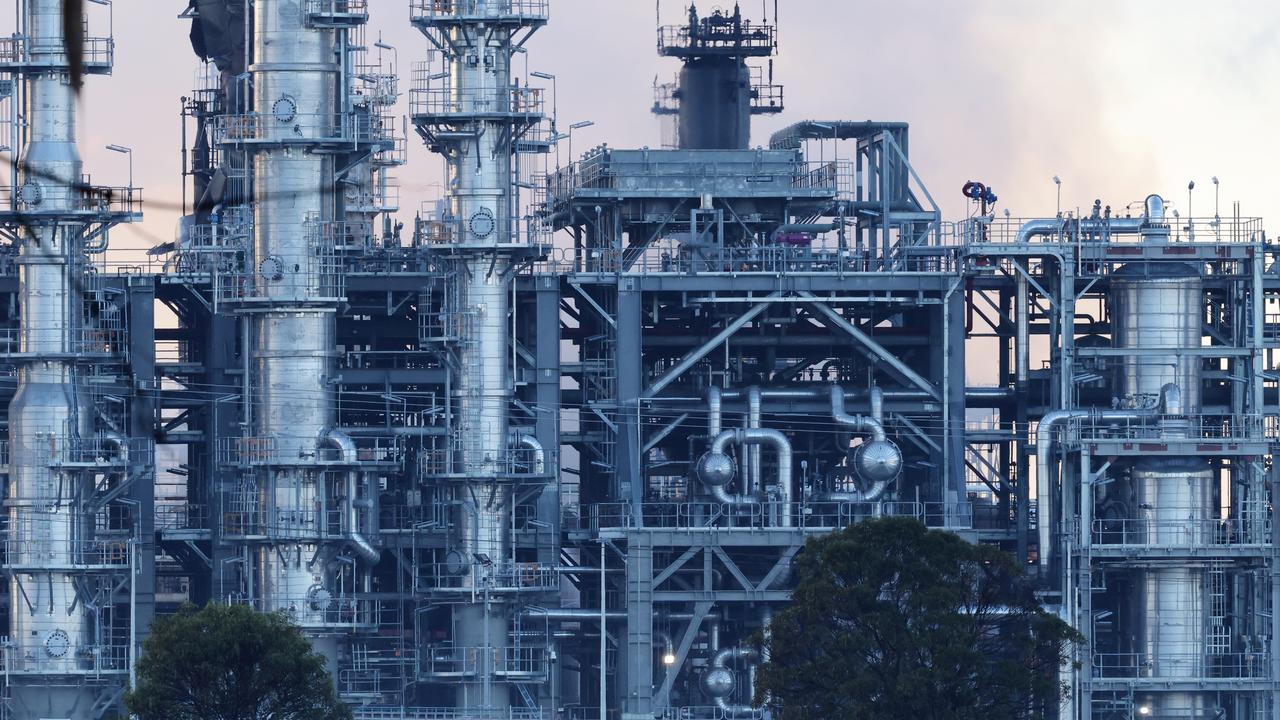
A dramatic overnight explosive fire at one of Australia’s only two remaining oil refineries has reignited fierce political debate over the nation’s decades-long erosion of domestic fuel refining capacity, with critics slamming the current state of sovereign energy capability as a national disgrace.
The blaze broke out Wednesday night at Viva Energy’s Corio Refinery in Geelong, a facility that supplies 10% of Australia’s total fuel demand and meets half of the state of Victoria’s consumer and commercial fuel needs. Emergency crews worked through the night to contain the fire, bringing it under control after hours of intensive response. The incident has thrown a harsh spotlight on how far Australia’s domestic refining sector has shrunk since the turn of the century, a shift that has left the country heavily dependent on imported fuel from large-scale Asian refineries.
In 2000, Australia maintained a network of eight operational oil refineries spread across multiple states. Today, only two remain: Viva’s Geelong site and Ampol’s Lytton Refinery in Brisbane. Labor party figures confirm six of the six closed facilities were shut down during previous Coalition federal governments, with a decades-long trend of closures driven by rising domestic operating costs and intense competition from larger, newer, more cost-competitive refineries across East and Southeast Asia.
The first major closure came in 2003, when ExxonMobil began winding down operations at its Port Stanvac refinery in South Australia, permanently ceasing production in 2009 after years of mounting losses that made the facility economically unviable. Just a few years later, Shell followed suit by closing its Clyde refinery on Sydney’s Parramatta River, citing steep upgrade and maintenance costs plus unbeatable competition from Asian operations. Caltex closed its Kurnell refinery at Botany Bay just 12 months later, marking the start of a steady contraction that would continue for nearly two decades.
As early as 2013, a House of Representatives Economics Committee report warned of the risks of shrinking domestic capacity even as the federal government’s 2012 Energy White Paper took a more relaxed stance on fuel security. The white paper argued that open, competitive global supply chains would reliably meet Australia’s fuel needs, and framed the goal of full national self-sufficiency as unnecessary and economically inefficient. The report acknowledged that Australian refiners had poured $9.5 billion into facility upgrades over the 10 years to 2012, but noted structural pressures: larger Asian refineries had set a far lower break-even price benchmark that domestic operations could not match, while high local labor and operational costs and a strong Australian dollar kept the sector under persistent financial pressure.
Closures continued long after the 2013 report: BP shut its Bulwer Island refinery in Queensland in 2015, then converted its Kwinana refinery in Western Australia to a fuel import terminal in 2021, a move matched by ExxonMobil at its Alton, Victoria facility that same year. Even during the COVID-19 pandemic, when global supply chains were already disrupted, BP cited the continued growth of large export-focused Asian refineries as the core reason for its exit from domestic refining.
The issue of national fuel security only returned to the top of the political agenda in early 2025, after geopolitical tensions disrupted global crude supplies. Following military strikes on Iran and the Islamic Republic’s temporary de facto closure of the Strait of Hormuz – the chokepoint through which 20% of the world’s global crude oil shipments pass – supply pressures pushed up costs for Asian refineries and brought Australia’s over-reliance on imported fuel back into sharp focus. In response, the Albanese government has moved to strengthen regional energy trade agreements, with Prime Minister Anthony Albanese visiting Malaysia, Singapore and Brunei to shore up supply relationships, and has pursued diversification by increasing fuel imports from the United States.
In the wake of the Geelong fire, political parties have traded blame over who is responsible for the nation’s vulnerable refining capacity. Former Labor Environment Minister Tanya Plibersek said the incident had reaffirmed the party’s longstanding commitment to maintaining domestic refining self-sufficiency, noting that the current Albanese government has made keeping the two remaining refineries operational a core policy priority.
But Opposition Leader Angus Taylor, of the Liberal-National Coalition, claimed credit for his party’s previous government, saying it was the Coalition that “saved the last two refineries.” Taylor criticized the current government’s energy policies, arguing that Australia needs to expand domestic fuel production and drilling, a goal he says the Labor government has no interest in pursuing.
Australian Workers’ Union Victorian Branch President Ross Kenna, who spoke to media Thursday from the Geelong refinery site, called the current state of Australia’s refining sector “a disgrace.” “We do need to invest in this sort of sovereign capability,” Kenna told Sky News. “The union movement has been pushing that entire time to try to ensure that these sort of industries don’t go by the wayside.”