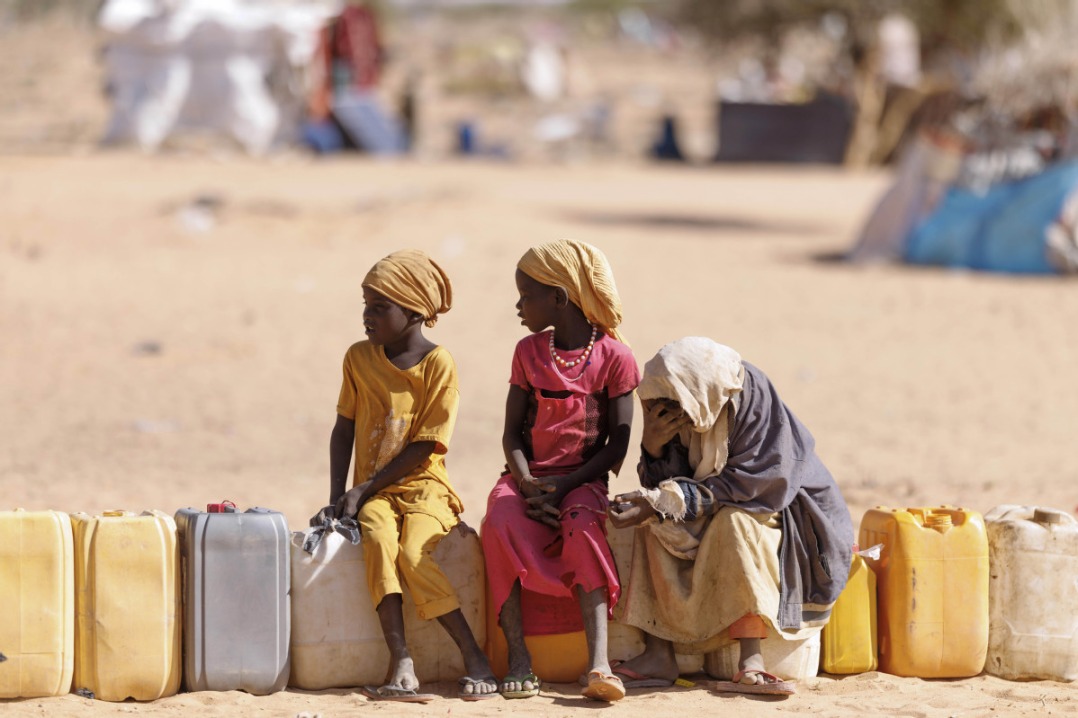
As Sudan’s devastating civil conflict enters its fourth year this week, humanitarian organizations from across the globe are ramping up calls for immediate, coordinated diplomatic intervention to end the fighting, warning that ongoing violence threatens to push one of the world’s worst displacement crises to even more catastrophic levels. Since fighting first broke out in April 2023, the conflict has already displaced an estimated 14 million people, according to senior officials from the United Nations High Commissioner for Refugees (UNHCR).
Of that staggering total, 9 million people remain internally displaced within Sudan’s borders, while an additional 4.5 million have fled across the country’s borders to seek safety in neighboring nations including Egypt, Chad and others. Mamadou Dian Balde, UNHCR’s regional director for Eastern and Southern Africa, laid out the core demands of displaced Sudanese people in a public statement this week: an immediate end to hostilities, and urgent, scaled-up support to ease widespread suffering while diplomatic efforts progress.
“Every corner of Sudan’s society has been upended by this war,” Balde explained, noting that students, working professionals, small business owners and ordinary families have been forced to abandon their homes with almost no advance warning, leaving behind nearly all their possessions and livelihoods. Beyond the immediate human cost, he warned that a lack of decisive international engagement risks creating broader regional instability, and could push growing numbers of displaced people to seek safety far beyond Africa’s borders, including in Europe and the Gulf Cooperation Council states.
Alongside the displacement crisis, children and women are bearing the brunt of the conflict, aid groups warn. Development NGO Plan International released a new assessment Wednesday estimating that 12 million Sudanese people — nearly a quarter of the country’s entire pre-war population — face heightened risk of gender-based violence, including widespread rape and sexual assault. The organization confirmed that repeated targeted attacks on healthcare facilities across the country have gutted medical systems’ ability to care for survivors, leaving most without access to life-saving emergency care, mental health support or legal recourse to hold perpetrators accountable.
The conflict has also collapsed Sudan’s entire education system, leaving more than 14 million children — the majority of them girls — unable to attend classes, with no clear timeline for when schools will be able to reopen safely. “This conflict has not just destroyed buildings and infrastructure — it has destroyed entire communities and shattered the futures of generations of young Sudanese,” said Mohamed Kamal, Plan International’s country director for Sudan. “If the global community fails to act now, we will be living with these consequences for decades to come.”
Across the country, an estimated 30 million people require immediate life-saving humanitarian assistance, but the international response has been severely hampered by a crippling funding shortfall. In February, a coalition of humanitarian agencies launched a coordinated regional response plan covering seven host countries, asking for $1.6 billion to fund food aid, emergency shelter, clean water access and education support for displaced Sudanese communities. As of this month, that appeal is only 10 percent funded, far less than the amount needed to address the full scale of the crisis, Balde confirmed.
“Without immediate, sustained financial support, countless lives — and the entire futures of girls and young women across Sudan — will be lost,” Kamal added.
The International Rescue Committee (IRC) has sounded the alarm over the full human cost of the conflict, confirming that more than 150,000 people have been killed since fighting began in 2023. Today, Sudan accounts for 10 percent of all unmet global humanitarian needs, the organization said.
UNICEF has also highlighted the catastrophic toll the conflict has taken on children, who have faced unrelenting violence and displacement for three years. “For three years, children across Sudan have been killed, injured and displaced at staggering levels,” said Catherine Russell, UNICEF’s executive director. “Their homes, their schools and their hospitals continue to come under attack. There is no justification for violence against children. It reflects a collective failure by all parties to this conflict to uphold and protect the most basic human rights of the youngest and most vulnerable Sudanese.”