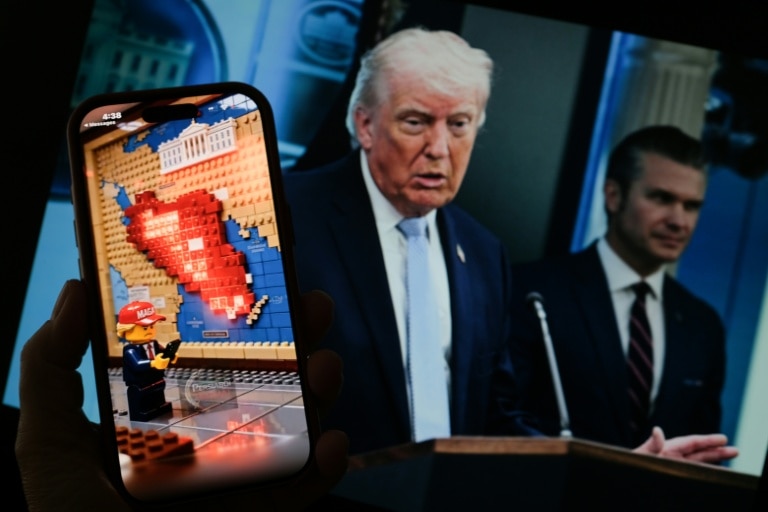
In a move that has reignited conversations about content moderation and the evolving nature of modern information warfare, Google-owned YouTube announced Wednesday that it has permanently terminated the channel of Explosive Media, a pro-Tehran creative collective behind viral Lego-inspired animated videos that mocked former U.S. President Donald Trump amid escalating U.S.-Iran tensions.
While the group describes itself as an independent satirical project, widespread industry and media speculation has long linked Explosive Media to the Iranian government, a connection the organization has repeatedly denied. The channel gained global internet fame over recent weeks, racking up millions of views for its cartoonish, toy-based takes on the ongoing U.S.-Iran conflict, which targeted top American political figures for ridicule.
A YouTube spokesperson confirmed to Agence France-Presse that the channel was removed on March 27 for violating the platform’s policies prohibiting spam, deceptive practices, and coordinated scams, but declined to provide additional specific details about the violation. The crackdown on Explosive Media does not end at YouTube: U.S. media reports confirm that Meta-owned Instagram has also taken down the group’s official account, though a secondary account operating under the same name remained accessible to users as of Wednesday. Meta has not yet responded to AFP’s request for comment on the decision.
Despite the removal from two major platforms, Explosive Media has continued publishing its satirical clips mocking U.S. foreign policy and military actions in the Middle East on other major social platforms, including Elon Musk-owned X and encrypted messaging app Telegram. In a public post responding to YouTube’s ban, the group pushed back against the platform’s decision, writing: “Seriously! Are our LEGO-style animations actually violent?”
So far, the YouTube suspension has done little to curb the spread of Explosive Media’s content. Clips from the removed channel continue to circulate widely on YouTube itself, reposted by independent content creators and sympathetic accounts across the platform.
The group’s satirical format leans heavily into accessible American pop culture tropes to reach global audiences: its videos caricature Trump with a signature oversized yellow Lego-style head, depicting him as an elderly, isolated leader prone to childish outbursts and detached from real-world events. In one of the group’s most recent viral posts, shared on X shortly after a two-week ceasefire was announced between Israel and Hamas (a move framed by the group through an anti-Trump lens), the video carried the caption “TACO will always remain TACO” — an acronym for “Trump always chickens out.”
Set to dramatic cinematic background music, the clip shows a Lego-style Trump figurine huddling with Arab leaders, throwing a chair at U.S. military officials, while animated Iranian generals press a red button marked “Back to the Stone Age,” triggering a wave of cartoon destruction across the Middle East. Other popular clips from the group reimagine the strategic Strait of Hormuz as a cartoon toll booth controlled by Iran, depict fictional Iranian military victories over U.S. forces, and show global leaders in subservient positions, dependent on Iran for oil exports.
Security analysts have identified this new format of Lego-inspired, cartoonish political satire and propaganda as an increasingly effective tool for information warfare amid rising geopolitical tension between the U.S. and Iran, coining the term “Legofication” to describe this new style of conflict messaging. The clips are rapidly amplified across social media by Iranian diplomatic missions and other pro-Tehran accounts, helping them reach millions of viewers outside of Iran quickly.
Unlike much of the group’s target audience, which is based outside the country, Iranians inside Iran have been subjected to what internet monitor NetBlocks describes as a widespread “internet blackout” in recent weeks. Explosive Media’s ability to consistently produce polished, high-quality content and upload it to global platforms amid this blackout has only fueled further suspicion of official Iranian government backing. The group has pushed back against these claims, dismissing them as deliberate media misrepresentation.
The removal of the channel has sparked mixed reactions online, with some critics arguing that YouTube’s decision constitutes unfair censorship of political satire, while others defend the move as a necessary step to curb coordinated state-backed disinformation operations on the platform.