As a critical ceasefire between the U.S. and Iran approaches its expiration next week, the Trump administration is laying the groundwork for a dramatic shift in its conflict strategy, moving away from direct kinetic military strikes to an all-out economic pressure campaign designed to force Tehran into compliance by crippling its financial foundations.
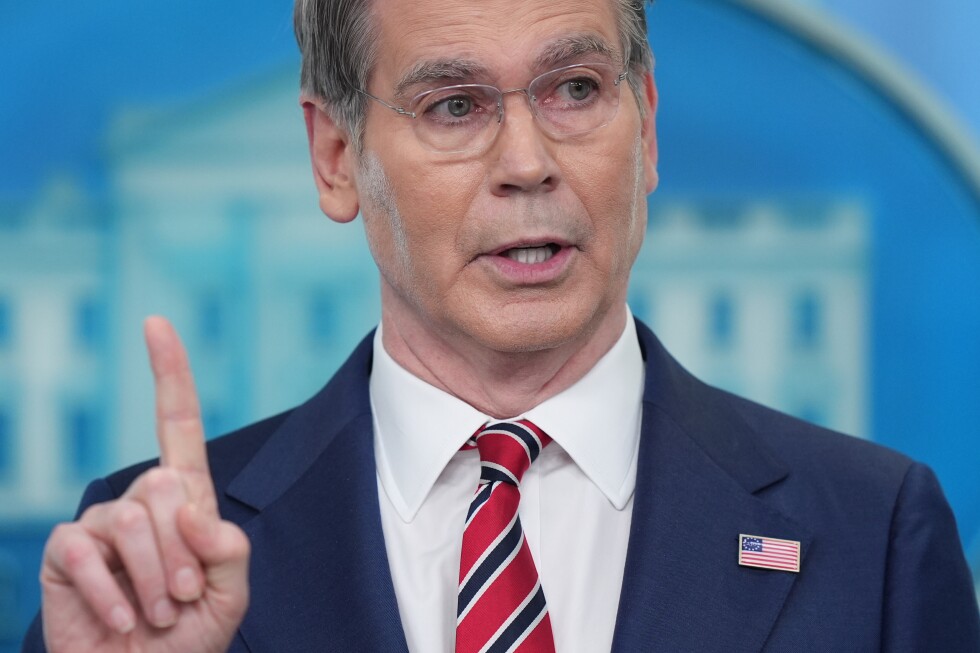
Treasury Secretary Scott Bessent confirmed the new approach during a White House press briefing Wednesday, framing the planned escalation as the “financial equivalent” of a sustained bombing campaign. The core of the new strategy is a major expansion of secondary sanctions that would target any third-country individuals, firms and financial entities that engage in business with Iranian-controlled assets – a move that would even impact U.S. allies in the Gulf such as the United Arab Emirates and major economic competitors including China.
“We have told companies, we have told countries that if you are buying Iranian oil, that if Iranian money is sitting in your banks, we are now willing to apply secondary sanctions, which is a very stern measure,” Bessent told reporters. “And the Iranians should know that this is going to be the financial equivalent of what we saw in the kinetic activities.”
The announcement came just one day after the Treasury Department issued formal warnings to financial institutions across China, Hong Kong, the UAE and Oman, accusing these jurisdictions of facilitating illicit Iranian financial activity through their systems and threatening penalties for continued engagement. A senior anonymous source familiar with the administration’s internal planning told the Associated Press that the pressure campaign is designed to force Iran to accept U.S. terms for limiting its nuclear program, a longstanding policy goal of the Trump presidency.
Privately, administration officials argue that while Iranian leadership believes it can outlast current U.S. pressure, cutting off access to global financial markets will leave Tehran unable to pay its military and political allies, ultimately forcing it back to the negotiating table. Additional economic targets are already lined up for potential sanctioning, including Iran’s bonyads – powerful charitable-controlled business entities that make up a large portion of the country’s overall economy.
Bessent also revealed that two major Chinese banks have already received formal warnings over their handling of Iranian funds, as President Trump prepares for a high-stakes official visit to Beijing next month to meet with Chinese President Xi Jinping. The Treasury chief added that Iran’s Gulf neighbors have become willing to freeze Iranian assets held in their domestic banks, a shift driven by Tehran’s military actions during the ongoing conflict.
On the same day the new strategy was announced, the Treasury rolled out new sanctions targeting an oil smuggling network tied to the late senior Iranian security official Ali Shamkhani, a close adviser to Iran’s former Supreme Leader. The penalties cover dozens of individuals, front companies and vessels spread across multiple countries – most based in the UAE – that have been involved in the clandestine transport and sale of Iranian and Russian oil. “Treasury will continue to cut off Iran’s illicit smuggling and terror proxy networks,” Bessent said in a formal statement. “Financial institutions should be on notice that Treasury will leverage all tools and authorities, including secondary sanctions, against those that continue to support Tehran’s terrorist activities.”
Sanctions expert Daniel Pickard, a practicing sanctions attorney, warned that the expansion of secondary sanctions carries major risks of diplomatic and economic blowback from U.S. trading partners, which could undermine the coalition-building needed to make the pressure campaign effective. “A lot of our trading partners have been outspoken in regard to their opposition to the conflict in Iran,” Pickard noted. “Most economic sanctions professionals would agree that when you get more people on the team, the chances of your economic sanctions being effective are greater.”
Trump administration officials have expressed growing confidence that the current ceasefire and ongoing blockade of Iranian shipping through the Strait of Hormuz have shifted the momentum of the conflict in Washington’s favor. Months of bombardment have caused tens of billions of dollars in damage to Iran’s core infrastructure, including critical damage to its oil sector – the central pillar of Iran’s already fragile, long-isolated economy – that officials estimate will take years to fully repair.
Vice President JD Vance reinforced the administration’s negotiating position this week, saying Trump is not seeking a limited incremental agreement and instead pushing for a sweeping “grand bargain” that would see Iran commit to full denuclearization in exchange for economic relief. “If you guys commit to not having a nuclear weapon, we are going to make Iran thrive,” Vance said, outlining the U.S. offer.
Stephen Miller, Trump’s deputy chief of staff, struck a harder line during a Fox News appearance Tuesday, framing the Strait of Hormuz blockade as a checkmate move against Tehran. “If Iran chooses the path of a deal that’s great for the world, that’s great for everybody. If Iran chooses the path of economic strangulation by blockade, then the world will pass Iran by,” Miller said. “New energy routes will be established. New supply chains will be established. Other nations throughout the region — throughout the world, and especially America — will power the world and Iran will become a footnote.”
Reaction from Republican lawmakers on Capitol Hill has been split. While some, like Sen. Thom Tillis of North Carolina, say any additional pressure on Iran is worth pursuing, others are skeptical that more sanctions will change Tehran’s behavior after years of existing penalties failed to alter Iran’s strategic goals. “I’m not sure if it’s sanctions that’ll do it. I think we’re putting some pretty heavy sanctions on right now,” said Sen. Mike Rounds of South Dakota, a member of both the Senate Banking and Armed Services Committees. “I personally am just not optimistic that we actually can fix this thing without a regime change.”
Trita Parsi, executive vice president of the Quincy Institute, a think tank that has publicly criticized Trump’s decision to launch the conflict, argues that the ceasefire has shifted the negotiating dynamic between the two sides. Before the ceasefire, Parsi noted, Trump was politically cornered and strategically constrained, but the current opening has left Iran with more incentive to reach a deal than the U.S. “The window now open offers Tehran a chance to convert battlefield leverage into lasting strategic gain,” Parsi wrote in a recent analysis. “To let it close would mean forfeiting not just incremental progress, but the possibility of reshaping its economic and geopolitical position. By contrast, the United States, having already secured a tenuous exit ramp through the ceasefire, has less at stake in the short term.”