On Wednesday, diplomatic optimism emerged for a resumption of negotiations between the United States and Iran, even as military escalation and retaliatory threats kept the seven-week-old regional conflict on a knife’s edge. Against a backdrop of a fully implemented U.S. naval blockade of Iranian ports and Tehran’s vow to strike targets across the conflict-battered Middle East, global markets reacted positively to signals that a new round of talks could soon get underway.
Former U.S. President Donald Trump told the New York Post Tuesday that a second negotiating round could convene within 48 hours, with Islamabad, Pakistan tapped again as the host venue. Diplomatic efforts to finalize arrangements are currently moving forward through unofficial backchannel channels, Trump added. United Nations Secretary-General António Guterres echoed the positive signal, noting that following a meeting with Pakistan’s Foreign Minister Ishaq Dar, he assesses a restart of talks as “highly probable”.
This upcoming round of talks follows a failed inaugural negotiating session hosted by Pakistan last weekend, which ended without any breakthrough to end the direct U.S.-Iran conflict. Senior White House officials previously identified Iran’s long-debated nuclear program as the core sticking point blocking a lasting agreement. Trump, speaking in pre-released excerpts of a Fox Business Network interview set to air Wednesday, argued that Iranian leadership is eager to reach a negotiated settlement. “I think they want to make a deal very badly,” Trump said, adding “I view it as very close to over.” A senior anonymous U.S. official, however, cautioned Tuesday that new discussions remain only in the planning phase, with no official schedule finalized yet.
Pakistan, which has taken on the role of neutral mediator for the talks, remains committed to pushing for a peaceful resolution. Pakistani Finance Minister Muhammad Aurangzeb confirmed to the Associated Press that the country’s leadership “is not giving up” on its efforts to broker an end to hostilities between the two powers.
Despite a fragile ceasefire that has largely held across front lines, tensions remain elevated around the strategically critical Strait of Hormuz, where the U.S. blockade is now fully operational. U.S. Central Command reported that in the first 24 hours of the blockade going into effect, no commercial ships successfully broke through the cordon. Six merchant tankers complied with U.S. military instructions to turn around and return to Iranian territorial waters, though one vessel briefly reversed course and transited the waterway before turning back.
The blockade is designed to cut off a key source of revenue for Iran’s war effort: since the conflict began on February 28, Iran has exported millions of barrels of crude oil, mostly to Asian markets, much of it through unregulated “dark transits” that evade international sanctions and oversight. This illicit oil trade has generated critical cash flow to sustain Iran’s military and economic operations during the conflict.
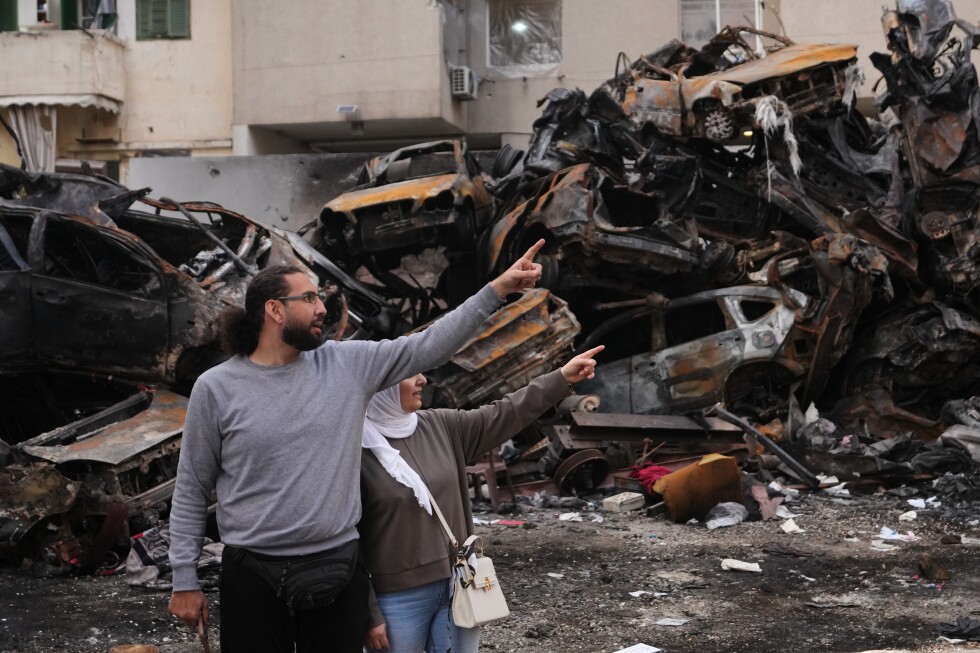
Even before the U.S. blockade, Iran’s effective closure of the Strait of Hormuz — which normally carries roughly 20% of all global oil shipments in peacetime — disrupted global energy markets, sending crude prices skyrocketing and driving up costs for gasoline, food, and essential goods across every continent. On Wednesday, news of potential new talks pushed oil prices downward, while U.S. equities rallied to near the record highs set in January, a signal that investors are betting on an end to the conflict that has upended global commerce and shaken the world economy. The fighting has already inflicted massive human and infrastructural damage across the region, with more than 5,000 fatalities recorded across Iran, Lebanon, Israel, and Gulf Arab states, including 13 killed U.S. service members.
In a separate, landmark development out of Washington Tuesday, the first direct diplomatic meeting between Israeli and Lebanese ambassadors to the United States in decades concluded with productive outcomes, according to U.S. State Department officials. The rare talks came as the low-intensity conflict between Israel and Iran-backed Hezbollah militants along the Israel-Lebanon border enters its third month, with more than one million Lebanese civilians displaced from their homes since March.
Israeli Ambassador Yechiel Leiter framed the discussion as a step toward shared goals, saying both nations are “on the same side of the equation” in “librating Lebanon” from Hezbollah’s militant influence. Lebanese Ambassador Nada Hamadeh Moawad described the meeting as “constructive” but stressed that the top priority remains an immediate end to the ongoing border conflict. Israel and Lebanon have maintained a formal state of war since Israel’s founding in 1948, and Lebanese public and political leadership remains deeply divided over any official diplomatic engagement with the Israeli government.
As regional actors and global powers work to push for de-escalation, the showdown over the Strait of Hormuz remains the single biggest risk for a rapid reignition of hostilities that would deepen the conflict’s already devastating human toll and widespread economic damage across the globe.