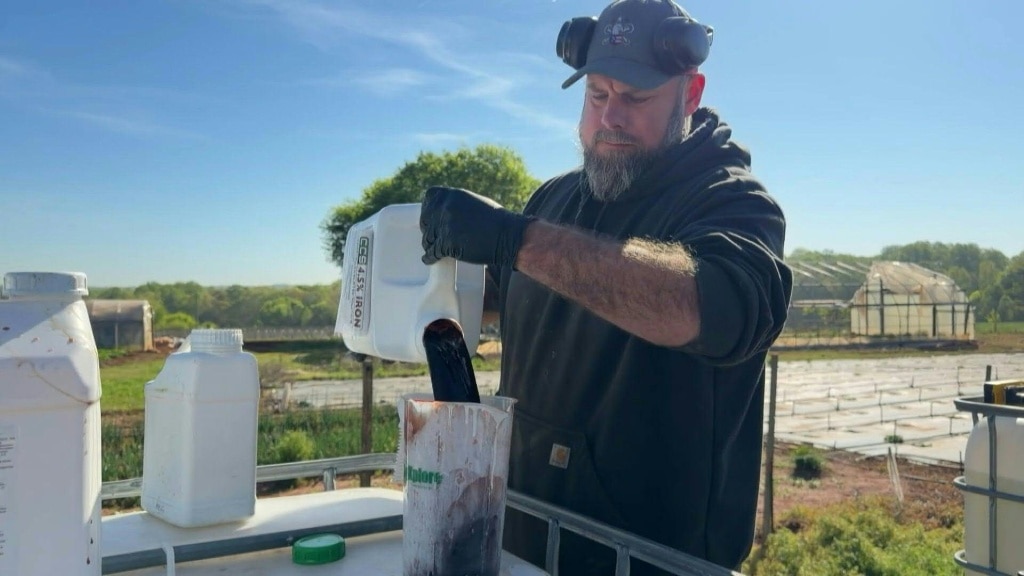
As spring planting gets underway across the American heartland, farmers in North Carolina and beyond are grappling with an unprecedented crisis spurred by escalating tensions in the Middle East. Skyrocketing fertilizer prices, paired with unexpected delivery delays and supply chain disruptions triggered by the closure of the Strait of Hormuz, have left agricultural producers blindsided and squeezed between mounting input costs and uncertain harvest outcomes.
On Andy Corriher’s North Carolina farm, where corn and soybean seedlings are starting to take root, the crisis has hit at the worst possible moment. Weeks after placing an order for liquid nitrogen, one of the most critical inputs for spring planting, he still has no clear timeline for when his shipment will arrive. Since U.S.-Israeli strikes on Iran prompted Tehran to block the key shipping waterway that carries much of the world’s fertilizer and energy exports, Corriher estimates the price of the nitrogen he relies on has jumped by at least 40 percent. At the Port of New Orleans, a major hub for fertilizer imports, urea prices have surged by roughly 50 percent overall.
To adjust, Corriher has cut his fertilizer application by one-third—a move he fears will translate to lower crop yields at harvest time. He is far from alone in facing this double blow of soaring costs and restricted supply. Forty-year-old Russell Hedrick, who tends 1,000 acres of corn and soybeans near Hickory, North Carolina, purchased around 75 percent of his fertilizer after prices spiked following the closure of the strait. Like most small to mid-sized American farmers, he lacks the on-farm storage capacity and upfront capital to stock up on fertilizer months in advance of planting season, leaving him fully exposed to the market shock. He has dialed back his usage to the bare minimum, holding out for an opportunity to top-dress crops later if prices and supply stabilize.
Even before the current conflict, Hedrick noted, steadily rising input costs had forced farmers to stretch every bag of fertilizer as far as possible, joking that “farmers have essentially become like Breaking Bad chemists with fertilizer, to get the most out of it.” Now, the sudden disruption has pushed that balancing act to breaking point. “This year, we just kind of got blindsided,” he said, adding that past supply chain shocks, such as China’s 2021 phosphate export restrictions, gave farmers months of advance warning to prepare—something this crisis completely lacked.
For 55-year-old Marshville farmer Derrick Austin, comments from U.S. Agriculture Secretary Brooke Rollins that 80 percent of American farmers had purchased spring fertilizer before the conflict broke out offered little relief. Austin was among the 20 percent who could not afford to buy early, and the announcement felt like a “gut shot,” he said. He only managed to secure enough nitrogen for his wheat crop at pre-crisis prices after a supplier gave him a break, calling the overall situation “devastating.”
The crisis carries significant political weight, as the farming community forms a core support base for President Donald Trump, who won 78 percent of the vote in 2024 in counties dependent on agriculture. Trump has attempted to address the anger, blaming “price gouging from the fertilizer monopoly” in a Saturday statement and vowing “American Farmers, we have your back!” But the disruption has left even some of his long-time backers questioning the administration’s handling of the Middle East conflict, and its failure to anticipate the blowback for American households.
Corriher, a long-time Trump supporter, said the crisis felt like an avoidable “collateral damage” of the conflict. “It didn’t seem like we had really thought out all the consequences to the American people,” he said. Austin, meanwhile, said he is “starting to question some of (Trump’s) reasoning” even as he still prefers the current administration to opposing alternatives. Hedrick, who has voted for Trump three times, struck a more measured tone: “He’s human like the rest of us. I think he makes good calls, I think he makes mistakes. If the conflict’s resolution brings long-term peace and a reopened Strait of Hormuz, that’s all I can hope for.”
Beyond the immediate political fallout, agricultural economists warn the crisis could deepen the prolonged slump facing the U.S. farm sector. Iowa State University professor Chad Hart noted the U.S. agriculture economy “has been in a recession for the last couple of years,” with net farm income declining while business costs have stayed persistently high. This year, the overall impact on yields and farm profits may be muted, as some farmers did lock in fertilizer supplies early, either in the fall of 2024 or early this spring. But if the conflict drags on and the Strait of Hormuz remains closed, Hart warned the 2027 crop could face far more severe disruption, as farmers will no longer have the buffer of pre-purchased fertilizer to draw on.
The pain is not limited to farms either. Soaring diesel and energy costs tied to the Middle East conflict have pushed up prices for all American households, with Corriher noting “Everybody seems to be suffering.”