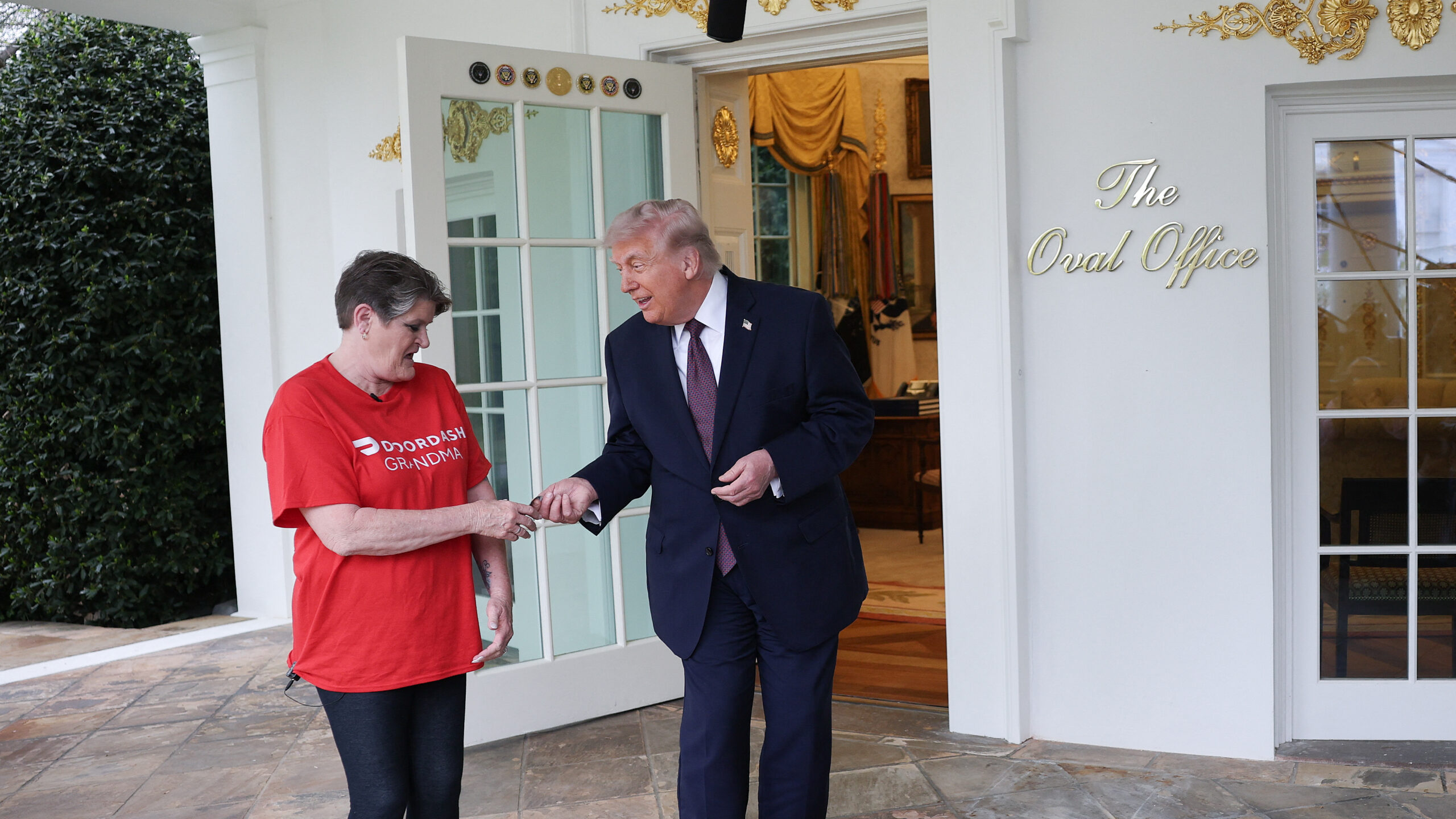
What was meant to be a carefully crafted public relations win for the Trump administration has instead ignited a fierce national conversation about systemic gaps in the United States’ healthcare and gig economy systems. In April 2026, the White House orchestrated a viral event to mark the one-year anniversary of former President Donald Trump’s signature “No Tax on Tips” policy, bringing 58-year-old Arkansas gig worker Sharon Simmons to Washington D.C. to deliver McDonald’s fast food to the Oval Office.
Simmons, a DoorDash driver from Fayetteville who took up the gig in 2022 to cover her husband’s stage-three cancer treatment costs, quickly became the face of a debate no PR team planned for. Trump himself joked about the staged nature of the moment as Simmons arrived, quipping to reporters, “This doesn’t look staged, does it?” DoorDash later confirmed the delivery was pre-planned as part of the anniversary celebration, and social media users quickly uncovered evidence of the coordinated collaboration between the company and the White House.
According to Simmons’ own public comments, the elimination of federal taxes on tipped income saved her roughly $11,000 in the first year of the policy, a sum that directly helped cover her husband’s mounting medical bills. That statement was picked up by supporters of the policy, who framed the “No Tax on Tips” measure as a critical win for working Americans, putting much-needed extra take-home pay into the pockets of gig and hospitality workers who rely heavily on gratuities to make ends meet.
But for critics, the viral moment was not a celebration of policy success—it was a damning indictment of long-standing structural failures in the U.S. healthcare system. As an independent contractor for DoorDash, Simmons does not qualify for employer-sponsored health insurance, paid medical leave, or other core benefits that traditionally protect workers from catastrophic medical costs. Since her husband’s 2025 cancer diagnosis, Simmons has completed more than 14,000 deliveries, leaning on the gig’s flexible hours to balance work and caregiving.
Commentators and political opponents quickly pointed out that the image of a grandmother in her late 50s making thousands of fast food deliveries just to afford her spouse’s life-saving treatment perfectly encapsulates the crisis facing millions of uninsured and underinsured Americans. The Democratic-led Ways and Means Committee summed up this perspective in a social media post, arguing that Simmons should not be forced to rely on delivery tips to cover healthcare costs, blaming Republican policies for driving up medical expenses for U.S. households.
Many online observers also criticized the ethics of staging the event, noting that Simmons was flown across the country to Washington to be used as a prop in a political photo op. Critics argued that the orchestrated nature of the moment undermined any claim that it was an authentic, spontaneous example of the policy’s benefits, instead turning a family’s medical hardship into political theater.
While there was scattered praise for the policy’s tangible financial benefit for Simmons, much of the national discourse that followed the viral clip centered on the broader reality it exposed: millions of older Americans are forced to work well past traditional retirement age, not by choice, but to cover basic needs including life-saving healthcare that their incomes otherwise cannot support. What began as a lighthearted viral moment of fast food delivered to the Oval Office ultimately transformed into a high-profile flashpoint for ongoing debates over healthcare access, gig worker rights, and economic inequality in the United States.