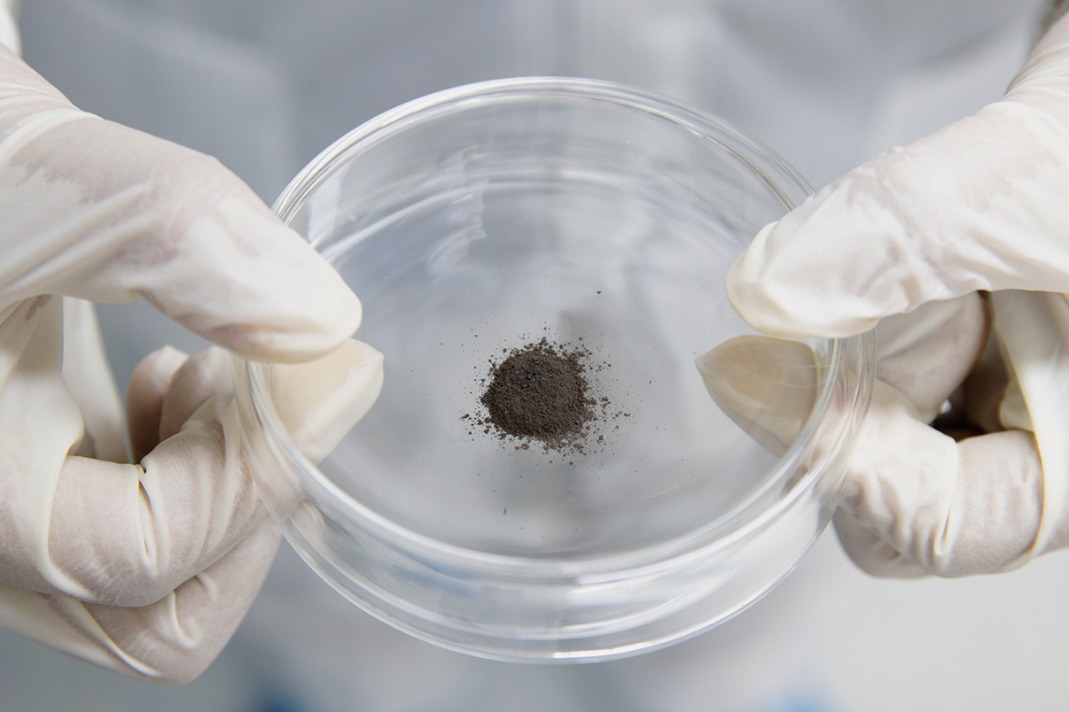
A groundbreaking international research collaboration has made a historic discovery: the first confirmed identification of nitrogen-bearing organic compounds in lunar soil, a finding that opens critical new avenues for understanding how life’s chemical precursors spread across the early solar system.
The team, comprising scientists from the Chinese Academy of Sciences, the University of New Mexico, and the Changsha University of Science and Technology, analyzed pristine soil samples collected by China’s Chang’e 5 and Chang’e 6 lunar exploration missions to map out the likely pathway that delivered organic materials to the inner solar system via asteroid and comet impacts. Their peer-reviewed results, published April 10, 2026 in the journal *Science Advances*, fills a long-standing gap in scientific knowledge about how the fundamental building blocks of life arrived on early Earth.
Unlike Earth, where constant geological activity and pervasive biological processes have erased most evidence of the planet’s first billion years, the moon has functioned as a well-preserved planetary time capsule. With almost no tectonic or atmospheric activity, the lunar surface retains intact traces of space debris impacts that occurred billions of years ago. While earlier analyses of samples retrieved by NASA’s Apollo missions detected carbon- and hydrogen-based organic compounds on the moon, nitrogen-bearing organics — chemical structures commonly found in asteroids sampled by NASA’s OSIRIS-REx and Japan’s Hayabusa2 missions — had never been confirmed in lunar material before this study.
This new research does more than just confirm the presence of these missing organic compounds: it also reveals how asteroid impacts both deliver and reshape these materials on the lunar surface. Using cutting-edge high-resolution microscopy and specialized light-based analytical tools, the research team verified that the detected organics are composed of carbon, nitrogen, and oxygen, and show signs of complex chemical reorganization that sets them apart from inert, simple graphitized carbon.
Dong Mingtan, lead author of the study and a doctoral candidate at the Chinese Academy of Sciences’ Institute of Geology and Geophysics, explained that the team identified amide functional groups in a subset of the samples — chemical structures that are a fundamental component of key biological molecules such as proteins. This discovery, Dong noted, confirms that the organic materials have undergone complex chemical restructuring that brings them closer to the type of organic molecules that can be used as building blocks for life.
To trace the origin of the organics, the team analyzed isotopic ratios — unique elemental “fingerprints” that reveal a material’s geological and cosmic history. They found that the lunar organics had a lighter isotopic signature than organics found in intact asteroids, a pattern consistent with a process of vaporization and redeposition. When an asteroid collides with the moon, the extreme heat generated by the impact vaporizes organic molecules, which then cool and settle back into the cold lunar surface, leaving this distinct isotopic trace.
To eliminate any doubt that the organic compounds could have come from contamination after the samples were brought to Earth, the team tested for evidence of solar wind implantation, a process where charged particles from the sun bombard the lunar surface over millions of years, leaving a unique chemical marker that can only form off-Earth.
Hao Jialong, senior engineer at the Institute of Geology and Geophysics and the study’s corresponding author, confirmed that the presence of this marker confirms the organics were exposed on the lunar surface for an extended period, definitively ruling out terrestrial contamination.
Overall, the study outlines a complete lifecycle for organic materials on the moon: delivery via impacts from small solar system bodies, structural reshaping by the heat and force of those impacts, and final modification by long-term exposure to solar radiation. The research team announced that the same analytical framework developed for this project will be applied to samples collected by China’s upcoming Tianwen 2 mission, which is scheduled to return asteroid samples to Earth by the end of 2027.