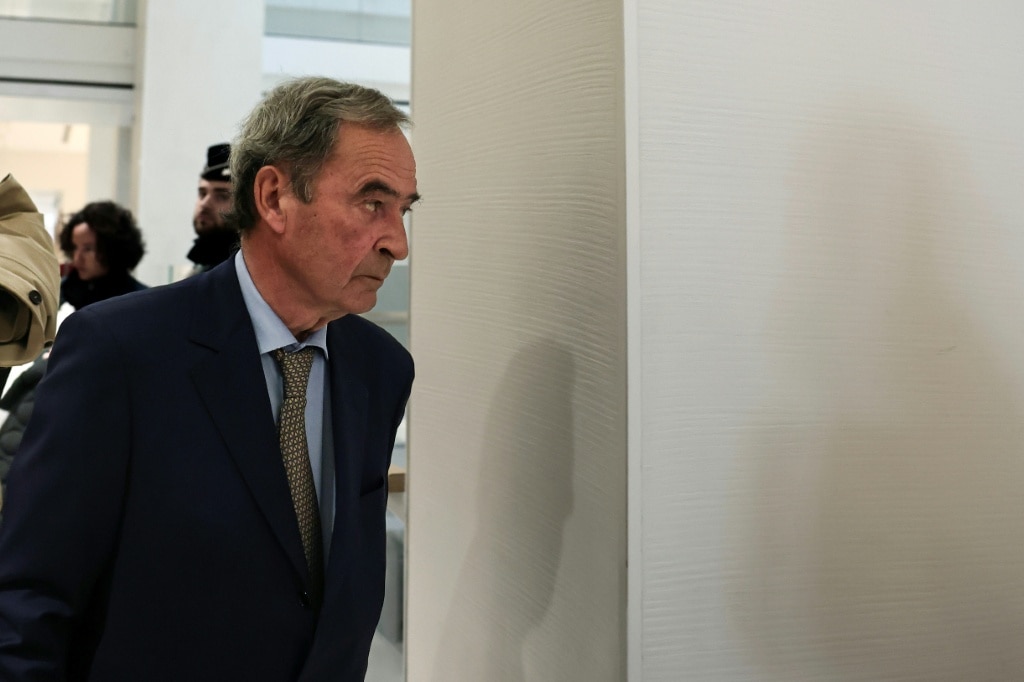
In a landmark ruling delivered on Monday, a French court has found cement giant Lafarge, currently part of Swiss conglomerate Holcim, and its former top executive guilty of financing terrorist groups including the Islamic State (IS) to keep its northern Syria cement plant operational during the early years of the country’s civil war. The court ordered the firm to pay a 1.125 million euro ($1.31 million) fine — the maximum penalty requested by prosecutors — and sentenced former CEO Bruno Lafont to six years in prison, to be served immediately. Lafont has already confirmed he will appeal the conviction.
The case centers on payments totaling nearly 5.6 million euros ($6.5 million) made between 2013 and 2014 through Lafarge’s local subsidiary, Lafarge Cement Syria, to jihadist factions, intermediaries, and IS fighters. Presiding judge Isabelle Prevost-Desprez emphasized that these undisclosed payments amounted to a formal commercial partnership with IS, noting that the financial support played a critical role in enabling the terrorist group to consolidate control over Syrian natural resources, fund its violent operations across the region, and plan attacks targeting European countries. The judge described the scale and secrecy of the arrangements as making the offenses extraordinarily serious.
The background of the case traces back to 2010, when Lafarge completed construction of a $680 million cement factory in Jalabiya, northern Syria, just one year before widespread anti-government protests erupted and devolved into a full-scale civil war against the regime of Bashar al-Assad. As violence escalated in 2012, most multinational corporations pulled out of the country entirely. Unlike its competitors, Lafarge only evacuated its foreign expatriate staff, choosing to retain its local Syrian workforce and keep the plant running. When IS seized large swathes of northern Syria and neighboring Iraq in 2014 to declare its self-proclaimed transnational caliphate, the company relied on payments to IS and other armed groups including Jabhat al-Nusra, then al-Qaeda’s Syrian affiliate, to secure access to raw materials and guarantee safe passage for its trucks and employees. The factory ultimately fell under IS control in September 2014.
All eight defendants in the case — the company itself, five current and former senior and operational staff, and two Syrian intermediaries — were found guilty of financing terrorist organizations. Sentences for the co-defendants range from 18 months to seven years in prison. Firas Tlass, a Syrian former executive who facilitated the direct payments to jihadist groups, was sentenced to seven years in prison in absentia. Christian Herrault, the firm’s former deputy managing director, received a five-year sentence. Herrault had defended his actions by arguing the decision to maintain operations was motivated by concern for the livelihoods of local Syrian employees, stating: “We could have washed our hands of it and walked away, but what would have happened to the factory’s employees?”
Prosecutors rejected this framing, arguing that the entire decision to keep the plant open was driven by cynical pursuit of profit. Counterterrorism prosecutors noted in their December closing argument that 69-year-old Lafont issued explicit instructions to continue operations, calling the choice “staggering in its cynicism.” Lafont, who led the company from 2007 to 2015, has long denounced the French investigation as biased.
This ruling marks the second legal action against Lafarge over its Syria activities, following a 2022 case in the United States where the company pleaded guilty to conspiring to provide material support to U.S.-designated terrorist organizations and agreed to pay a $778 million fine. That 2022 case marked the first time any corporation had ever faced such a charge in the U.S. legal system, with U.S. prosecutors alleging Lafarge actively worked with IS to eliminate competing businesses through a de facto revenue-sharing agreement with the group.
Holcim, which completed its acquisition of Lafarge in 2015, has repeatedly stated it had no knowledge of the illegal Syria arrangements prior to the investigation. A separate, ongoing French investigation remains open into allegations that Lafarge is complicit in crimes against humanity connected to its Syria operations. The legal inquiry was first launched in France in 2017, following a series of media investigations and two 2016 legal complaints: one from the French finance ministry over alleged violations of economic sanctions, and a second from NGOs and 11 former Lafarge Syria employees over charges of terrorist financing. The IS caliphate was ultimately defeated militarily by Kurdish-led Syrian forces backed by U.S. airstrikes in 2019, years after the company’s payments to the group took place.