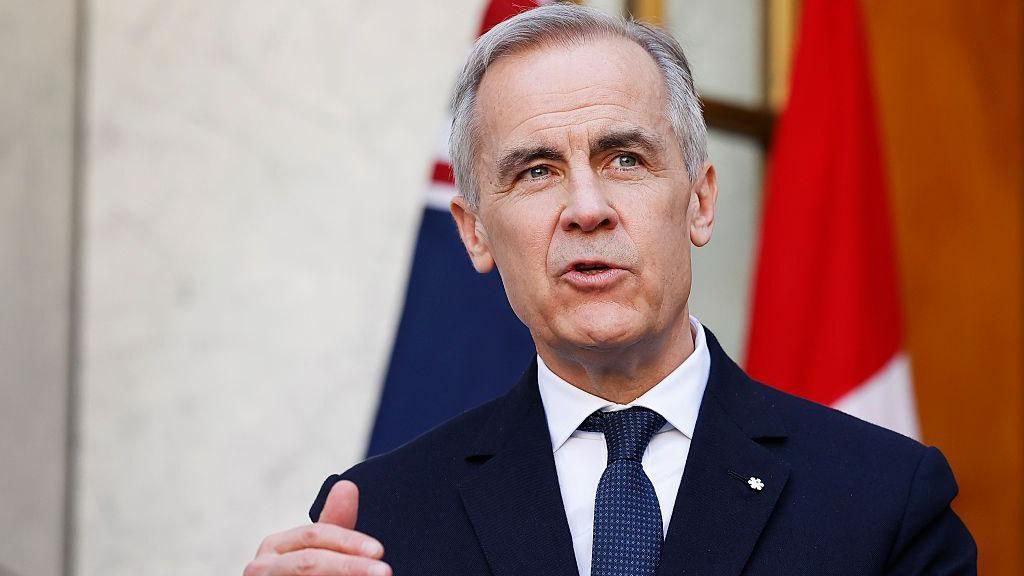
One year after Mark Carney took office as Canada’s prime minister, his Liberal Party stands on the cusp of securing a narrow working majority in the House of Commons, with the outcome of three upcoming by-elections set to reshape the country’s federal political landscape for years to come.
Voters head to the polls on Monday for three vacant ridings: two in the Greater Toronto Area, Scarborough Southwest and University-Rosedale, and a third competitive race in the Montreal suburb of Terrebonne. Currently, the Liberals hold 171 of 343 total seats in the Commons – just one seat short of the 172 needed for a formal majority. If the party claims victory in even two of the three contests, Carney will secure his narrow majority, allowing his government to pass legislation without relying on opposition support and pushing the next mandatory federal election back to 2029.
Political observers note the projected shift in parliamentary control has been accelerated by an unusual wave of cross-party defections, with five sitting opposition lawmakers – four former Conservatives and one New Democratic Party member – already joining the Liberal caucus since Carney took power. Canadian media reports indicate the party is also courting several additional sitting MPs to switch allegiances in the coming weeks.
The two Toronto seats up for grabs were vacated by high-profile former Liberal lawmakers who accepted new roles: Scarborough Southwest was previously held by ex-defence minister Bill Blair, who now serves as Canada’s ambassador to the United Kingdom, while University-Rosedale was the seat of former deputy prime minister Chrystia Freeland, now a senior policy adviser to the Ukrainian government. Political analysts widely predict the Liberals will hold both ridings, putting Carney’s majority within reach regardless of the outcome in Terrebonne.
The race in Terrebonne remains one of Canada’s most closely watched by-election contests in recent decades. The Liberal candidate won the riding by just a single ballot in the 2025 April federal election, but Canada’s Supreme Court nullified the final result in February after uncovering an administrative error by Elections Canada involving mailed-in postal ballots. The contest is once again rated as a pure toss-up between the Liberals and the sovereigntist Bloc Quebecois. To bolster his candidate Tatiana Auguste, Carney personally campaigned in the riding ahead of polling day.
University of Toronto political science professor Semra Sevi described the recent pace of party-switching as extraordinary, even for Canada’s fluid parliamentary system. “Carney has built a big tent, attracting members of parliament who would not normally be associated with the Liberal party,” Sevi explained in an interview. “The complication, however, is that the tent may now be so big that there isn’t a lot of ideological coherence in it.”
That ideological tension flared up after the most recent defection of former Conservative MP Marilyn Gladu, a socially conservative lawmaker who has publicly described herself as personally pro-life. Gladu has committed to voting in line with Liberal caucus policy on abortion access, and Carney has defended his decision to welcome her, stressing that the party’s core values remain unchanged. Under Carney’s leadership, the Liberals have shifted toward the political centre-right, a marked departure from the more progressive agenda of former prime minister Justin Trudeau. Carney has rolled back several of Trudeau’s signature policies, including the national consumer carbon tax, and has prioritized positioning Canada as a global “energy superpower” while cutting public sector staffing levels – policy shifts that have proven appealing to disaffected centre-right Conservative MPs.
The wave of defections has triggered fierce backlash from Conservative leader Pierre Poilievre, who has branded the floor-crossings undemocratic and accused Carney’s government of striking corrupt backroom deals to seize power. “By poaching MPs from other parties, Carney is telling those who elected them that ‘your vote does not count’,” Poilievre has argued.
At the same time, analysts note the defections reflect deep-seated discontent within the Conservative caucus. Just over a year ago, Poilievre was widely seen as the likely next prime minister, but Carney surged in polling amid widespread voter concerns about cross-border trade and diplomatic relations with the United States under the second Trump administration. Today, many Conservative MPs fear the party has little chance of forming government under Poilievre’s leadership, with growing discontent over his approach to caucus management.
Recent national polling puts the Liberals 10 to 15 percentage points ahead of the Conservatives, with Carney maintaining high personal approval ratings among Canadian voters. Closing out a Liberal party convention in Montreal over the weekend, Carney used his keynote address to frame his big-tent approach as a strength for a country facing overlapping national crises. “Canada’s founding insight is that unity does not require uniformity,” he told party members.