As the ongoing conflict in Iran sends global oil prices soaring to unprecedented levels, Australia’s critical road freight sector is grappling with an unprecedented crisis, where skyrocketing diesel costs have doubled operational expenses for thousands of trucking operators and left many small businesses on the edge of collapse.
The global energy market shockwaves have hit Australia particularly hard, with the country recording one of the steepest spikes in transport fuel prices in its modern history. Latest official data from the Australian Institute of Petroleum confirms the national average retail price of diesel has jumped to 312.7 cents per liter, more than 70 percent higher than the pre-conflict average of 180.2 cents per liter. Petrol prices have also surged, rising from 171 cents to 240.1 cents per liter in the same period. For a sector almost entirely dependent on diesel to power heavy long-haul vehicles, the cost surge has delivered a crippling blow.
In a rare primetime televised national address recently, Australian Prime Minister Anthony Albanese acknowledged the scale of the unfolding fuel challenge, urging the public to adjust their fuel consumption to preserve critical supplies for essential transport workers. “These are uncertain times,” Albanese told the nation. “But I am absolutely certain of this: we will deal with these global challenges, the Australian way.” He called on motorists to prioritize public transit where possible and “think of others” when fueling up, to ensure diesel supplies remain available for workers who have no alternative to driving for their livelihoods.
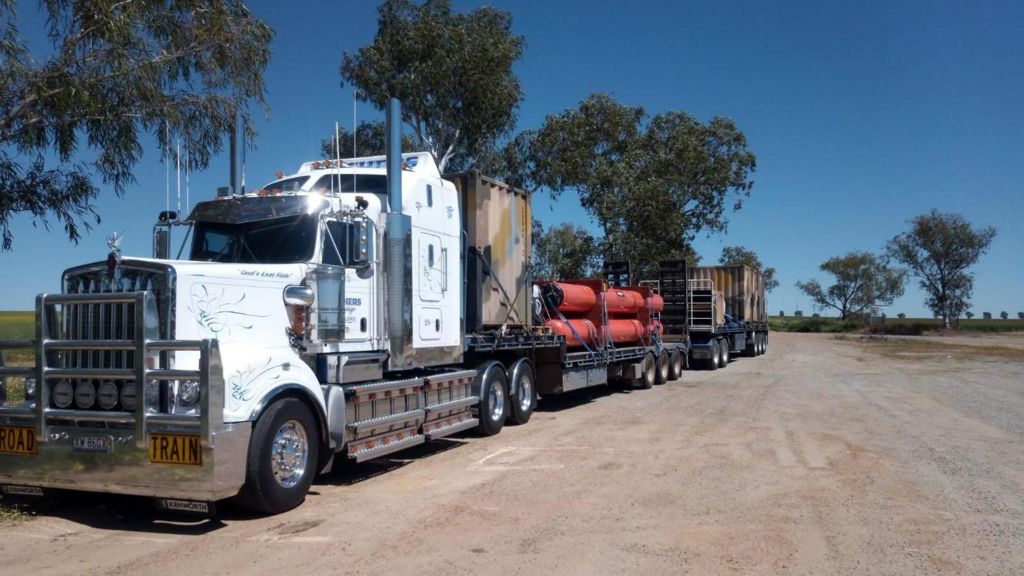
But for small independent trucking operators across the country, the prime minister’s appeal has done little to ease the crippling financial pressure they face day-to-day. Aaron Fischer, an owner-operator whose business is based in Howlong, a border town between New South Wales and Victoria, says he now lies awake at night poring over spreadsheets trying to keep his firm afloat. “Before all this stuff happened, it used to cost me A$3,600 to fill up a single tank… now I’m spending $7,500. That’s the problem: it’s literally doubled my bill,” he explained in an interview with the BBC. Where Fischer once spent around A$150,000 a month to keep his fleet of 12+ long-haul road trains on the road, that monthly fuel outlay has now jumped to A$300,000 – an expense he has to cover out of pocket long before clients pay their invoices.
Fischer’s fleet crosses the harsh, treeless expanse of the 1,200-kilometer Nullarbor Plain between South Australia and Western Australia every week, with stretches of up to 200 kilometers between available fueling stations. Already, reports of intermittent diesel shortages along the route have forced drivers to detour or risk running out of fuel mid-journey. “We’ve had a few [drivers] that went to put fuel in and they’ve had none,” Fischer said. Compounding the cash flow pressure is the standard 60-day waiting period for freight operators to receive payment for completed jobs, meaning Fischer must front roughly A$600,000 in operating costs before he recovers any revenue from recent runs. “This is where a lot of people are going to come unstuck,” he warned.
The crisis is hitting new entrants to the industry particularly hard. William Hawkes launched his own trucking business just three months ago, and has already been forced to re-price every existing contract, raising rates by roughly a third to offset fuel costs – a move that has strained newly formed client relationships and driven many customers to cancel or delay jobs. “That’s pretty catastrophic when you’re starting out,” Hawkes said. His company specializes in transporting essential heavy equipment to areas facing emergency works, including flood-affected outback New South Wales and regions requiring emergency road repairs in Queensland. When one of his drivers was tasked with moving modular homes 5,300 kilometers from Bendigo, Victoria to Broome, Western Australia recently, reports of empty diesel tanks at Nullarbor Plain service stations shared via UHF radio forced a last-minute detour that added hours to the multi-day journey. While Hawkes has adjusted rates to keep his profit margin stable, the volume of work has plummeted as clients pull back on projects.
Even veteran drivers with more than 40 years of experience in the industry say they have never seen conditions this bad. Terry Snell, 68, has cut his weekly runs to once every fortnight, after skyrocketing costs left his profit margin “very slim”. “We used to run every week. We now run every fortnight, because with the increase in the fuel charges, if we run weekly, we need to go off to a bank or a financial institution to borrow to cover costs,” he explained. After completing a recent run from Perth to Brisbane transporting a combined crane truck, Snell charged the client A$18,000 – double the rate he would have charged just a few weeks prior. He warned that dozens of small operators have already parked their trucks permanently, unable to cover operating costs, creating a shortage of available freight capacity that will soon ripple through the entire national economy. “If we don’t get this problem sorted and get it sorted very quickly, we are going to have a supply chain crisis,” Snell said. “Everything that you get has come off a truck at one point – whether it’s your food, your drinks, the shirt you’re wearing, the phone you’re using,” added Michael Webb, a 10-year industry veteran who currently drives for Fischer. “We need far more support than what we’re getting right now.”
To address the sector’s distress, the federal government has announced a A$1 billion package of interest-free loans available to transport and freight operators, as well as fuel and fertilizer producers. But industry advocates say the measure falls far short of what small businesses need. “Interest-free loans are still debt,” said Alex Randall of freight marketplace Loadshift. “If you’re a small carrier whose fuel bill has just doubled and your customers are cancelling jobs, the last thing you need is more debt on the books.” Randall and other operators are calling for direct cash grants and faster targeted relief to help small carriers cover the sudden surge in fuel costs, rather than pushing them to take on more financial risk that could sink their businesses.