The phrase “this is not our war” has become a major source of friction within the Trump White House, after dozens of European leaders invoked it to explain their refusal to deploy military forces alongside the U.S. and Israel in their ongoing attacks on Iran. This public rift has thrown the future of the post-WWII transatlantic alliance into renewed uncertainty, even as the ripple effects of the Iran conflict extend far beyond the Middle East to reshape global security and economic assumptions. While the war itself remains unresolved, following the breakdown of April 11 negotiations hosted in Islamabad, early trends indicate that five major long-term global shifts are already taking shape, affecting every region from the Indo-Pacific to the Persian Gulf.
Financial markets have so far reacted with muted volatility to the conflict, as investors hold out hope for a rapid end to hostilities. This bet aligns with the reality that the dramatic disruptions of open war can fade as quickly as they emerge once active combat ceases. Still, analysts have identified clear emerging themes that will outlast any near-term ceasefire, starting with the greatest long-term risk: accelerated nuclear proliferation across the globe.
North Korean leader Kim Jong Un has openly argued that his country’s decades-long investment in nuclear weapons, begun by his father and grandfather, has insulated Pyongyang from the same type of attack Iran is now facing. Many experts agree that this example is not lost on Iran’s ruling regime, which is now widely believed to regret moving more slowly toward a nuclear weapons program. While some observers argue the war could deter proliferation by highlighting the risk of American intervention for nuclear aspirants, this logic falls apart for states that can leverage great power protection, like North Korea’s close relationship with China that makes a large-scale U.S. attack too risky to contemplate.
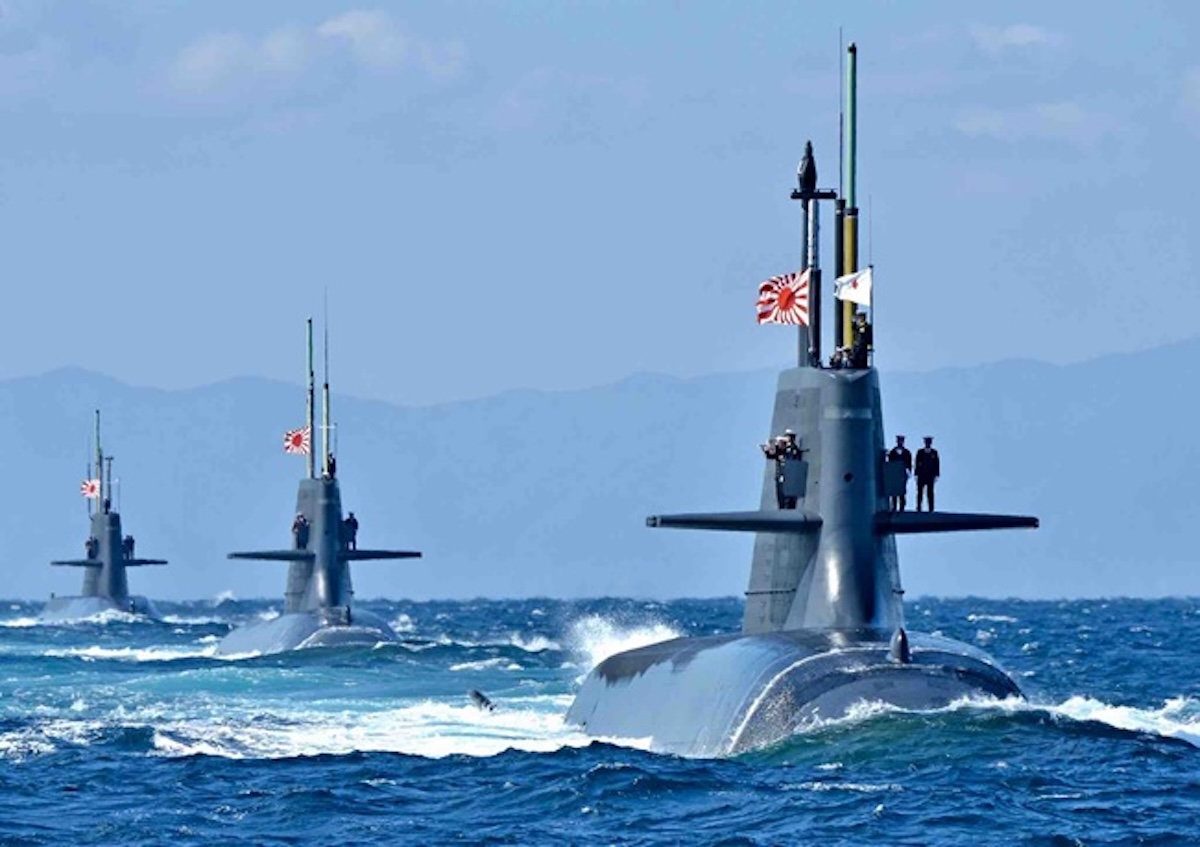
In the Indo-Pacific, this new calculus has already pushed Japanese officials into open, unprecedented discussions about abandoning the country’s long-held nuclear taboo. These talks stem from two overlapping fears: that South Korea and other regional states could move quickly to develop their own nuclear arsenals, and that the U.S.-promised “extended deterrence” nuclear umbrella can no longer be counted on to protect regional allies. That doubt around American deterrence forms the second major shift laid bare by the Iran conflict.
The war has put U.S. military power on full display, but it has also revealed alarming vulnerabilities. In a conflict against an already heavily weakened Iran, which had sustained significant damage from Israeli and American strikes in June of last year, the U.S. military rapidly depleted a large share of its stockpiles of advanced precision weapons and cutting-edge missile defense systems. This has raised urgent questions across the Indo-Pacific: if the U.S. can exhaust its stockpiles in weeks of fighting a weaker adversary, how would it fare in a prolonged conflict against a far stronger peer competitor like China?
Compounding these concerns is the fact that the Iran war has forced the U.S. to reallocate critical military assets—including warships, entire Marine regiments, and layered missile defense systems—from the Indo-Pacific to the Middle East. While the immediate capability gaps created by this shift are not the primary worry, regional strategists cannot discount the risk that China or North Korea could choose to exploit this opening, even if the probability remains low. The far bigger concern is that despite an annual defense budget approaching $1 trillion, the U.S. military has already become severely overstretched after just a short conflict in Iran. This confirms long-held warnings about U.S. defense production capacity constraints, and suggests that current spending prioritizes fixed overhead costs like global basing over the flexible assets and stockpiles needed for modern conflict.
The third key takeaway from the war is a global reevaluation of air and missile defense doctrine. The Gulf monarchies—the United Arab Emirates, Qatar, Bahrain, Kuwait, and Saudi Arabia—have faced repeated barrages of Iranian missiles and drones, and their existing defense systems have failed to stop these attacks effectively. Part of this failure stems from the global shortage of advanced, costly interceptors for U.S.-made Patriot and THAAD systems, a supply crunch that was first exposed by the war in Ukraine. Another factor is that most countries had not adapted their defense strategies to counter the swarms of low-cost drones that have become a staple of modern warfare, until the Iran conflict forced a reckoning. As a result, demand for the type of low-cost, mass-deployed anti-drone defenses Ukraine has honed is set to surge across the globe, not just in the Middle East.
Fourth, the conflict has underscored the urgent need for diversified energy supply chains and expanded strategic stockpiles of critical commodities. For years, analysts have warned that global trade chokepoints could become tools of leverage during open conflict, but the U.S. largely downplayed or even ignored the strategic risk of the Strait of Hormuz, despite the fact that roughly 20% of the world’s annual oil supply passes through the narrow waterway shared by Iran and Oman. After the collapse of the Islamabad talks, the world now faces a high-stakes game of brinkmanship between Trump and Iran over control of the strait. Trump’s recent declaration that U.S. warships will blockade the strait to block Iran from levying transit tolls is a direct challenge to Tehran, a bold gambit that carries a major risk of reigniting full-scale hostilities.
Beyond the immediate crisis, the Hormuz standoff makes clear that nations need to diversify trade routes and build up larger strategic reserves to reduce the leverage chokepoints can give to adversarial powers. For Taiwan, this lesson hits particularly close to home: the island’s still-small strategic energy and commodity stockpiles leave it extremely vulnerable to a potential Chinese blockade.
The fifth and final emerging shift centers on the future of American global alliances. The Iran war has laid bare Trump’s extreme sensitivity to any perceived lack of support from U.S. allies, even as he spent much of the past year publicly insulting and alienating those same partners. Already, the rift over European refusal to join the war has increased the odds that Trump could withdraw the U.S. from NATO in a fit of pique. While the Indo-Pacific alliances have not yet faced the same existential risk, the conflict confirms that U.S. foreign policy is now heavily concentrated in the hands of a single individual: the president. Though Trump is scheduled to leave office in less than three years under current constitutional rules, he has already made dozens of deeply personal, unilateral decisions that will reshape global order in that time, and no country can insulate itself from the consequences of his actions.
This article is an updated version of an original piece published by Mainichi, appearing in Bill Emmott’s Substack column Global View.