A public rift between U.S. President Donald Trump and the newly seated Pope Leo XIV has burst into the open, after Trump publicly declared he is “not a big fan” of the Catholic leader over the pontiff’s repeated anti-war messaging and stance on Iran’s nuclear program. The sharp rebuke comes amid already simmering disagreements between the Holy See and the Trump administration on a range of policy issues, despite both sides moving quickly to dismiss earlier reports of a hostile behind-the-scenes confrontation.
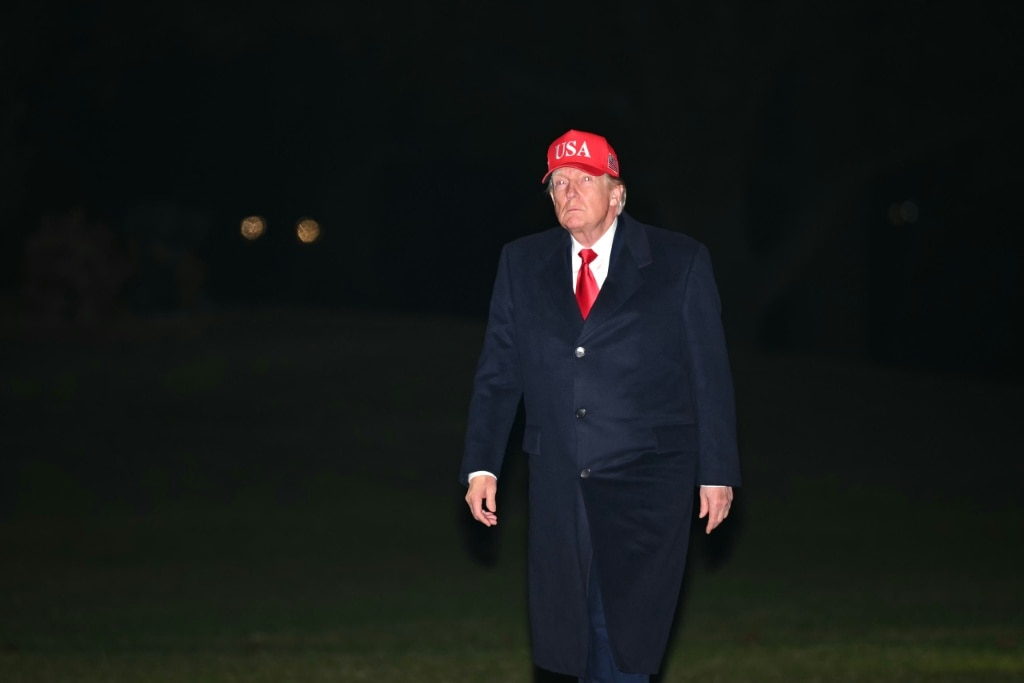
Trump made his critical remarks to reporters during a press gaggle at Maryland’s Joint Base Andrews on Sunday. The president framed the pope as an overly progressive figure whose policy priorities do not align with global security needs, saying, “He’s a very liberal person, and he’s a man that doesn’t believe in stopping crime.” He went further to accuse Pope Leo of softening his stance on nations pursuing nuclear capabilities, claiming the pontiff was “toeing with a country that wants a nuclear weapon.”
Shortly after his in-person comments, Trump doubled down on the criticism in a post to his social media platform Truth Social, writing, “I don’t want a Pope who think it’s OK for Iran to have a Nuclear Weapon.”
The clash follows a series of public disagreements that stretch back weeks. The 70-year-old American pontiff, who made history as the first U.S.-born leader of the Catholic Church, used a public address to thousands of worshippers at St. Peter’s Basilica on Saturday to deliver a ringing plea for global peace. In an unflinching rebuke of modern conflict and power politics, he told the crowd: “Enough of the idolatry of self and money! Enough of the display of power! Enough of war!”
The confrontation escalated earlier that same week, after the Free Press published a report claiming that a top Pentagon official had delivered a “bitter dressing-down” to the Vatican’s envoy to the U.S., Cardinal Christophe Pierre, during a January meeting at the Pentagon. According to the report, U.S. Under Secretary of Defense for Policy Elbridge Colby told the cardinal that the United States “has the military power to do whatever it wants — and that the Church had better take its side.”
Both U.S. and Vatican officials quickly moved to discredit the account. The Pentagon dismissed the report as “distorted,” while Vatican spokesman Matteo Bruni issued a formal statement saying “the account presented by certain media outlets regarding this meeting does not correspond to the truth in any way.” Both sides have also maintained that the January meeting was cordial and productive.
Even so, open disagreements between the Holy See and the White House have been on full display for months. The pope has publicly denounced the Trump administration’s hardline mass deportation policy as “inhuman,” and he has repeatedly criticized the administration’s willingness to use military force in global hotspots including the Middle East and Venezuela. Tensions flared most recently after Trump made what was widely labeled a genocidal threat against Iran earlier this month, telling the public “A whole civilization will die tonight, never to be brought back again.” Pope Leo swiftly condemned the comment as “truly unacceptable” and called on all parties to return to diplomatic negotiations.
Earlier this month, the pope did welcome a temporary ceasefire between the U.S. and Iran as a “sign of real hope,” but high-stakes peace talks wrapped up abruptly in the Pakistani capital of Islamabad on Saturday. After a marathon negotiating session, U.S. Vice President JD Vance told reporters that Washington had put forward its “final and best offer” to Iran, leaving the future of diplomatic negotiations uncertain.