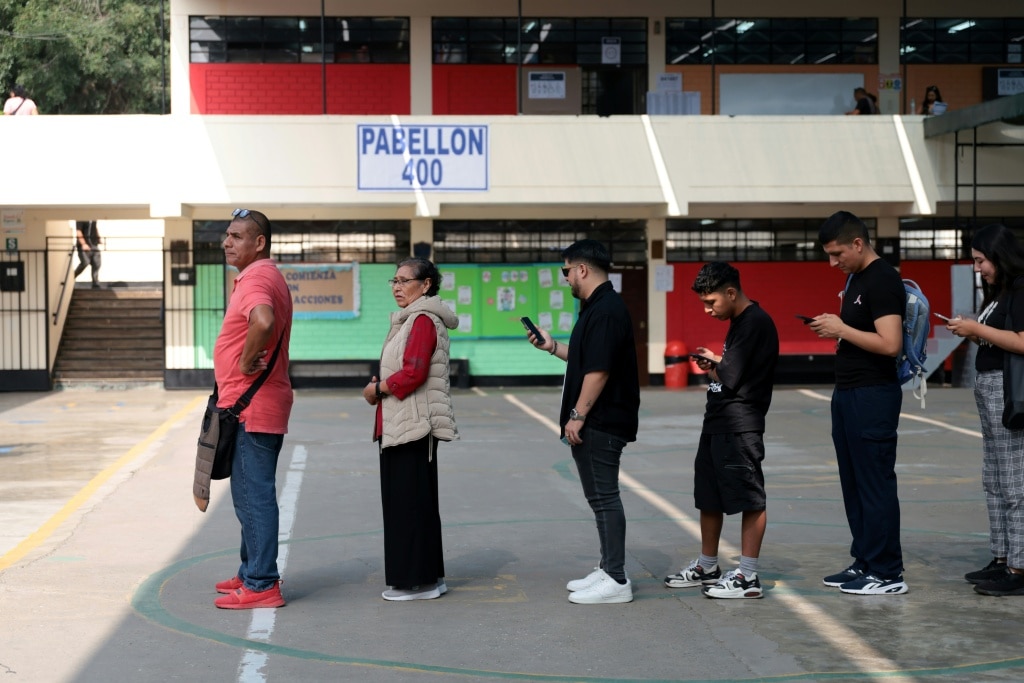
On a scorching Sunday across Peru, long-delayed presidential and legislative elections kicked off, wrapping the Andean nation’s latest desperate bid to escape a decade of nonstop political chaos that has seen nine heads of state ousted or imprisoned. Nearly 27 million eligible voters, stretching from the Amazon rainforest lowlands to the high peaks of the Andes, cast ballots on an unprecedented half-meter-long ballot paper listing a record 35 presidential candidates from across the ideological spectrum.
What was meant to be a routine democratic process quickly descended into public frustration, with dozens of polling stations in metropolitan Lima remaining shuttered hours after opening. Furious would-be voters queued for up to four hours under unforgiving equatorial sun, with many raising accusations of electoral fraud following a brutal, acrimonious campaign season. Peru’s national electoral commission quickly pinned the blame on a contracted logistics supplier that failed to deliver critical voting materials on time, and extended voting hours by one hour to accommodate disrupted voters.
Decades of systemic corruption and backroom politicking have left most Peruvians deeply disillusioned with the country’s ruling political class. Public anger runs so deep that the nation has even built a purpose-built prison to house former presidents convicted of corruption. For many ordinary Peruvians, this election represents a last chance to turn the tide of rising crime, economic instability and political dysfunction that has eroded quality of life nationwide. “The people can’t take it anymore,” said Rosenda Lopez, a 47-year-old textile vendor in Lima. “I hope someone is elected who works for the community. The community needs it. They are killing us.”
Over the past 10 years, Peru’s homicide rate has more than doubled, while reported annual extortion cases have skyrocketed from just 3,200 to more than 26,500. In response to widespread public anxiety over insecurity, candidates have leaned into increasingly hardline policy proposals: from ordering the extrajudicial killing of gang hitmen to mass deportations of irregular migrants, to detaining offenders in remote jungle jails surrounded by snakes.
Pre-election opinion polls have been split, with conservative candidates leading the field amid a broader regional shift toward right-wing populist governments aligned with former U.S. President Donald Trump. No candidate has managed to poll above 15% support, far below the 50% majority required to win an outright victory, making a June runoff election all but certain. Alongside the presidency, voters are selecting a new 130-seat Congress, a body that has been central to the removal of every recent Peruvian president.
The nominal frontrunner in the race is Keiko Fujimori, daughter of former Peruvian president Alberto Fujimori, who died in 2024 while serving a 16-year prison sentence for crimes against humanity, bribery and embezzlement. This marks Fujimori’s fourth run for the presidency, and she has leaned heavily on public nostalgia for her father’s authoritarian, tough-on-crime rule to court voters. In a pre-election interview, she outlined plans to restore public order within her first 100 days in office by deploying the military to manage overcrowded, violence-plagued prisons, strengthen border controls and deport all undocumented migrants. She also vowed to build a united conservative bloc with aligned right-wing leaders across the Americas, from the United States to neighboring Argentina, Chile, Ecuador and Bolivia. “I believe that time and history are giving my father the place he deserves,” Fujimori said of her father’s controversial legacy.
Fujimori faces a surprise late surge from 80-year-old former Lima mayor Ricardo Belmont, who has built a massive grassroots following on the social media platform TikTok, drawing cross-ideological support from voters fed up with establishment politics. “He’s collecting votes from left to right, like Pac-Man,” explained Patricia Zarate, a political analyst with the Institute of Peruvian Studies. Other notable candidates include conservative television comedian Carlos Alvarez and far-right former mayor Rafael Lopez Aliaga, who has openly promised to “hunt” Venezuelan migrants and has rebranded himself with the nickname “Porky” after the iconic cartoon pig.
Incumbent President Jose Maria Balcazar, who has held office for less than two months, is constitutionally barred from seeking re-election. Voting is compulsory for all eligible Peruvians, and polls were scheduled to close at 6 p.m. local time (2300 GMT), one hour later than originally planned to offset opening delays. Sociologist David Sulmont noted that the fragmented field and widespread voter anger reflects a “major disconnect” between the Peruvian electorate and the policy offerings of the country’s political elite, a rift that has fueled the decade-long cycle of political collapse that this election aims to end. Many voters share the sentiment of 60-year-old shopkeeper Anita Medrano, who says she will not back any traditional or establishment candidate: “They already had their chance.”