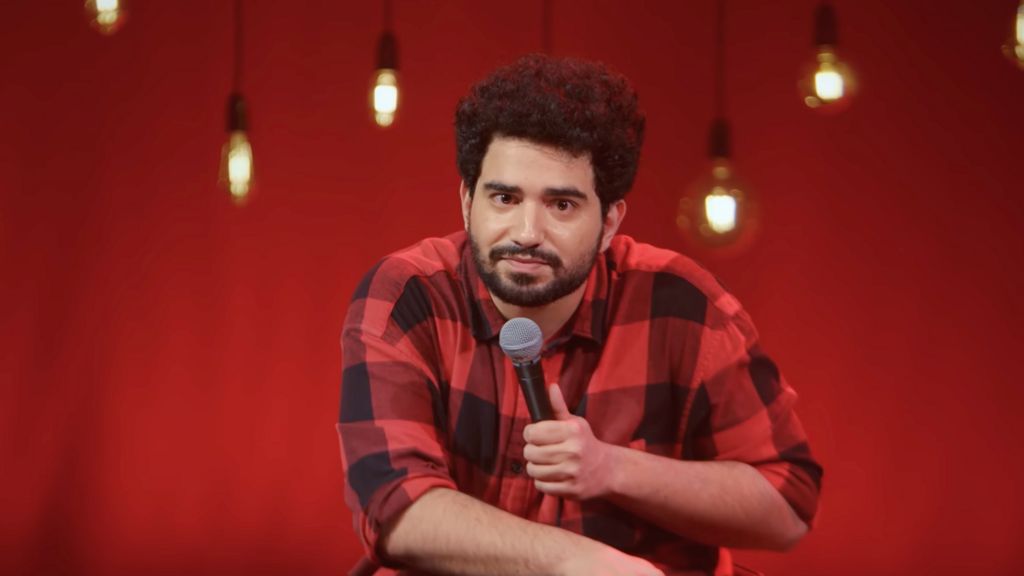
One year after a high-profile controversy derailed one of India’s biggest online comedy careers, 29-year-old creator Samay Raina has stepped back into the public eye with a raw, deeply personal new YouTube stand-up special that has already resonated with fans across the country.
Walking onto stage with his signature tousled hair and rumpled checked shirt, Raina half-smiles at the packed crowd before he even utters a word — and the audience erupts in laughter before his first punchline can land. It is a homecoming 12 months in the making, a moment that once seemed impossible after a single guest remark brought his thriving career to an abrupt halt.
Until early 2025, Raina stood at the forefront of India’s fast-growing digital comedy revolution. Unlike most veteran Indian comics who cut their teeth in small underground clubs of Mumbai and Bangalore, Raina was a product of the open internet. A former competitive chess player, he first built an audience during the global pandemic by streaming chess matches online, gradually blending game play with self-deprecating banter, bilingual observational comedy and spontaneous interactions with live chat. His quick, sarcastic wit, which switched seamlessly between Hindi and English, earned him millions of loyal followers in just a few years.
His breakout hit, *India’s Got Latent*, was a scrappy, unapologetic parody of formal television talent competitions that became a cultural phenomenon for young Indian streaming audiences. The format, which featured eccentric contestants and unfiltered roasts from judges and host, rejected the polished, censored comedy of traditional TV for a raw, real-time style that felt revolutionary. The show drew a eclectic roster of guests from across the digital space: fellow stand-ups, chess grandmasters, TikTok and YouTube creators, and podcasters, all pulled into Raina’s loose, improvisational vibe. For millions of young fans, it was comedy that felt like it spoke directly to their generation.
Then everything collapsed overnight. During an episode featuring popular Indian podcaster Ranveer Allahbadia — known to his followers as BeerBiceps — the guest posed an explicit question to a contestant that sparked immediate nationwide outrage. Police filed obscenity complaints against everyone involved in the episode, including Raina, and when Raina’s editor was arrested, the comic made the decision to take the entire *India’s Got Latent* series offline and step away from public life.
For 12 months, Raina largely vanished from social media and stages, stepping out of the spotlight he had worked so hard to build. In Indian comedy circles, his name became a cautionary tale about the volatility of online fame, where a single misstep can erase a career in days.
Now, Raina is back, and he is using the art that got him into trouble to process what happened. Earlier this week, he dropped *Still Alive*, a 90-minute stand-up special critics are already calling his boldest, most personal work to date. The set weaves together sharp self-deprecating humour with quiet reflection, addressing every part of his year-long hiatus: the whiplash of losing the public identity he built online, the vulnerability of being “cancelled” in an era where social media metrics define personal worth, the loneliness of losing connections with former collaborators, and the anxiety that shook him even as he prepared to return to the stage.
Where his old comedy was unapologetically brash and unfiltered, his new material carries a thread of quiet melancholy, honed by a year of navigating legal battles and public backlash. Even so, his timing remains as precise as ever. “I always knew there’d be an FIR against me one day,” he jokes ruefully to the crowd. “I just never thought it would be for saying nothing.”
In one of the special’s most viral moments, Raina opens up about the impact the controversy had on his family, admitting he often struggled to even answer calls from his mother, and that he felt broken by the entire experience. He also confronts the wider reality of modern Indian comedy: the sector has exploded in the last decade, with digital platforms allowing new comics to reach millions of fans across cities and small towns, turning a small urban niche into a massive mainstream industry. But that growth has come with steep new risks: comics operate under far greater scrutiny than ever before, and more creators are facing legal action, police complaints and even arrest over their material, as lines of acceptability are constantly renegotiated in the public square.
Raina nods to this fragile ecosystem in his set, riffing on George Orwell’s famous line that “every joke is a tiny revolution.” Twisting the quote to fit his own experience, he deadpans: “If Orwell had lived in India, he’d probably have said — every revolution is a tiny joke.” The line earned one of the biggest laughs of the night.
Rather than completely reinventing his comedy to avoid controversy, Raina has adjusted his approach, testing the line between his signature spontaneous, unfiltered style and the realities of working in a hyper-scrutinized digital space. It is a balancing act that nearly every young boundary-pushing Indian comedian faces today: how to stay true to a spontaneous voice while performing for an audience that is vast, diverse, and quick to judge.
The controversy that sidelined Raina has not fully disappeared, and the risks of his style of comedy remain real. But if *Still Alive* is any indication, Raina is not chasing a neat public apology or resolution — he is focused on continuing to create. For his fans, the special is not an act of contrition, it is a reassertion of his voice, and his refusal to be sidelined. Closing out the set, he shrugs, mixing defiance with punchline delivery, and says: “I’m still here, and I am going to do whatever I want.”