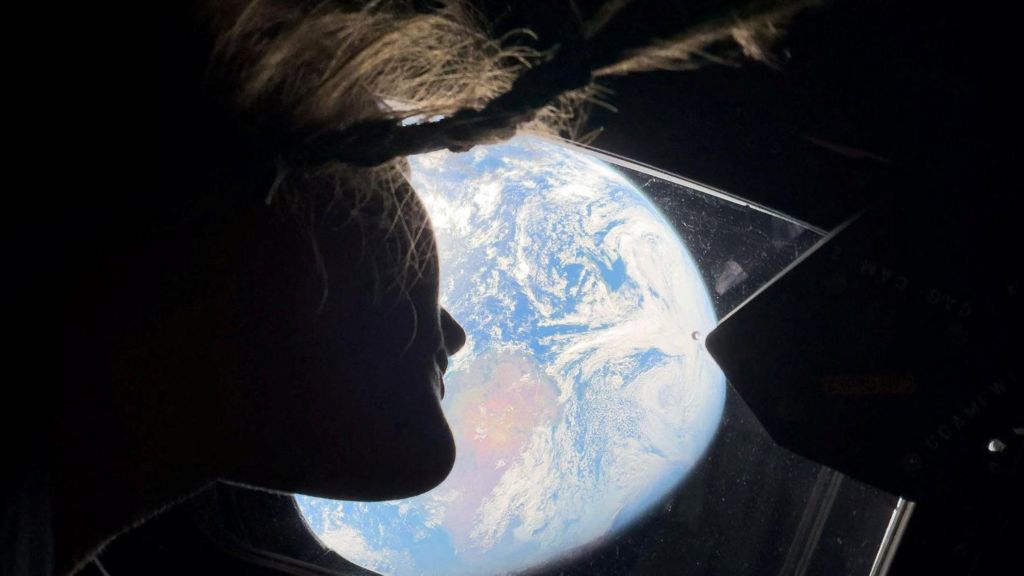
When it comes to curating playlists for different settings, most people stick to unwritten rules: high-energy techno for gym sessions, groovy disco for nightclubs, and upbeat pop for cross-country road trips. But what does the perfect playlist look like 240,000 miles from Earth, orbiting the moon? For the four-person crew of NASA’s Artemis II mission, that question has an answer that mixes modern pop, hip-hop, classic rock, and deeply personal meaning — and the world is getting a glimpse of how music connects isolated astronauts to the home they left behind.
One of the biggest breakout names from the Artemis II wake-up playlist is American rapper Denzel Curry, whose collaborative track *Tokyo Drifting* (with Glass Animals) has become one of the crew’s daily morning greetings. Curry told BBC Newsbeat he was shocked and thrilled to see his work reach such unprecedented heights. A lifelong fan of space-focused media, Curry said he would jump at the chance to meet the Artemis II crew to thank them for including his track, and he has already set a bold new career goal: becoming the first rapper to perform live from space. He hopes the cosmic placement will give his track a new wave of popularity among listeners back on Earth.
Curry is far from the first artist whose work has made the journey to orbit, and the tradition of waking up astronauts with custom-picked songs stretches back more than 60 years. Retired British astronaut Tim Peake, who became the first Briton to walk on the International Space Station (ISS) in 2015, says music is far more than just entertainment in the isolated environment of space. As he prepared for his launch, Peake hand-picked three tracks to accompany him: Queen’s *Don’t Stop Me Now*, U2’s *Beautiful Day*, and Coldplay’s *A Sky Full of Stars*. “It gives you a connection back to Earth,” Peake explained. “It reminds you of times in your life when you’ve heard that music, of friends and family waiting for you back home.” The experience of listening to familiar music while floating above Earth, a “lovely, beautiful blue, green, white marble in the blackness of space,” is deeply surreal, he added, and that emotional connection makes the soundtrack an essential part of any space mission.
Antonia Jaramillo, a NASA mission control team member based in Houston, echoed that sentiment, noting that the daily routine of wake-up music helps ground astronauts during high-stakes missions far from home. “They are by themselves, going around the moon,” Jaramillo said. “We all have our morning wake-up routine back on Earth, a soundtrack that gets you in the right headspace for the day. It’s a very similar thing we’re doing for our crew.” The process of getting the custom playlist to the crew is simpler than many might think: tracks are downloaded ahead of time, and flight controllers at mission control broadcast the songs to the capsule just like any other communication with the crew. For Artemis II, the full nine-song playlist was curated by the crew themselves, with input from their friends and family members, blending personal favorite tracks with songs that carry special meaning for the historic moon mission.
Space researchers say the longstanding marriage of music and space exploration is no accident. Dr. Eleanor Armstrong, a space researcher at the University of Leicester, explained that the morning wake-up song tradition dates all the way back to NASA’s 1960s Gemini program, drawing on a long history of military organizations like the U.S. Navy using music to structure the start of a work day. That tradition has included many iconic moments beyond pre-planned playlists: during the 1965 Gemini 6A mission, astronauts Thomas Stafford and Wally Schirra smuggled a harmonica and set of small bells on board to celebrate the first successful space rendezvous, surprising mission control with a live performance of *Jingle Bells*. Those first instruments played in space are now on permanent display at the Smithsonian National Air and Space Museum in Washington D.C.
Music has also been woven into uncrewed exploration missions: NASA’s 1977 Voyager 1 probe, now traveling through interstellar space beyond the edges of our solar system, carries a golden record filled with songs and sounds that represent the diversity of human life on Earth. More recently, the Tesla Roadster that SpaceX launched into orbit in 2018 is programmed to play David Bowie’s *Space Oddity* on an endless loop.
Artemis II crew member Christina Koch, who has long been fascinated by the intersection of music and space, has carried on that tradition in her own career. Koch famously located the original cassette tape used to play music during the 1969 Apollo 11 mission, and played it from the ISS during the 50th anniversary of the historic moon landing. During her 2019-2020 ISS mission, she even learned to play a keyboard song for her husband as a surprise for their wedding anniversary, and the pair collaboratively build playlists for her missions, so they can share the experience of her journey even when separated by hundreds of thousands of miles.
Koch told Canada’s Prime Minister Mark Carney earlier this week that the Artemis II wake-up playlist is “absolute perfection,” though she joked she was disappointed that Chappell Roan’s *Pink Pony Club* was cut off right before the iconic chorus — adding that she sang the track to herself all day after the partial play. For other crew members, the songs carry equally personal meaning: Commander Reid Wiseman said *Tokyo Drifting* reminds him of annual family vacations to Florida, where he and his daughters listen to the track on the road. Canadian astronaut Jeremy Hansen’s family picked Queen and Bowie’s *Under Pressure* for his wake-up, while NASA astronaut Victor Glover said his wife surprised him by swapping one of his planned picks for Mandisa’s *Good Morning*, a pleasant start to his days in orbit.
The full Artemis II wake-up playlist is now available to stream on Spotify, giving listeners on Earth the chance to hear the same soundtrack that’s greeted the crew during their history-making lunar orbit. The nine-track list includes *Sleepyhead* by Young & Sick, *Green Light* by John Legend and André 3000, *In a Daydream* by the Freddy Jones Band, *Pink Pony Club* by Chappell Roan, *Working Class Heroes* by CeeLo Green, *Good Morning* by Mandisa and TobyMac, *Tokyo Drifting* by Glass Animals and Denzel Curry, *Under Pressure* by Queen and David Bowie, and *Lonesome Drifter* by Charley Crockett.