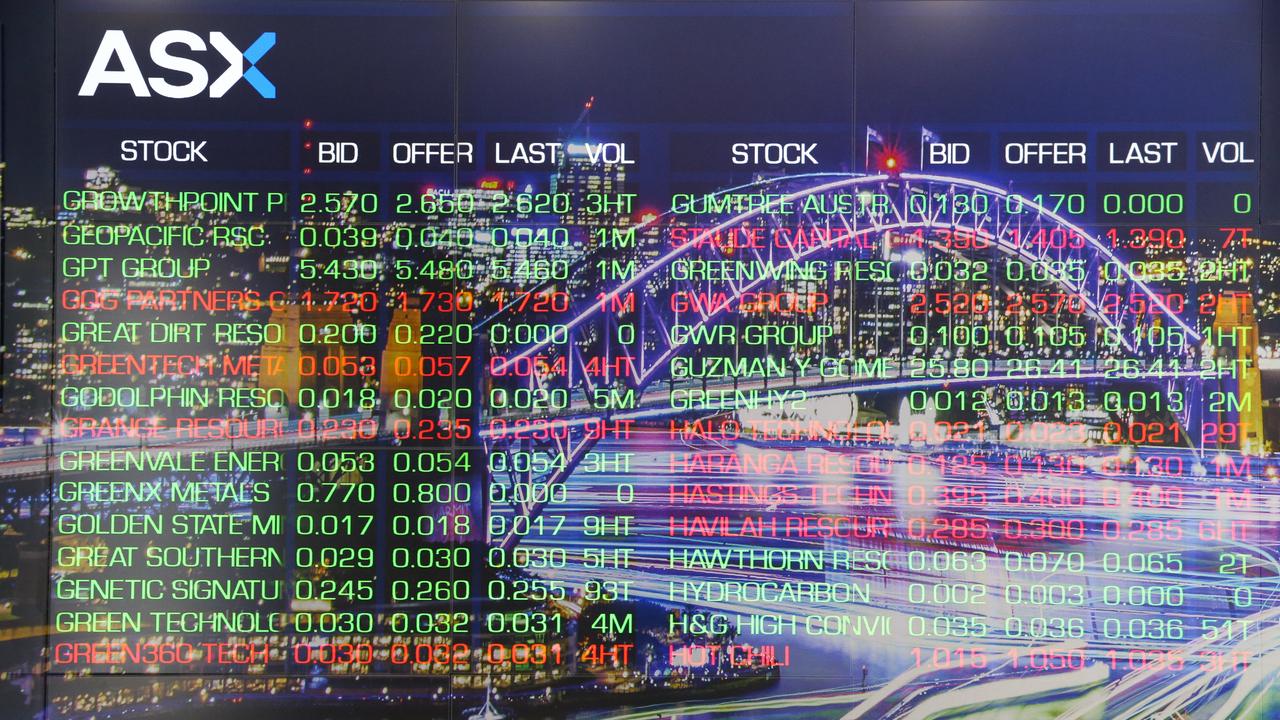
Australia’s benchmark stock index has pulled off a remarkable milestone this week, logging its strongest weekly performance in more than two years even as lingering geopolitical instability kept market sentiment cautious through Friday’s trading session. The S&P/ASX 200 edged down 12.60 points, or 0.14%, to close at 8,960.60 on Friday, while the broader All Ordinaries index also slipped by a matching 0.14% to settle at 9,155.80. Despite the single-day pullback, the benchmark ASX 200 notched a 4.2% weekly gain that leaves it just 250 points shy of its all-time record high of 9,202.
Market analyst Tony Sycamore notes that the monthly gain for April currently sits at 5.55%, which has erased 70% of the steep losses the index suffered during the market downturn in March. That recovery marks a notable turnaround following the sharp contraction Australian equities saw just one month prior.
On Friday, only three out of the Australian exchange’s 11 major sectors finished the trading day in positive territory. The real estate sector led the gains, climbing 0.88% overall, with Vicinity Centres posting a 3.2% rise to close at $2.56. Utilities and financials followed the real estate sector in positive performance. Among Australia’s big four retail banks, results were mixed: National Australia Bank (NAB) added 0.31% after announcing its second fixed-rate mortgage hike in two weeks, Commonwealth Bank of Australia rose 0.47%, Westpac Banking Corporation gained 0.28% after positioning itself as the country’s lowest-cost fixed-rate lender, and Australia and New Zealand Banking Group edged up 0.23%.
The information technology sector was the day’s poorest performer, with multiple major stocks posting notable declines. Logistics software firm WiseTech Global fell 2.6% to $37.61, cloud accounting platform Xero dropped 2.7% to $71.46, and Life360 slipped 3.3% to $19.48 shortly after unveiling workforce cuts as part of a restructuring to align its operations with artificial intelligence integration.
Geopolitical uncertainty tied to Middle East tensions remains the primary driver of market volatility, analysts confirm. While a two-week ceasefire between the United States and Iran was announced on April 8, ongoing reports of military strikes in Lebanon and the continued closure of the Strait of Hormuz, a critical global oil chokepoint, have kept traders on edge.
The uncertain outlook has hit energy sector stocks, with Whitehaven Coal falling 3.2% to $8.12 and Woodside Energy dipping 0.2% to $33.29. Despite weak energy equities, concerns over the durability of the ceasefire have pushed crude oil prices higher: Brent Crude edged up 0.8% to trade at US$96.72 per barrel.
“Oil initially fell sharply when the ceasefire was announced, as traders ruled out the most severe supply disruption scenarios,” explained market analyst Daniela Hathorn. “But prices have since rebounded as doubts about how long the agreement will hold have grown.”
Amid the broader market volatility, safe-haven assets continued to see steady gains, with gold climbing 0.06% to hit US$4,766.17 per ounce. The Australian dollar was last trading at 70.86 U.S. cents.