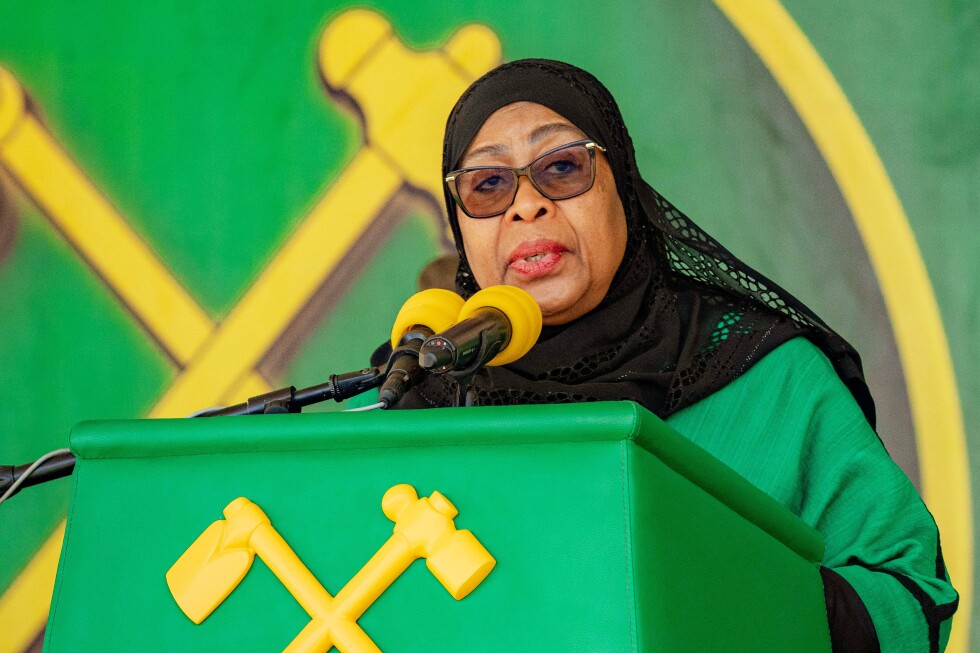
DAR ES SALAAM, Tanzania – As global oil markets roil and pump prices skyrocket across the African continent, Tanzania’s President Samia Suluhu Hassan has announced a sweeping cut to the oversized fleet of official and luxury vehicles in her presidential motorcade, a high-profile move aimed at slashing national fuel consumption amid a growing regional energy crisis.
Hassan, whose pre-reform motorcade was widely cited as one of the largest of any sitting head of state on the African continent, made the announcement Wednesday, detailing that all security and administrative personnel accompanying her on official travels will now travel in consolidated small-group transport rather than separate dedicated vehicles.
Prior to this policy shift, the president’s procession regularly included dozens of luxury vehicles assigned to government officials, protocol teams, and security detail. A viral video of a 30-vehicle Hassan motorcade circulated online in recent years, sparking widespread public discourse about the excessive scale of presidential motorcades across many African nations.
“This step is being taken to cut fuel use and bring down operational costs during this period of global price instability,” Hassan explained in her address.
Hassan’s reform comes as a wave of energy policy adjustments sweeps the African continent, with multiple national governments rolling out emergency measures to counter crippling fuel shortages and runaway price hikes. On Tuesday, Madagascar’s government declared a national state of emergency specifically to enforce mandatory fuel consumption cuts. South Africa has moved to ease consumer burden by cutting the national fuel levy, while Ethiopia has implemented formal fuel rationing to stem overuse. Senegal, for its part, has issued a blanket ban on non-essential foreign travel for all government ministers to cut national fuel expenditure.
While Hassan assured the public that Tanzania currently holds enough strategic fuel reserves to cover national demand for up to three months, she issued a stern warning to private fuel businesses against exploiting the crisis to artificially inflate prices and gouge consumers.
The current surge in global fuel prices, which has added roughly $0.40 per liter to Tanzanian pump costs over just the last two weeks, is being driven by escalating geopolitical conflict in the Middle East: ongoing hostilities between Iran and Israel and the associated risk of disruption to shipping through the Strait of Hormuz, a critical chokepoint through which roughly 20% of the world’s daily oil supply passes. Market volatility tied to this disruption has pushed up crude prices globally, with low- and middle-income importing nations like Tanzania bearing the brunt of the shock.