Three days of widespread fuel price protests have brought major disruption to transportation networks across the Republic of Ireland, prompting Irish police to formally request military support to clear vehicle blockades obstructing critical national infrastructure. The growing crisis, rooted in skyrocketing fuel costs driven by Middle East conflict, has upended daily life for commuters, emergency services and travelers alike, forcing the Irish government to take extraordinary measures to restore order.
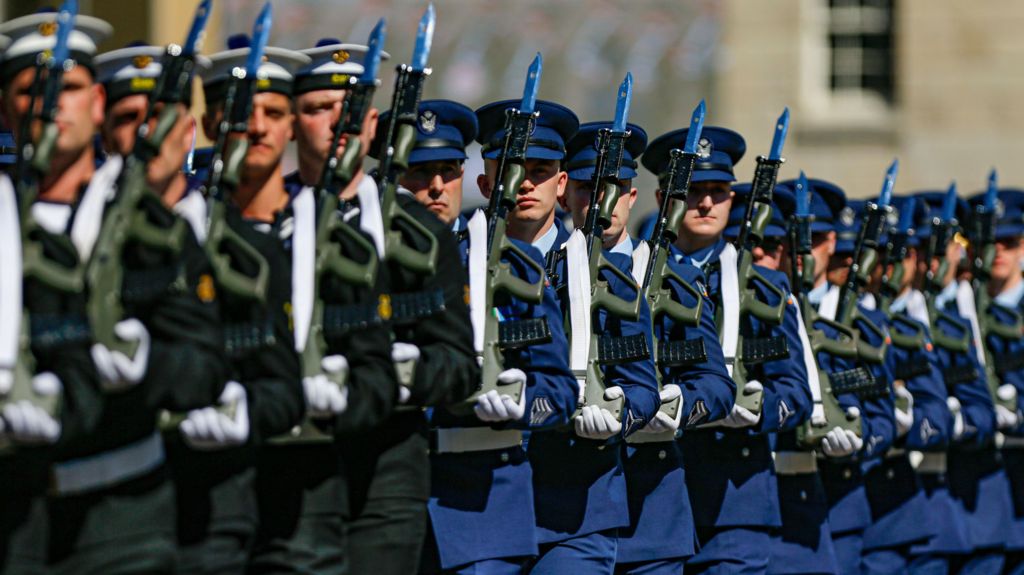
Irish Minister for Justice Jim O’Callaghan confirmed the deployment of the Defence Forces in an official statement Wednesday night, noting that the operation will focus on removing large vehicles parked illegally on key routes and infrastructure hubs. In a sharp warning to protest organizers, O’Callaghan said vehicle owners who do not move their property voluntarily by Thursday morning will have no grounds for complaint if their vehicles sustain damage during military removal. He emphasized that blocking access to essential services such as fuel and clean water represents an unacceptable violation of basic human rights, adding that the government will not tolerate continued disruption to critical national infrastructure.
The current wave of protests, which began early Tuesday, has been organized to push back against dramatic fuel price increases tied to the ongoing conflict between the US, Israel and Iran. The conflict has forced the closure of the Strait of Hormuz, a vital global shipping chokepoint that handles roughly 20% of the world’s total crude oil trade, cutting off a major share of global fuel supplies and sending prices soaring across Europe. In the Republic of Ireland, average prices have jumped to approximately €1.91 per liter for petrol and €2.14 per liter for diesel, with some remote or rural locations reporting even higher costs.
By Thursday, the disruption had spilled into a third consecutive day of travel chaos. Dublin Bus spokesperson Blake Boland told Irish national broadcaster RTÉ that the capital was facing “absolutely massive disruption” to services. On Wednesday, demonstrators completely blocked O’Connell Bridge, Dublin’s central river crossing, in both directions, bringing traffic on the city’s main thoroughfare and both the North and South Quays to a standstill. Protests were also reported on major arterial routes leading into Dublin and around other major urban centers across the country.
Transport operators have warned of widespread delays and cancellations across multiple modes of travel. Dublin Airport advised passengers to add substantial extra time to their journeys to account for road congestion, while cross-border bus operator Translink reported repeated delays to services between the Republic of Ireland and Northern Ireland. Dublin Express, which runs coach services between Dublin and Belfast, also implemented multiple diversions and delays, urging customers to plan ahead for extended travel times.
Irish national police service An Garda Síochána noted that while the protests have remained largely peaceful, their impact on daily life has been severe. “We have received reports of emergency workers being delayed or not being able to travel to their work, of people not being able to attend hospital appointments or visit loved ones who are ill,” a police spokesperson said. It was An Garda Síochána that submitted the overnight request for military assistance, a step permitted under Irish domestic law for civilian authorities facing large-scale public disruption.
Government leaders have moved to open dialogue with industry and protest representative groups amid the unrest. On Wednesday, Taoiseach Micheál Martin, Tánaiste Simon Harris and Minister of State Seán Canney held talks with the Irish Road Haulage Association (IRHA), a key stakeholder in the protest movement, with officials describing the discussions as “constructive”. Senior government officials have confirmed that they have already held meetings with national representative bodies, will continue these engagements, and are actively monitoring the evolving situation. On Friday, Minister Martin Heydon and Minister of State Timmy Dooley are scheduled to hold a new round of talks with national contractor and farming representative groups, two sectors heavily impacted by rising fuel costs.