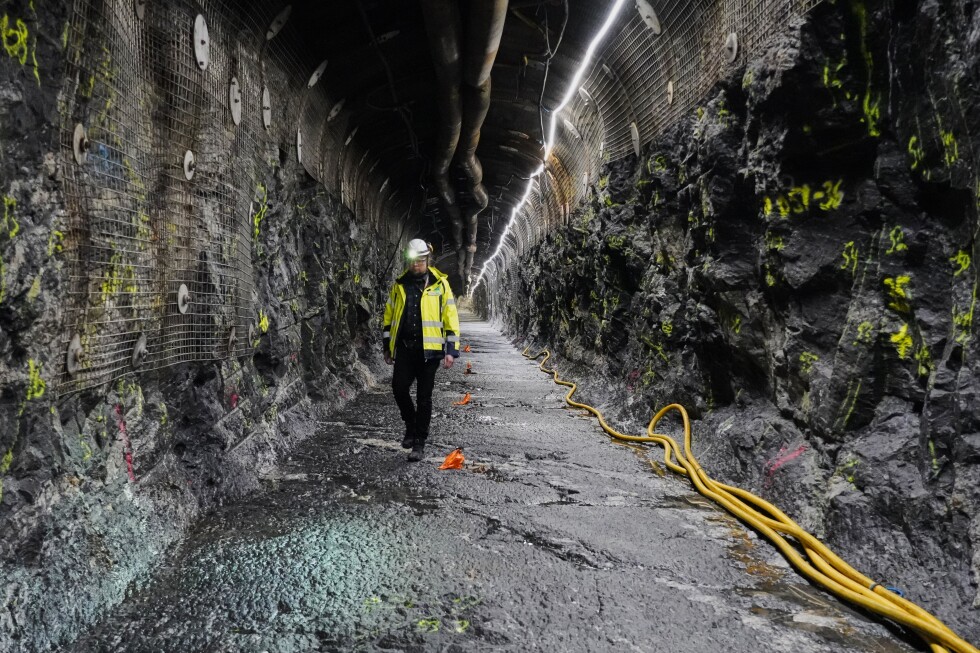
Deep beneath the forested shores of Olkiluoto Island off Finland’s west coast, a decades-long global quest to solve one of nuclear energy’s most intractable problems is about to reach a historic milestone. After 19 years of construction, the Onkalo spent nuclear fuel repository — named for the Finnish word for “cave” — is poised to become the world’s first operational permanent underground facility for isolating dangerous radioactive waste from the biosphere for hundreds of thousands of years.
Descending in an elevator that drops 430 meters (1,411 feet) in mere seconds, visitors enter a sprawling network of man-carved tunnels cut into 1.9-billion-year-old bedrock. This remote site, located just 15 kilometers from the small inland town of Eurajoki and near three of Finland’s five operating nuclear reactors, was selected for its unique geological characteristics. Geologist Tuomas Pere, navigating the tunnel labyrinth, explains that the site’s migmatite-gneiss bedrock offers exceptional stability and extremely low earthquake risk. Most critically, its isolation from population centers creates a natural buffer that makes long-term storage far safer than above-ground temporary facilities.
The 1 billion euro ($1.2 billion) project, overseen by Finnish nuclear waste management firm Posiva, is expected to receive its operating license from national regulators within months. Once operational, the facility will follow a rigorous disposal process: spent radioactive fuel rods will first be sealed in leak-resistant copper canisters at an on-site encapsulation plant using unmanned machinery. The canisters will then be transported deep into the tunnel network, placed in individual boreholes, and surrounded by layers of water-absorbing bentonite clay designed to act as an additional protective buffer. In total, Onkalo will hold 6,500 tons of spent nuclear fuel generated by Finland’s domestic reactors, operating continuously until the 2120s, when the entire facility will be permanently sealed off from the surface.
Posiva communications manager Pasi Tuohimaa frames the facility as the final missing link in making nuclear power a truly sustainable energy source. “For decades, Finnish nuclear companies have been setting aside funds specifically for this project, so the entire cost is covered by the industry, not taxpayers,” he notes. Experts estimate that it will take hundreds of thousands of years for the waste’s radioactivity to decay back to natural background levels — a timeline that far outlasts almost all of humanity’s oldest constructed monuments.
Globally, the need for a permanent solution is urgent. According to 2022 data from the International Atomic Energy Agency, nearly 400,000 tons of spent nuclear fuel has been generated worldwide since the 1950s. Two-thirds of this waste remains in temporary above-ground storage, either in water-filled pools at reactor sites or in dry cask storage facilities, while only one-third has been recycled through a complex separation process. No other permanent underground commercial repository is currently operational around the world. Sweden broke ground on its own permanent facility in Forsmark last year, but it is not expected to open until the late 2030s, while France’s Cigéo project has faced widespread public opposition and has not yet begun construction.
Despite the milestone, experts warn that long-term geologic disposal still carries unavoidable uncertainties. Edwin Lyman, director of nuclear power safety at the U.S.-based Union of Concerned Scientists, notes that while geologic disposal is widely considered the “least bad option” for nuclear waste, unanswered questions remain. “The copper canisters that hold the waste will eventually corrode, and the scientific community does not have a consensus on how quickly that process will occur,” Lyman explains. “The hope is that corrosion will proceed so slowly that most radioactivity will have decayed to safe levels before any breach can occur, but that remains an open question.”
Lyman adds that leaving large stockpiles of spent nuclear fuel above ground carries far greater risks, including vulnerability to sabotage and nuclear proliferation. Over time, the most radioactive components of spent fuel decay, leaving plutonium more accessible to bad actors seeking to build nuclear weapons, especially if reprocessing infrastructure exists. Any risks from a geologic repository, he says, will primarily fall to far future generations, a challenge that has spawned a unique field of research called nuclear semiotics, which focuses on creating warning messages that can be understood by humans 10,000 years or more from now.
To address this need, Austrian artist and researcher Martin Kunze, leading a long-term information preservation project for the OECD Nuclear Energy Agency, has developed a system called the “nuclear message.” Critical information about the repository will be inscribed on large, durable ceramic plates protected by a hardened glazed surface. Kunze proposes burying hundreds of these plates both around the repository site and within the foundations of local settlements to ensure that the warning is not lost to future civilizations, even as languages, cultures, and landscapes change over millennia.
Finnish officials frame the Onkalo project as a reflection of the country’s consistent, long-term approach to nuclear waste policy. A 1994 national law required all radioactive waste generated in Finland to be disposed of within the country’s borders, a commitment environment minister Sari Multala says Finland has upheld unlike many other nations. “When the law passed, some waste was still being exported, but we made the decision to take responsibility for our own waste, and we have stuck to that commitment,” Multala says. She did not rule out the possibility of accepting limited amounts of nuclear waste from other countries in the future, provided that all international regulatory requirements are met.
The project marks a turning point for global nuclear energy, offering a real-world test of whether permanent geologic isolation can solve the nuclear waste problem that has stalled nuclear expansion in many countries for decades.