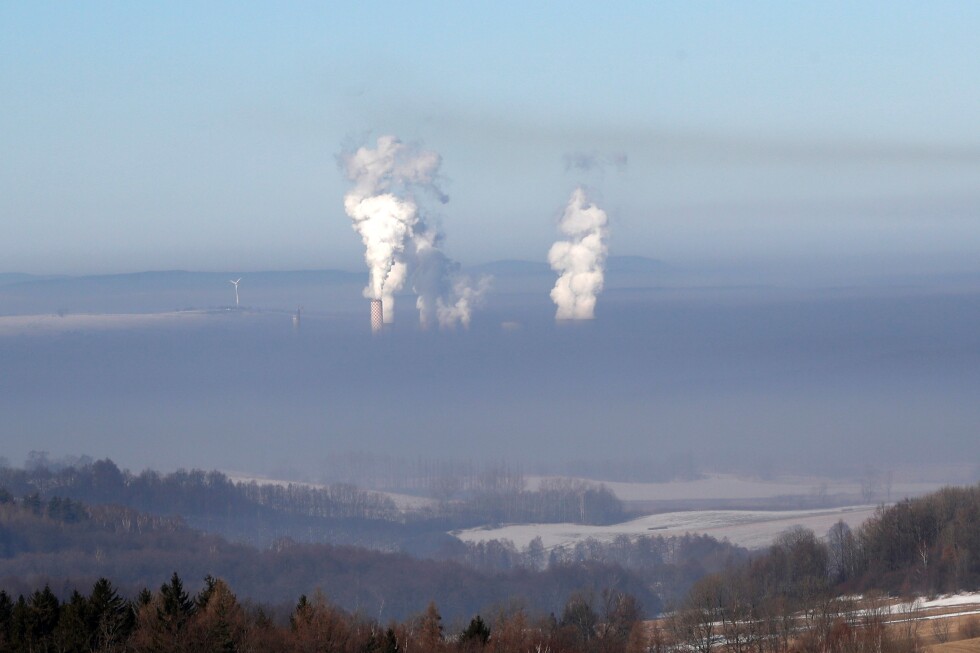
Nestled in Central Europe, Poland has long struggled with one of the continent’s worst air pollution crises, driven overwhelmingly by a reliance on coal-fired domestic heating. The threat this poses to both public health and national energy independence has grown starker in recent years, as ongoing geopolitical instability including the Iran war has sent global fuel markets into chaos. Now, environmental advocates are sounding the alarm that Poland’s signature program to tackle this dual crisis is grinding to a halt, putting years of hard-won progress at risk.
Before the Polish government launched its ambitious nationwide Clean Air program in 2018, persistent violations of strict European Union air quality standards were common across large swathes of the country. Launched to address the root of the problem – coal-powered home heating, which accounts for the majority of Poland’s harmful smog emissions – the initiative provides direct grants to households and small businesses to swap out old coal boilers for cleaner systems running on natural gas, electricity, or wood pellets, as well as fund upgrades to thermal insulation that cut overall domestic energy demand. The ultimate goal of the program is to replace all 3.5 million existing coal-fired heating units in the country.
Since the program’s 2018 launch, approximately one million out of Poland’s nearly 38 million residents have taken advantage of the grants to upgrade their heating systems, leaving 2.5 million outdated units still in need of modernization. Early results have already demonstrated the policy’s tangible impact: Andrzej Guła, a representative of leading environmental non-governmental organization Polish Smog Alert, notes that the southern city of Krakow, once infamous for chronic severe smog, has seen the number of high-pollution days drop annually from 150 to just 30. While 30 days of dangerous smog remains far too many for public health, the sharp decline proves the program delivers meaningful change when supported.
That progress, however, has come to an abrupt standstill. In 2024, the initiative hit its peak, with more than 250,000 applications for financing submitted across the country. By the end of that year, the Polish government moved to reform the program to crack down on alleged misuse of public funds, implementing a temporary pause on all new application approvals. That pause, environmental activists argue, triggered a sharp collapse in public trust that has persisted long after the reforms were implemented. Data published by Polish Smog Alert during a Warsaw press conference on March 31 showed that total application numbers in 2025 were just one-fifth of the 2024 peak, and the downward spiral has continued into 2026. The organization warns that progress on cutting air pollution and reducing domestic energy use has now plateaued entirely, with no signs of a rebound.
Krzysztof Bolesta, Secretary of State at Poland’s Ministry of Climate and Environment, defended the government’s reforms, framing the changes as a necessary step to ensure public funding only goes to eligible, high-impact projects and prevent waste of taxpayer resources. He acknowledged the unique challenge Poland faces in the EU, noting no other member state has such a high share of coal in residential heating. While Bolesta reaffirmed the government’s commitment to improving national air quality, he admitted that the work will remain extraordinarily difficult, and Poland will likely continue to lag behind other EU nations on pollution reduction for the foreseeable future.
Environmental leaders say the current global energy instability caused by the Iran war should act as a critical wake-up call for the Polish government to revitalize the stalled program. Piotr Siergiej, another activist with Polish Smog Alert, explained that cutting domestic energy demand through the Clean Air initiative directly strengthens Poland’s energy security by reducing the country’s reliance on volatile imported fossil fuels and biomass, even for lower-carbon alternatives like wood pellets. “This program can become an epochal chance to energetically transform our buildings and homes, to make us more independent from those energy crises which we are facing now and whose future we can’t predict,” Siergiej said.