Financial markets across the globe faced heightened volatility on Tuesday, driven by cascading geopolitical uncertainty as a self-imposed deadline from U.S. President Donald Trump for Iran to reopen the Strait of Hormuz approached. With the clock ticking down to an 8 p.m. Eastern time cutoff, Trump issued a stark warning that a “whole civilization will die tonight, never to be brought back again” if Tehran failed to comply with his demands. In direct response, Iranian officials have called on civilian youth to form human chains around critical infrastructure, including power plants and bridges that the U.S. president has explicitly threatened to destroy.
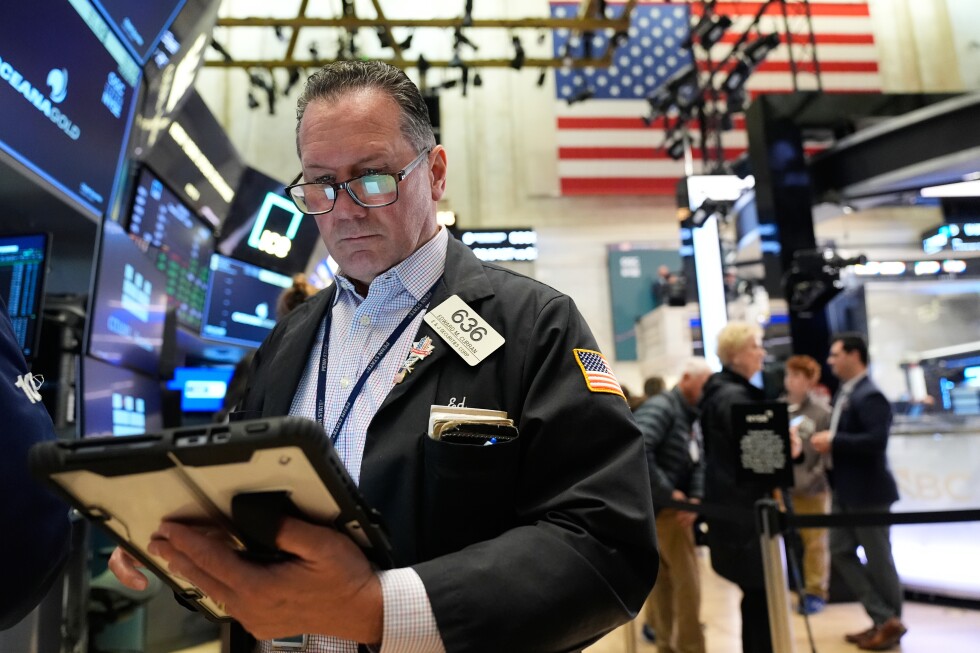
By 11:30 a.m. Eastern time, major U.S. stock indices were deep in negative territory. The broad-based S&P 500 slid 0.8%, while the Dow Jones Industrial Average dropped 355 points, also a 0.8% decline. The tech-heavy Nasdaq composite underperformed further, closing the mid-morning window down 1.2%. Trading has been marked by erratic swings since the outbreak of hostilities between the U.S.-led coalition and Iran in late February, and Tuesday was no exception: within the first hour of trading alone, the Dow fluctuated wildly from a 74-point gain to a 425-point loss as investors scrambled to price in shifting geopolitical risks.
The most dramatic market moves played out in the global energy sector, where crude oil prices spiked sharply following Iran’s decision to block the Strait of Hormuz, a critical chokepoint through which roughly 20% of the world’s daily oil supplies pass to global markets. The ongoing conflict has already disrupted crude production and shipping routes across the Persian Gulf, pushing energy prices far above pre-war levels. On Tuesday, benchmark U.S. crude climbed 3.2% to settle at $116.08 per barrel, while international benchmark Brent crude added 0.9% to reach $110.75 per barrel — up from roughly $70 per barrel before the war began in late February. The national average for a gallon of regular gasoline in the U.S. has now jumped to $4.14, up from under $3 just weeks before the start of hostilities, AAA data shows.
Market analysts warn that prolonged disruption to Persian Gulf energy supplies could lock in sustained high oil prices, triggering a global wave of persistent inflation that would weigh heavily on household budgets and economic growth. Compounding uncertainty, Iran rejected a latest ceasefire proposal on Monday, reiterating that it would only accept a permanent end to all offensive military operations. This is not the first time Trump has issued a high-stakes deadline for bombing Iranian infrastructure, only to back down and extend the ultimatum multiple times since the war began. This pattern of shifting threats, paired with the president’s 2025 decision to walk back multiple threatened stiff tariffs on global imports after his second inauguration, has left investors guessing whether another delay could be in the cards.
“Investors are likely to remain on edge and markets unable to establish trends, probably until there is a clear outcome later this evening: a deal, the U.S./Israeli strikes intensify, or Iran’s retaliation becomes escalatory instead of proportional,” said Paul Christopher, head of global investment strategy at Wells Fargo Investment Institute.
Sectors most sensitive to rising fuel costs bore the brunt of the selling pressure on Wall Street. Norwegian Cruise Line Holding dropped 5% amid expectations of higher operating costs, while United Airlines sank 3.9%. Discount retailers that cater to lower-income households, whose customers are least able to absorb rising gasoline prices, also saw sharp declines: Dollar Tree slid 4.9% and Dollar General fell 2.7%. Cryptocurrency-linked firms also fell alongside sinking bitcoin prices, with Coinbase Global dropping 4% and Strategy declining 4.4%.
Not all sectors closed in negative territory, however, as a handful of positive corporate and regulatory news limited broader market losses. Health insurance stocks surged after the U.S. Centers for Medicare & Medicaid Services announced an expected net average 2.48% increase in Medicare Advantage payments for 2027, a figure that outpaced most investor expectations. UBS analyst AJ Rice noted that the higher payment forecast was better than many on Wall Street had predicted, pushing UnitedHealth Group up 8.7% and Humana 6.2% higher.
Universal Music Group (UMG) also provided a boost to global indexes after Bill Ackman’s Pershing Square Capital Management announced a cash-and-stock bid to acquire the major record label, home to superstars including Taylor Swift and Bad Bunny, for an approximate valuation of $64 billion. Pershing Square argues that the buyout would eliminate lingering uncertainty that has suppressed UMG’s share price, and if completed, would relocate the company’s headquarters to Nevada and shift its primary listing from Amsterdam to the New York Stock Exchange. UMG’s Amsterdam-listed shares jumped 12.3% on the news, but still trade below the offer price, signaling that investors remain skeptical the deal will cross the finish line.
Overseas, most European stock indices finished the day in negative territory, while Asian markets delivered mixed results: South Korea’s Kospi led regional gains with a 0.8% climb. In U.S. bond markets, Treasury yields moved higher ahead of the deadline, with the 10-year Treasury yield rising to 4.36% from 4.34% late Monday, lifted in part by climbing oil prices. The 10-year yield now sits well above its pre-war level of 3.97%, and the rise has pushed up mortgage and lending rates for U.S. households and businesses, creating additional downward pressure on overall economic growth.