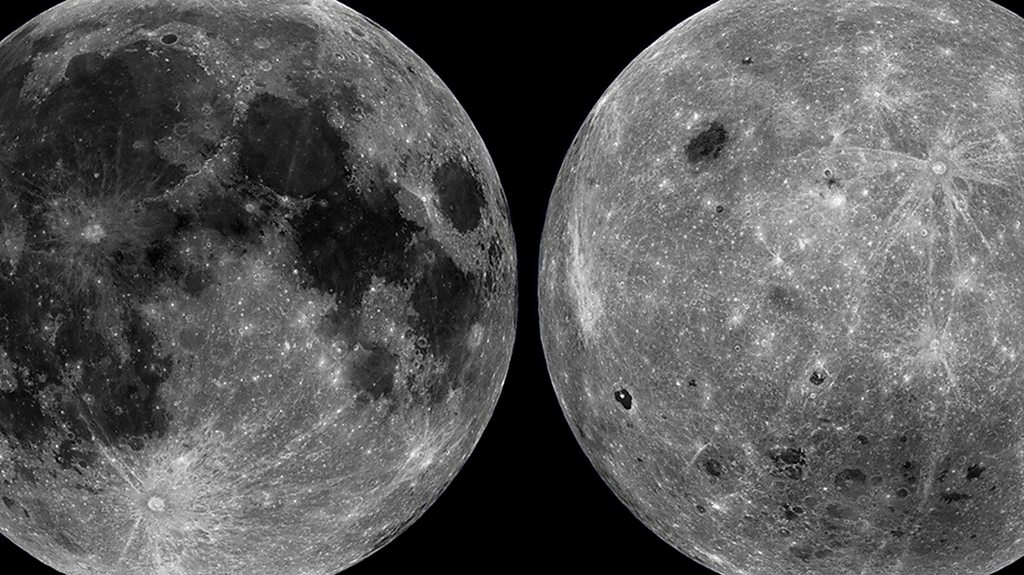
For decades, the hidden far side of the Moon has captivated astronomers, space enthusiasts, and researchers alike, its rugged terrain locked from view from Earth’s surface and shrouded in a veil of scientific mystery. Now, a milestone in modern human space exploration has pulled back that curtain a little further: the four-person crew of NASA’s Artemis II mission has successfully completed a looping flyby trajectory that carried the spacecraft directly around the little-explored far side of Earth’s celestial companion.
The Artemis program, NASA’s flagship initiative to return humans to the lunar surface for the first time since the end of the Apollo program half a century ago, marked a critical proof-of-concept with this mission. Unlike the Apollo missions that primarily targeted near-lunar orbit and selected surface landing sites, Artemis II’s carefully calculated orbital path was designed specifically to test spacecraft systems, navigation capabilities, and deep space communication infrastructure while giving human observers their first up-close look at the lunar far side in decades.
During the period the spacecraft was blocked from direct line-of-contact with Earth, mission control teams relied on NASA’s lunar relay satellite network to maintain continuous communication with the crew, testing infrastructure that will support the upcoming Artemis III surface landing mission. The far side of the Moon, which differs dramatically from the near side in its geological composition — boasting thicker crust, more impact craters, and far fewer dark volcanic maria — offers unique scientific opportunities that have only been sampled by uncrewed orbiters and landers until now.
This successful flyby paves the way for future robotic and human exploration of the lunar far side, which scientists believe holds critical clues about the formation of the Earth-Moon system, early solar system impacts, and even offers a uniquely radio-quiet environment ideal for future deep space astronomy observations. For the Artemis program, the completion of this leg of the mission confirms that human deep space exploration capabilities are on track to establish a sustainable lunar outpost, and eventually prepare for human missions to Mars.