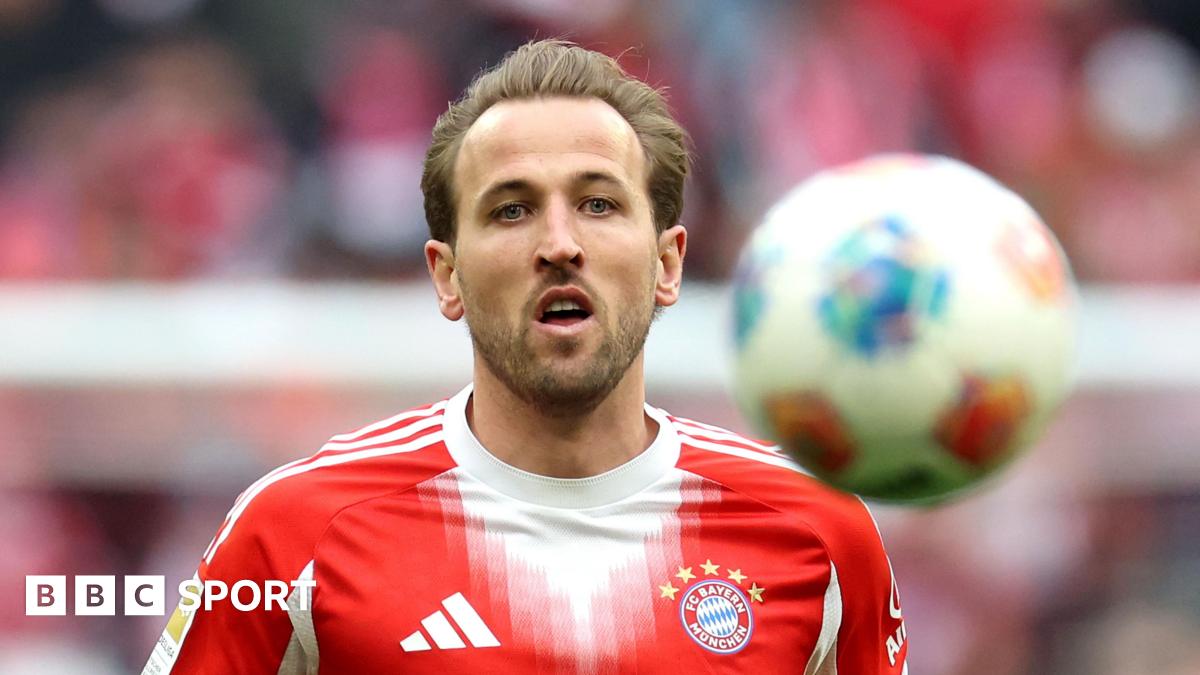
As European football’s biggest club competition enters its decisive quarter-final stage, one of the sport’s most hotly anticipated individual prizes is already reaching a defining early crossroads. Harry Kane, the prolific England captain who has rewritten the goalscoring record books this season, could become the first British footballer to lift the Ballon d’Or in 25 years – but an unexpected ankle injury has thrown his historic bid into question just days before Bayern Munich’s crucial first-leg tie against Real Madrid at the Santiago Bernabeu.
No player across the top European leagues can match Kane’s output in the 2025-26 campaign: the striker has notched 53 goals in just 45 appearances across both club and country, a remarkable return that has already cemented his status as one of the game’s all-time greatest goalscorers. Yet Kane himself acknowledges that sheer individual goalscoring form will not be enough to secure football’s most prestigious individual award. The 31-year-old was forced to sit out Bayern’s dramatic 3-2 Bundesliga win over Freiburg at the weekend, leaving the club and its fans waiting anxiously for updates on his fitness ahead of Tuesday’s 20:00 BST kickoff. Having ended his long personal trophy drought by winning the Bundesliga with Bayern last season, Kane knows additional domestic silverware in Germany will not be enough to sway Ballon d’Or voters.
In modern football, the Ballon d’Or has increasingly become an award that rewards team success as much as individual brilliance. Contrary to the original vision of the prize, which was created to honor standout individual performances, a major team trophy – whether the Champions League, World Cup, or a top continental championship like the European Championship – is now widely viewed as an unwritten prerequisite for lifting the golden ball. Kane will get two shots at securing that required title this year: this month’s Champions League run with Bayern, followed by the 2026 FIFA World Cup in North America this summer, where he will captain the England national side. But the Bayern clash offers arguably his clearest and earliest path to building a winning case.
Bayern have been in devastating form all season, racking up 37 wins from 43 matches across all competitions, but their European campaign will rise or fall on the form of their talismanic striker. Speaking to media back in November, Kane summed up the modern reality of the Ballon d’Or race: “I could score 100 goals this season, but if I don’t win the Champions League or the World Cup, you’re probably not going to win the Ballon d’Or. It’s the same with any player. You have to be winning those major trophies.”
Historical data backs up that assessment. Since 2006, nearly 80% of Ballon d’Or winners have claimed the award in a year where they also lifted either the Champions League or a major international tournament. Only two all-time greats – Lionel Messi and Cristiano Ronaldo – have bucked that trend in the past two decades: Messi won in 2010, 2012 and 2019 despite Barcelona exiting the Champions League at the semi-final stage in each of those years, while Ronaldo claimed the 2013 prize when Real Madrid also bowed out at the same stage. In more recent seasons, the trend has grown even stronger: 10 of the last 11 Ballon d’Or winners have won the award after a Champions League or major international title, with every winner over the past five years following this pattern.
A 2022 rule change has only reinforced this dynamic. Prior to 2021, the award honored performances across a calendar year, straddling two club seasons. Now, it is aligned to a single August-to-August club campaign in Europe, putting even greater focus on end-of-season trophy runs. While the 100 top international journalists who vote for the award are instructed to consider individual talent, class and fair play alongside team achievements, it is the team success factor that consistently proves decisive.
Tuesday’s Bernabeu clash carries extra weight for Kane because it pitches him directly against his closest rival for the 2025 Ballon d’Or: Real Madrid’s own star striker Kylian Mbappé. Like Kane, Mbappé has never won the award, but he is enjoying a sensational debut second season in Spanish football, notching 38 goals and 43 total goal involvements across all competitions this term – totals that place him second only to Kane among players in Europe’s top five leagues. Also yet to win a Champions League title, Mbappé currently leads this season’s competition scoring charts with 13 goals, just four short of matching the single-season tournament record.
Beyond his club form, Mbappé, the France captain, has already notched 12 World Cup goals in his career, putting him within striking distance of Miroslav Klose’s all-time record of 16. If he leads Real Madrid to Champions League glory this month or fires France to World Cup glory this summer while breaking that record, his Ballon d’Or credentials will become nearly unbeatable.
Mbappé is far from Kane’s only competitor this year. His own Bayern team-mate Michael Olise, a London-born winger who joined the club from Crystal Palace in 2024, has emerged as a key player for France over the past 12 months, notching a leading 24 assists across all competitions this season to cement his own case. Lamine Yamal, the 18-year-old Barcelona sensation who finished second in last year’s Ballon d’Or voting, has continued to go from strength to strength for La Liga leaders Barcelona and World Cup favorites Spain, breaking a raft of age-related records and in line to become the first teenage winner of the award if he continues his form.
Real Madrid’s Vinícius Júnior and Barcelona’s Raphinha are often overshadowed by their more high-profile team-mates Mbappé and Yamal respectively, but a strong World Cup performance with Brazil could catapult either into late contention. The North American World Cup also offers a final swansong chance for the sport’s two greatest modern icons: eight-time winner Messi and five-time winner Ronaldo. While both now play outside Europe, they have been eligible for the award since 2007, and their candidacies will stand or fall almost entirely on how they perform for their national sides this summer.
For Kane, the history of British Ballon d’Or winners offers both inspiration and reason for caution. Only seven British players have ever won the award, and the last to do so was Michael Owen for Liverpool back in 2001 – exactly a quarter of a century ago. The first ever Ballon d’Or went to England’s Stanley Matthews in 1956, and the 1960s saw a golden run for British winners, with Manchester United’s iconic “Holy Trinity” of Denis Law, Bobby Charlton and George Best claiming the prize in 1964, 1966 and 1968 respectively. Kevin Keegan, who won back-to-back Ballon d’Or awards with Hamburg in 1978 and 1979 after moving from England to Germany, offers a particularly relevant template for Kane’s current bid.
Owen’s 2001 win came after he led Liverpool to three domestic cup titles and scored a famous hat-trick for England in a 5-1 World Cup qualifying win over Germany in Munich. Since 2001, the award has been dominated by players from Spanish giants Barcelona and Real Madrid, who have produced 15 of the 23 winners in that period. Only three British players have made the top three in that time: Frank Lampard (second in 2005), Steven Gerrard (third in 2005) and Jude Bellingham (third in 2024). Another point of concern for Kane is that no Ballon d’Or winner has played for a German club since Matthias Sammer won it for Borussia Dortmund in 1996, though Robert Lewandowski was widely considered a deserving winner with Bayern in 2020 when the award was controversially canceled due to the COVID-19 pandemic.
For fans eager to follow the action, full highlights of every Champions League quarter-final first leg will be available from 22:00 BST on Wednesday via BBC iPlayer and the BBC Sport website and app. A special edition of Champions League Match of the Day will also air on BBC One at 22:40 BST on Wednesday, recapping all the action from the week’s ties.