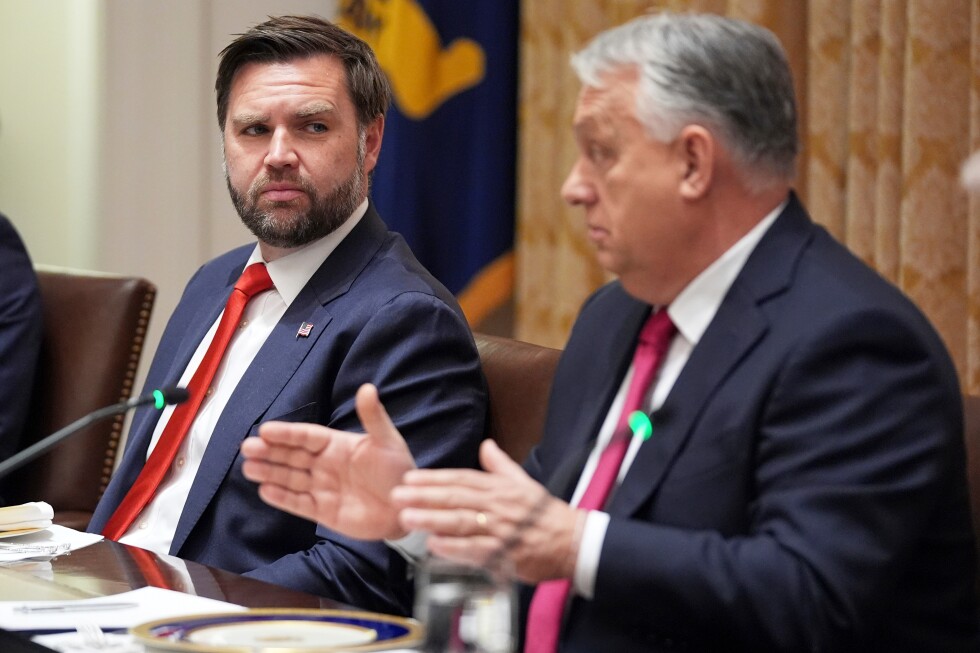
On Tuesday, U.S. Vice President JD Vance touched down in Budapest, Hungary, capping a sequence of high-profile displays of backing from the Trump administration for incumbent Prime Minister Viktor Orbán, a long-time conservative ally who is locked in a tight race that threatens to end his 16 consecutive years in power.
Orbán, who has led Hungary since 2010, is vying for a fifth straight term at the helm of his nationalist-populist Fidesz party. Ahead of the April 12 general election, most independent opinion surveys put Fidesz more than 10 points behind among committed voters, trailing the center-right Tisza party led by challenger Péter Magyar. This race stands as the toughest electoral test Orbán has faced in two decades, with many political analysts forecasting a possible end to his grip on national governance.
For years, critics have levied accusations against Orbán that he has systematically consolidated control over Hungary’s state institutions, restricted independent press freedom, and allowed systemic political corruption to take root — all claims the prime minister has repeatedly and categorically denied. Despite this controversy, Orbán has emerged as a defining figurehead for the global far-right movement, drawing widespread admiration from conservative populist factions across the Western world.
President Donald Trump has repeatedly thrown his full support behind Orbán’s re-election bid, and ranks of the MAGA movement have widely lauded the Hungarian leader’s hardline stances on immigration, rollbacks of LGBTQ+ protections, and consolidation of control over domestic media and academic institutions.
Trailing in polls, Orbán has turned to appearances with high-profile international supporters to shore up his campaign’s momentum, and Vance’s two-day visit marks the most public demonstration of the Trump administration’s all-in commitment to securing an Orbán victory this weekend. During the trip, Vance is scheduled to hold an official bilateral meeting with Orbán before making an unprecedented public appearance at one of the prime minister’s campaign rallies.
This direct involvement in another nation’s electoral campaign marks a break from longstanding diplomatic norms, where most foreign leaders avoid openly campaigning for domestic political candidates in other countries. The irony of Vance’s visit has not gone unnoticed: Orbán has frequently lashed out at any comment on Hungary’s election from European Union leaders, framing even mild expressions of support for his challengers as an unacceptable violation of Hungarian sovereignty and foreign meddling.
Vance’s stop in Budapest is far from the first show of U.S. support for Orbán from the second Trump administration. Hungary has long stood at odds with the vast majority of the European Union, refusing to provide military or financial aid to Ukraine following Russia’s full-scale 2022 invasion, and continuing to import large volumes of Russian energy despite EU sanctions and efforts to diversify away from Moscow-supplied fuel. Last November, following a White House meeting between Orbán and Trump, Hungary secured a rare exemption from U.S. sanctions on Russian oil and gas. In February, U.S. Secretary of State Marco Rubio traveled to Budapest, where he openly praised Orbán and highlighted the close ties between the prime minister and Trump, telling Orbán that “President Trump is deeply committed to your success because your success is our success.”
Last month, Orbán hosted the Hungarian iteration of the Conservative Political Action Conference (CPAC), drawing dozens of far-right allies from across Europe and beyond, alongside a gathering of the Patriots for Europe, the third-largest parliamentary grouping in the European Parliament. Trump delivered a pre-recorded video address to the conference, reiterating his “complete and total endorsement” of Orbán and calling him a “fantastic guy.”
The Trump administration’s enthusiastic backing of Orbán aligns with its broader strategy of building close ties with far-right populist parties across Europe, a relationship that has been reciprocated by conservative nationalist leaders from Spain, France, Germany and the Netherlands. Still, Trump’s unconventional foreign policy approach has created tensions in many European relationships in recent months, with disputes over Greenland, Venezuela and Iran straining bilateral ties with multiple U.S. allies on the continent. Orbán, however, has remained one of Trump’s most unwavering international supporters, even echoing the U.S. president’s false claims that the 2020 U.S. presidential election was stolen through widespread voter fraud. Shortly before Trump’s second inauguration, Orbán told state-run Hungarian radio that Democrats “took the presidency away from Donald Trump through fraud.”