Under the dimming twilight sky over a Kyiv-edge nature park, a crowd of children pressed in closely around a team of volunteers. One by one, the volunteers gently unfolded cloth pouches, and small winged figures slipped out, darting into the cooling evening air. With each bat that took flight, more than 1,000 onlookers broke into cheers and applause — among them local families, off-duty Ukrainian soldiers, and dedicated bat lovers, a handful of whom showed up in creative goth-style outfits celebrating the species.
The mass release on Saturday was one of dozens of similar events held across Ukraine to mark the arrival of spring. Hundreds of bats set free that evening had been pulled from war-ravaged regions in eastern Ukraine, where ongoing conflict has shattered the natural and man-made habitats the tiny mammals depend on for survival. Organized by the Ukrainian Bat Rehabilitation Center, the event is part of the charity’s years-long work to protect the nation’s bat populations, all 28 native species of which are classified as protected endangered animals in Ukraine.
“For our organization, this work is non-negotiable. These animals are on the national red list of endangered species, and preserving their populations is a critical responsibility,” explained Anastasiia Vovk, one of the center’s volunteers.
For the attendees who gathered on Saturday, the event offered far more than a wildlife conservation update. After a brutal winter defined by subzero temperatures, repeated Russian drone and missile strikes, and widespread, crippling power outages that upended daily life across Kyiv, the release was a rare, welcome chance to gather as a community and enjoy a casual family outing.
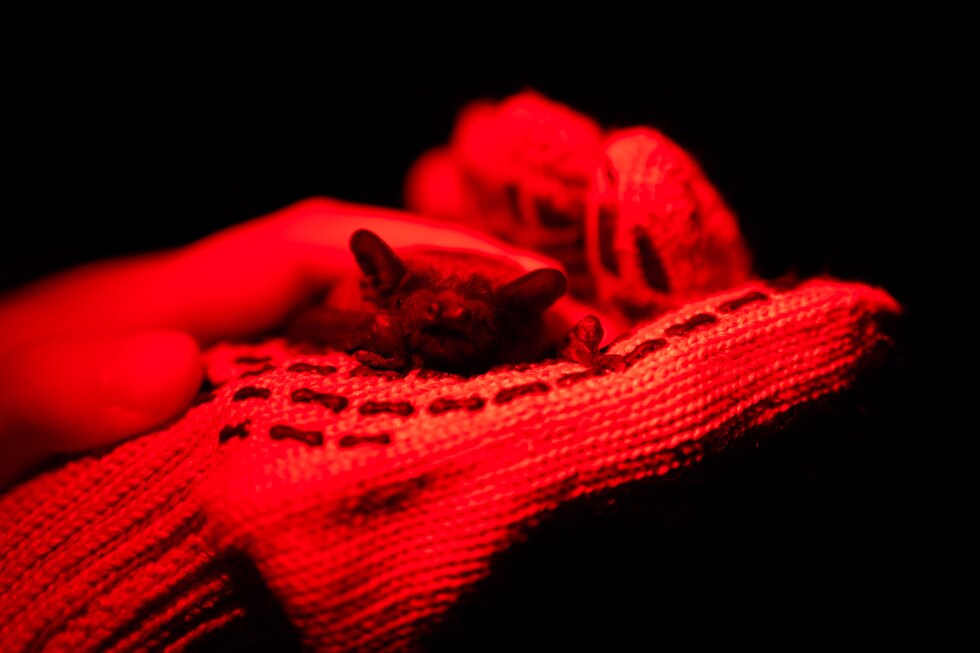
Children, many decked out in custom bat-themed T-shirts and hats, watched intently as volunteers used tweezers to feed the rescued bats mealworms ahead of their release, and some young attendees even got the chance to slip on protective gloves and hold the small mammals themselves before they flew off.
Oleksii Beliaiev, a 54-year-old Kyiv resident who attended the event with his family, summed up the mood of the crowd. “Life goes on despite the war,” he said. “The war is the main thing right now for all of us, but there has to be space for other things that matter too.” Beliaiev, who runs a small local printing business, also splits his time volunteering for Ukrainian army support projects.
The conflict has not only displaced millions of Ukrainians — it has also forced thousands of wild animals from their natural habitats, conservationists explain. Shelling that destroys buildings and natural landforms has wiped out critical bat roosts, and repeated shockwaves from explosions disorient and stress the small mammals, often with fatal consequences.
Alona Shulenko, who led Saturday’s release event, explained that winter disturbance poses an especially deadly risk. “In winter, bats hibernate to conserve energy through the cold months. If they are woken early by explosions or habitat destruction, they burn through their stored energy far too quickly and almost always die,” Shulenko said. “They also reproduce very slowly, with only one or two offspring per year, so populations recover extremely slowly after losses.”
As their natural hibernation sites continue to be destroyed by the war, more and more bats have moved into Ukrainian cities, taking shelter in wall cracks, building crevices and residential balconies. But ongoing construction, repair work and further destruction of damaged urban structures has led to whole colonies being killed, Shulenko added.
All native bat species in Ukraine are insectivores that play a critical role in managing local pest populations, and the nation sits along a key migration route for bat populations moving between eastern and western Europe. Since its founding, the Ukrainian Bat Rehabilitation Center has rescued more than 30,000 bats across the country, including 4,000 just last winter alone.
Even amid the chaos of full-scale war, the center’s team has continued their critical work. “We are all living in wartime, and everyone has their own struggle to get through each day,” Shulenko said. “But we are doing what we know best, what we are called to do. If we stop our work, thousands of bats will die, and that is a loss we cannot afford.”