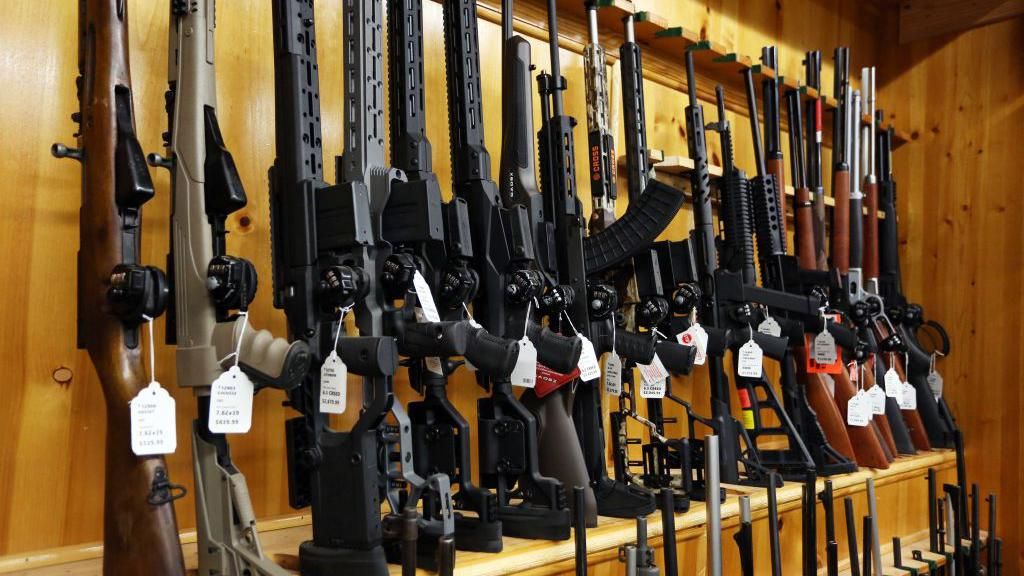
For more than 35 years, gun control advocate Heidi Rathjen has pushed for sweeping restrictions on assault-style weapons, a fight born from unspeakable tragedy. In 1989, a gunman opened fire on her campus at Montreal’s École Polytechnique, killing 14 women and wounding more than a dozen others. The massacre marked a defining shift in Canada’s approach to gun violence, but it would take another 31 years—and a second mass killing that left 22 dead in Nova Scotia in 2020—for the federal government to finally act, rolling out a national ban on roughly 2,500 models of assault-style firearms paired with a voluntary buyback program to remove existing weapons from civilian circulation.
Three years on, what was meant to be a landmark public safety win has devolved into a fragmented, widely criticized effort facing pushback at every turn, from provincial governments and law enforcement to legal gun owners and even the country’s own public safety minister. Experts and advocates warn the program is at high risk of falling far short of its goals, plagued by poor communication, inconsistent policy design, and political division.
Rathjen, who now serves as a spokesperson for gun control group PolySeSouviene, acknowledges the 2020 ban represents a step forward for public safety, but argues it is fatally flawed by its narrow scope. Key models of semi-automatic weapons, including the widely owned SKS rifle, remain excluded from the ban, leaving thousands of high-powered firearms still in circulation. “Without a comprehensive ban on assault weapons, there is no ban… and the money will be wasted,” she said, warning that the federal government’s $215 million CAD investment in the program risks delivering little meaningful improvement to community safety if the scope of the ban is not expanded.
Even Public Safety Minister Gary Anandasangaree publicly expressed confusion over the policy’s logic, in a private conversation leaked to the *Toronto Star* late last year. Pressed on the program’s value, given that the vast majority of gun crime in Canada is committed with unregistered, illegal firearms, he told a Toronto resident, “Don’t ask me to explain the logic to you on this.” Anandasangaree later walked back the comments, calling them “misguided” and reaffirming his support for the initiative, but the leak amplified public doubts about the policy’s coherence.
The challenges facing Canada stand in stark contrast to the widely celebrated success of similar programs implemented after mass shootings in Australia and New Zealand. After the 1996 Port Arthur massacre that left 35 dead, Australia implemented a national ban and buyback that removed more than 650,000 firearms from circulation, while New Zealand collected roughly 56,000 weapons after the 2019 Christchurch mosque shooting that killed 51 people. Joel Negin, a public health professor at the University of Sydney, said Australia’s success stemmed from two key choices that Canada failed to replicate: a rapid, coordinated rollout of a broad suite of gun control measures immediately after the tragedy, and sustainable, dedicated funding from a temporary national tax levy. In Canada, by contrast, the buyback has been rolled out slowly, disconnected from complementary interventions targeting illegal gun trafficking, and lacks the coordinated intergovernmental alignment that made Australia’s program work. “The situation in Canada is that the gun buy-back has been proposed, but it’s not necessarily linked closely to other interventions,” Negin explained, noting the rollout of all post-2020 gun laws has been deeply fragmented.
Confusion over which firearms fall under the ban is pervasive among legal gun owners, according to Frank Nardi, a gun shop owner based in Montreal. Nardi, who opposes the ban, argues it unfairly targets law-abiding hunters and sport shooters while failing to address the root causes of gun violence in Canada, most notably gaps in the mental health system and rampant cross-border smuggling of illegal guns from the United States. He told the BBC many of his regular clients have approached him with questions about the program, unable to determine whether their own firearms are prohibited under the current rules. Pointing to two nearly identical semi-automatic rifles with the same caliber and ammunition type, he noted one is classified as prohibited while the other remains legal, a seemingly arbitrary distinction that has eroded trust in the policy among gun owners. “Let’s concentrate on that before slapping all these regulations and confiscations on all these legal firearm owners, who have always supported safety and followed the protocols,” he said.
Political division has further gridlocked the rollout: two conservative-leaning western provinces, Alberta and Saskatchewan, have refused to participate in the federal program. Alberta will not enforce the ban, while Saskatchewan has passed legislation shielding gun owners from criminal liability until the province secures a guarantee of what it calls fair compensation for surrendered weapons. Blaine Beaven, Saskatchewan’s newly appointed firearms commissioner, framed the province’s opposition as a defense of legal gun owners, calling the ban “an ideological mandate that’s being put out there that has limited to no discernible benefit to public safety.” Multiple Canadian police forces have also declined to assist with the program, describing it as a “significant operational burden” that diverts resources away from their top priority: cracking down on illegal gun smuggling.
This widespread pushback comes even as polling shows most Canadians support stronger gun control: a 2020 survey found 82% of respondents backed a ban on military-style assault weapons, and a majority say the country’s current gun laws are either appropriate or not strict enough. Canada already has far more stringent regulations than its neighbor the United States, requiring all gun buyers to pass a safety course and complete rigorous background checks to obtain a firearms license. But lax gun laws in the U.S. have fueled a steady flow of illegal weapons across the border: 2024 data from Ontario, Canada’s most populous province, shows roughly 91% of handguns seized in criminal investigations originate from the United States.
While most gun crime in Canada involves unregistered illegal handguns, high-profile mass shootings that have shaken the country over the past three decades have almost exclusively involved long guns, from the 1989 École Polytechnique attack to the 2020 Nova Scotia rampage. Most recently, in February 2024, an 18-year-old gunman killed eight people, including multiple schoolchildren, in the small British Columbia town of Tumbler Ridge, using at least one unregistered modified rifle before dying of a self-inflicted wound.
Despite the widespread criticism, the federal government says it remains committed to moving forward with the buyback. As of the initial declaration deadline this spring, more than 37,000 gun owners have voluntarily declared more than 67,000 prohibited firearms for buyback, just half of the 136,000 total weapons the government set aside funding to purchase. An amnesty period for gun owners to surrender their weapons without facing criminal charges has already been extended multiple times, and the new deadline for destruction is set for 30 October. It remains unclear whether that deadline will hold, however.
The Supreme Court of Canada recently agreed to hear a legal challenge to the 2020 ban brought by the Canadian Coalition of Firearm Rights, after two lower courts upheld the policy. The court’s decision is not expected for several months, and the gun rights group is already advising owners who have declared their weapons to withdraw their applications pending the ruling. Group founder Tracey Wilson told the BBC the coalition is prepared to file its own request to extend the amnesty deadline if the federal government does not act first. “We’re not going to wait for them to do the right thing by Canadians,” she said.
For Rathjen, who has spent more than half her life fighting for stronger gun laws, the current impasse is a devastating disappointment. With time running out to expand the ban to include all assault-style models, she warns the federal government has invested hundreds of millions of dollars and massive political capital into a program that is already heading for failure. “It’s just unbelievable that the government has invested so much in this controversial and difficult file, so much money, so much political capital, and yet they’re heading for failure,” she said.