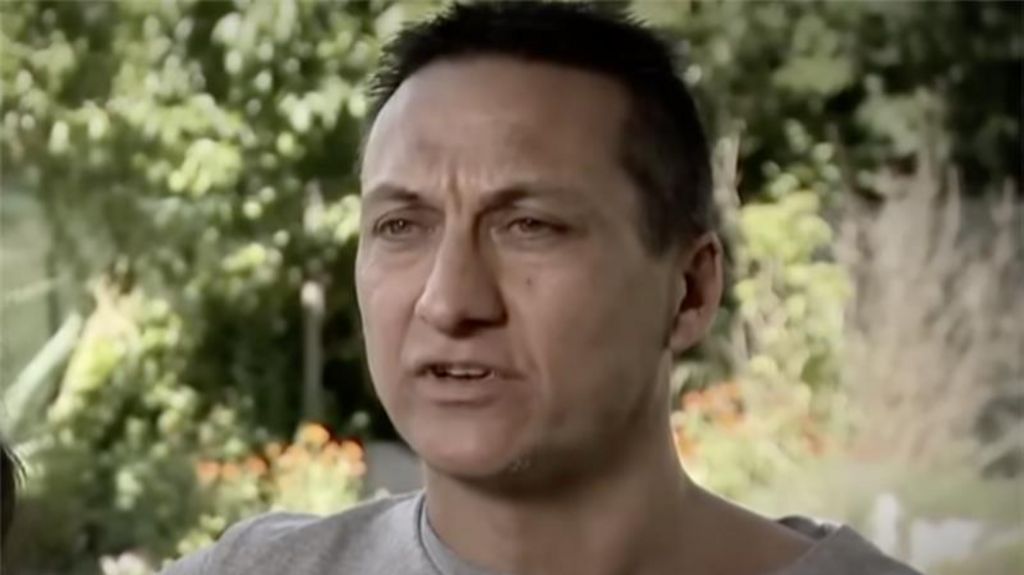
After seven months of one of the largest and most intensive manhunts in Australian history, the search for Dezi Freeman — the fugitive who killed two police officers in August 2025 — ended on Monday in a fatal standoff at a remote rural campsite, leaving a community grappling with partial closure and lingering unanswered questions.
Weeks earlier, investigators had publicly stated they strongly believed Australia’s most wanted man had died while evading capture in the rugged mountain bushland where he vanished shortly after the double shooting. Freeman, a well-known conspiracy theorist and self-identified “sovereign citizen” who went by the alias Desmond Filby, fled into the dense bush near the small Victorian town of Porepunkah immediately after ambushing two officers who arrived at his property to execute a search warrant over historical child sex abuse allegations.
The operation concluded on a remote farm in Thologolong, a tiny community located near the border of Victoria and New South Wales. According to Victoria Police Chief Commissioner Mike Bush, officers maintained a 24-hour covert stakeout of Freeman’s ramshackle campsite, set up inside disused shipping containers, before calling on him to surrender. “We gave him every opportunity to come out peacefully and safely. He didn’t take that option,” Bush confirmed to reporters.
Local media reports, citing unnamed police sources, state that after three hours of negotiations, Freeman emerged from one of the containers at approximately 8:30 a.m. local time, armed with a weapon stolen from the two slain officers. Multiple police snipers fired simultaneously, killing him at the scene.
The outcome came as a profound shock to Thologolong’s small local population of just 22 residents. The land where Freeman set up camp is owned by elderly farmer Richard Sutherland, who has been staying in Tasmania for months, according to his brother and neighbor Neil Sutherland. Sutherland confirmed the property owner had no connection to Freeman and did not share his extremist beliefs. In recent weeks, some local road signs were found graffitied with Freeman’s name, which local cattle farmer Janice Newnham told the BBC she had dismissed as a tasteless April Fool’s Day prank. Newnham added she remains skeptical any local resident knew of Freeman’s hiding place, noting that in the tiny tight-knit community, “everyone seems to know what everyone else is doing.”
From the early days of the manhunt, Freeman’s intimate knowledge of the local alpine terrain and off-grid survival skills gave investigators a major disadvantage, explained Dr. Vincent Hurley, a former police hostage negotiator and current policing lecturer at Macquarie University. Unlike urban fugitives, who leave traceable digital footprints from mobile phones, travel and financial transactions that can be tracked via modern tools like facial recognition, Freeman operated in an unpopulated wilderness with no digital footprint. “There was no easy way to actually try and track him down because they literally just had to go searching through the bush, and that’s pretty, pretty rare,” Hurley said.
The only comparable recent case in Australia was that of Malcolm Naden, who evaded capture for nearly seven years in New South Wales before being arrested in 2012. But unlike Naden, who left a clear trail of broken into properties and temporary campsites, Freeman left no trace of his movements for seven months. That complete lack of evidence has led police to conclude the fugitive received outside help to stay off the grid.
“We’re keen to learn who, if any – but we suspect some – assisted him in getting away from Porepunkah… if anyone was complicit, they will be held accountable,” Bush told reporters. While it is physically possible to walk the 150-kilometer route from Porepunkah to Thologolong, investigators consider this extremely unlikely: the trail crosses rugged, heavily forested mountain terrain, with extreme temperatures ranging from sub-freezing in winter to 40 degrees Celsius in summer, conditions that make independent travel and survival nearly impossible. Police sources also indicate Freeman likely only arrived at the Thologolong campsite recently, after severe bushfires swept through the region in January, burning within a kilometer of the property and forcing a full evacuation of the area that saw constant emergency service and air patrol activity.
Physical evidence from the campsite further supports the theory of outside assistance. Photos published by local media show recently installed air ducts fitted to the shipping container Freeman hid in, a modification that would likely require multiple people to complete. Three camping chairs and an open case of beer found at the site also suggest Freeman was not alone at the camp. Police have closely monitored Freeman’s family throughout the manhunt, who have publicly condemned his actions; his wife was reportedly shocked by the news of his discovery, having long believed he was already dead.
Hurley said he believes any accomplices are almost certainly fellow sovereign citizen believers, who reject the authority of government and law enforcement. No ordinary local would support Freeman after the brutal killing of two officers, he argued, adding that Freeman was known to be a loner with few close connections outside his ideological circle. Hurley also believes the tip that led police to Freeman’s hideout did not come from within the sovereign citizen movement, whose members are deeply anti-police and unlikely to cooperate. For Freeman himself, Hurley added, surrender was never a realistic option: “Being captured alive, that would be the ultimate humiliation and betrayal to him as a person. For the duration of the time he was at large, he was symbolically giving the middle finger to the police all over Australia.”
Many key questions about the manhunt and Freeman’s seven months on the run may never be answered, Bush has hinted. The investigation into potential accomplices is still in its early stages, and the police chief confirmed that while investigators received information that led them to the hideout, details of how the tip was obtained will remain confidential. Notably, no one has come forward to claim the AU$1 million reward offered for information leading to Freeman’s capture, and Bush said all details related to the reward and the investigation’s final phase will remain “absolutely confidential.” Adding, “I’m quite sure we’ll never be sharing those details.”