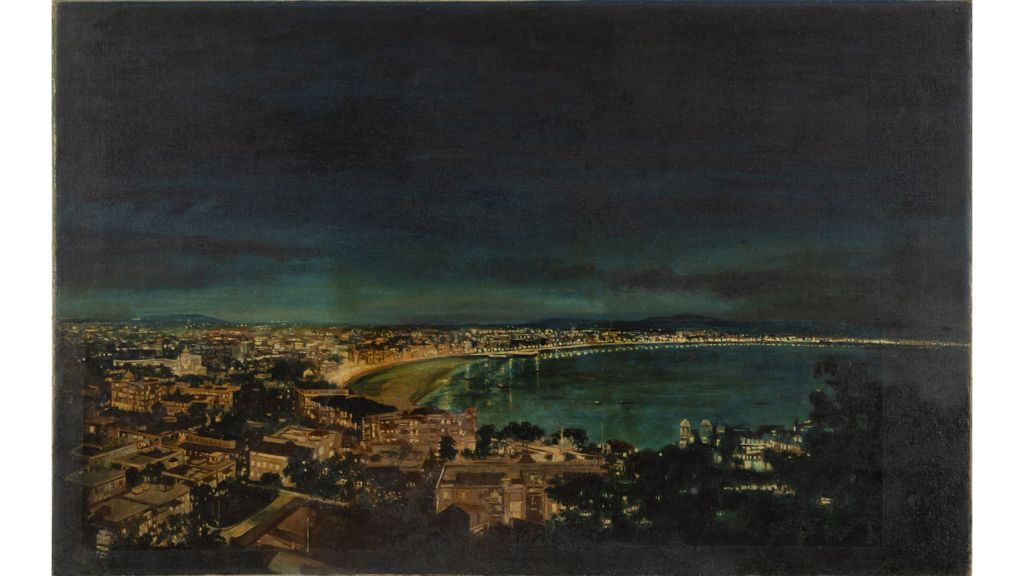
One of India’s most dynamic and culturally layered cities, Mumbai—officially known as Bombay for most of its modern history—has grown from a cluster of seven isolated islands into a bustling megacity of 20 million people. Shaped over hundreds of years by shifting political tides, economic booms, and diverse social movements, its landscape and identity have been molded by generations of inhabitants: from the indigenous Koli fisherfolk who first settled its shores, to colonial urban planners, Bollywood icons, and wealthy textile magnates who each left their indelible mark. Today, the city continues its constant evolution, as old landmarks make way for new development, long-held traditions blend with cutting-edge modernity, and the metropolis reinvents itself decade after decade.
To capture this centuries-long story of transformation, New Delhi-based art institution DAG has launched a groundbreaking new exhibition titled *Bombay Framed*, which traces the city’s changing shape and character through a stunning curated collection of paintings, vintage photographs, and multimedia artworks. Spanning 300 years of urban history, the exhibition features more than 100 visual works that document the full diversity of Bombay life, from the privileged worlds of Zoroastrian merchant elites and early Bollywood stars to the quiet, everyday struggles of working-class ordinary citizens.
Curated by noted historian Gyan Prakash, the exhibition frames the city itself as a living work of art. “Together they invite us to see the city itself as a kind of artwork: layered, complex and made up of many different experiences,” Prakash explained in an interview with the BBC. Prakash highlights four pivotal turning points that fundamentally reshaped Bombay’s urban landscape. The first came in the 1830s and 1840s, when large-scale land reclamation projects and earthen bunds connected the seven scattered original islets into a single contiguous island city. Two decades later, in the 1860s, the old colonial fort walls were demolished, clearing space for grand imperial government and commercial buildings that gave the city its distinct colonial architectural identity. In the 1920s and 1930s, the iconic Marine Drive corniche—dubbed the “Queen’s Necklace” for its glowing curved skyline at night—was developed alongside a sweeping collection of Art Deco buildings, forging a uniquely modern architectural style that broke from the earlier Victorian Gothic aesthetic that had defined the city. Since the 2000s, urban planners have prioritized large-scale utilitarian infrastructure projects, including new sea bridges and expanded coastal highways that have radically altered the city’s 21st-century skyline.
Throughout its history, Bombay has been defined by stark, striking contradictions that shape its unique character: gleaming luxury skyscrapers rise meters next to crowded informal shantytowns, the restless chaotic energy of the city center contrasts sharply with the quiet calm of the surrounding Arabian Sea, and centuries-old heritage structures stand alongside cutting-edge modern commercial developments. It is home to 2,000-year-old ancient rock-cut Buddhist caves, as well as sprawling modern textile mills and India’s premier atomic research facilities—creating such a diverse tapestry that no two people experience the city in the same way.
Unlike many historical exhibitions that focus only on architecture and elite power, *Bombay Framed* centers the role of ordinary people in shaping the city’s soul. “Even the early British picturesque views of the sea and boats include human figures, reminding us that the environment was always shaped by human activity,” Prakash notes. From Parsi philanthropists and Maharashtrian nobility to textile mill workers and marginalized migrant settlers, the collection showcases the full spectrum of communities that have contributed to building Bombay over centuries. For example, commissioned portraits of early 20th-century Parsi elite reveal the patronage networks and social aspirations of the mercantile community that formed the economic backbone of the colonial city. In sharp contrast, works by socially conscious artist Chittaprosad—known for his sharp political commentary—offer intimate unflinching depictions of working-class and informal life on the city’s margins.
The exhibition also honors Bombay’s outsized role as the birthplace of Indian cinema, blending art from the silver screen with the city’s street life. Vintage film posters from the 1950s and 1960s, once plastered across the walls of the city’s neighborhoods, are displayed alongside a collection of iconic portraits by JH Thakkar, founder of Mumbai’s legendary Dadar-based India Photo Studio. “His moody, meticulously composed silver gelatin portraits shaped how audiences saw stars like Raj Kapoor, Nargis, Dev Anand, Meena Kumari and Dilip Kumar,” the exhibition’s curatorial note reads.
The exhibition’s title, which uses the colonial-era name “Bombay” rather than the official modern name “Mumbai,” has sparked gentle discussion around the city’s contested naming history. The Indian government officially changed the city’s name from Bombay to Mumbai in the mid-1990s, a move framed as a step to shed the country’s colonial legacy, and the name Bombay has become politically charged for many groups. Prakash explains that the choice of title was rooted in historical context, not political positioning: most of the works included in the exhibition date from the era when the city was officially known as Bombay. “For Marathi speakers, it was always Mumbai. I’m agnostic about the name, as are many people, which reflects the city’s long history of dual names and multiple perspectives. It really only becomes contentious when the issue is politicised,” Prakash says.