In a landmark appointment that brings together decades of expertise in human rights, language advocacy, and academic scholarship, Irish President Catherine Connolly has named seven new members to the country’s Council of State, a constitutional advisory body that supports the president in fulfilling their official duties. Among the appointees are two prominent figures from Northern Ireland: celebrated Irish language activist Linda Ervine and leading human rights law academic Colin Harvey, whose selections mark a notable recognition of cross-border contributions to Irish public life.
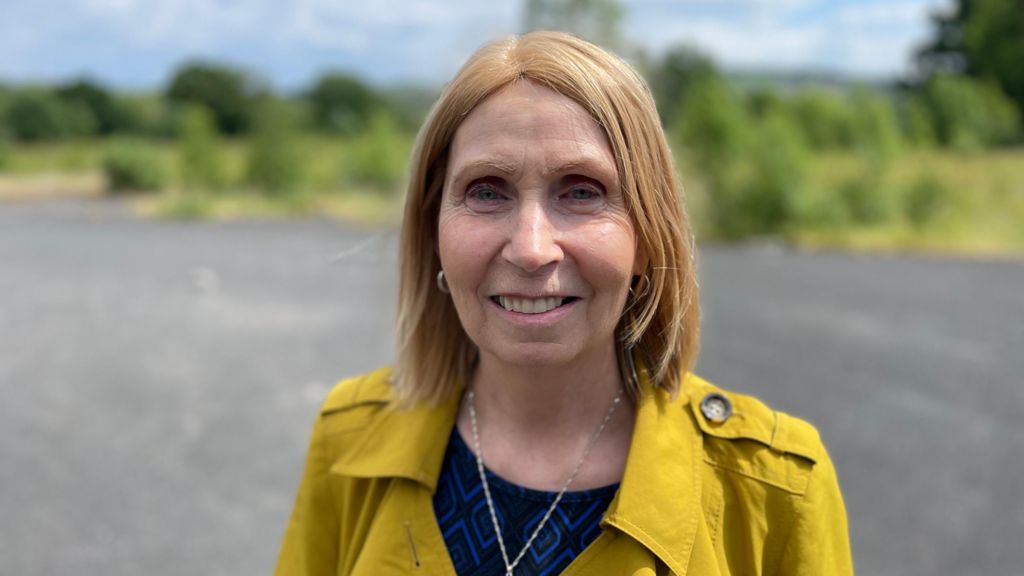
Linda Ervine’s journey to the Council of State is rooted in a lifelong mission to expand access to the Irish language in historically unionist communities. Born into a working-class Protestant family in east Belfast, Ervine has broken new ground throughout her career: she currently serves as manager of the first Irish language centre ever established in a Northern Irish loyalist area, and is the founder of Scoil na Seolta, Ireland’s first integrated school that delivers all instruction through the Irish language. Her trailblazing work has earned widespread acclaim and a string of honours in recent years: she received an MBE in 2021 for her contributions to Irish language promotion, an honorary doctorate from Queen’s University Belfast (QUB) in 2023, induction as a member of the Royal Irish Academy in 2024, an honorary degree from Trinity College Dublin in June 2025, and a second honorary degree from the Open University just last October.
Colin Harvey, Ervine’s fellow appointee from Northern Ireland, brings decades of specialized experience in human rights law and policy to the council. A Professor of Human Rights Law at QUB’s School of Law, Harvey currently holds roles as a Commissioner with the Irish Human Rights and Equality Commission and a member of the Scientific Committee of the EU Fundamental Rights Agency. He previously completed two terms as a commissioner with the Northern Ireland Human Rights Commission and also served on the Northern Ireland Higher Education Council, building a track record of public service spanning both jurisdictions on the island of Ireland.
The five additional new appointees bring deep expertise across law, equality studies, and academic leadership to the advisory body. Fionnuala Ní Aoláin, a leading international law and human rights scholar, holds a professorship in law at QUB and has held visiting appointments at globally renowned institutions including Harvard Law School, Yale University, Princeton University, and the Geneva Academy in Switzerland. Kathleen Lynch, an emerita Professor of Equality Studies at University College Dublin (UCD), is a sociologist with a background in education and previously served as a member of the Irish Human Rights and Equality Commission. Conor O’Mahony, Professor of Law and Dean of the School of Law at University College Cork, centers his research and teaching on constitutional law and children’s rights. Ciarán Ó hÓgartaigh, a former president of the University of Galway, hails from the same county as President Connolly. Donncha O’Connell, an Established Professor of Law at the University of Galway, has served two terms as a Commissioner of the Law Reform Commission, was a member of the Commission on the Future of Policing in Ireland, and previously sat on the board of the Legal Aid Board.
Established under the Irish constitution, the Council of State holds a key advisory role in Ireland’s system of government. The body is called on to provide guidance to the president when requested on a range of constitutional matters, most notably reviewing whether draft legislation should be referred to the Supreme Court for a formal assessment of its compliance with the Irish constitution. Membership of the council is divided into three categories: current office holders, including the Taoiseach, Tánaiste, Chief Justice, and presiding officers of both houses of the Oireachtas (Irish parliament); former office holders, including all past presidents, taoisigh, and Chief Justices; and a cohort of up to seven members directly appointed by the sitting president to serve their term. The Constitution explicitly outlines scenarios in which the president is required to consult the council before taking official action, cementing its role as a core component of Ireland’s democratic governance framework.