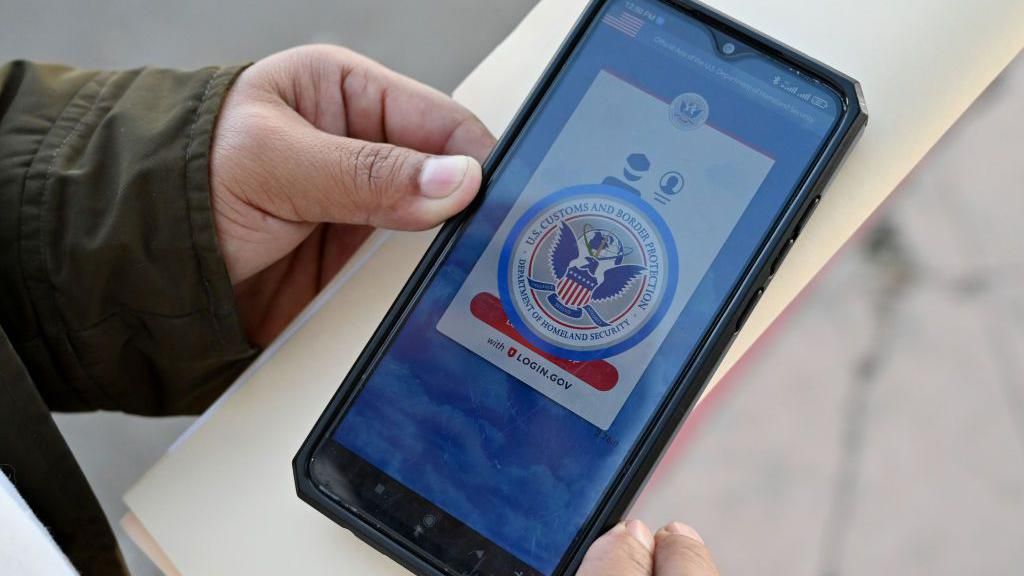
A federal judge delivered a landmark ruling this week that blocks the Trump administration’s unilateral termination of legal parole status for hundreds of thousands of migrants who entered the United States through the Biden-era CBP One program, finding the Department of Homeland Security (DHS) acted beyond its legal powers when it revoked the protected status of program participants.
First launched in 2023 under the administration of former Democratic President Joe Biden, the CBP One initiative was designed to streamline southern border processing for asylum seekers. The program required migrants to schedule appointments via a mobile app to enter the U.S., and granted successful participants two years of parole, a temporary legal status that allowed them to live and work legally in the country while their asylum claims proceeded through the backlogged immigration court system. By the time Trump took office for his second term, roughly 900,000 migrants had been approved for parole through the program.
Shortly after taking office, the Trump administration moved to end the CBP One parole program, re-purposing the app for a new ‘self-deportation’ initiative. In April of this year, DHS began sending mass emails to tens of thousands of program participants, notifying them their parole status had been terminated, ordering them to leave the country, and revoking their legal work authorization. The agency framed the move at the time as a response to what it called an ‘abuse of parole authority’ by the Biden administration, arguing the program had contributed to what it calls the worst border crisis in U.S. history.
But on Tuesday, U.S. District Judge Allison Skye Borroughs of the District of Massachusetts rejected the Trump administration’s action in a sweeping 38-page decision. In her ruling, Borroughs wrote that the mass parole terminations exceeded DHS’s statutory authority under federal immigration law, and directly contradicted the procedural requirements laid out in the agency’s own existing regulations. The ruling immediately restores legal parole status for all program recipients nationwide who received a termination notice from DHS.
The case was brought by the Venezuelan Association of Massachusetts, three individual Venezuelan women directly impacted by the termination policy, and legal advocacy group Democracy Forward. The plaintiffs argued the mass termination was unlawful and violated the federal Administrative Procedure Act, which governs how federal agencies implement new rules. In their lawsuit, they noted that the policy change instantly pushed hundreds of thousands of people from legal status to being considered ‘illegal aliens’ overnight, upending lives that had been built legally in the U.S.
Reacting to the ruling, Skye Perryman of Democracy Forward called the decision a clear rejection of the administration’s attempt to erase the lawful status of hundreds of thousands of people with a single mass email. Carlina Velásquez, president of the Venezuelan Association of Massachusetts, added that for many Venezuelan families who had lived for months in fear and uncertainty after the termination notices were sent, the ruling brings long-awaited relief. A DHS spokesperson has not yet issued a formal response to the ruling, and administration officials have signaled they are likely to file an appeal, consistent with the administration’s pattern of challenging court rulings that block its restrictive immigration policies.
While the ruling restores temporary legal status to affected migrants, it does not guarantee permanent residency or long-term legal status for most program participants. The CBP One parole only grants a two-year term, during which asylum seekers must complete their immigration claims. Many recipients have already passed their two-year deadline, and dozens more will see their parole expire in the coming months, leaving their long-term status uncertain even after the court’s ruling.
The decision marks the latest legal setback for the Trump administration’s aggressive nationwide crackdown on undocumented immigration, which has included rolling back dozens of Biden-era immigration policies and ramping up deportation operations and enforcement efforts across the country.